News Summary
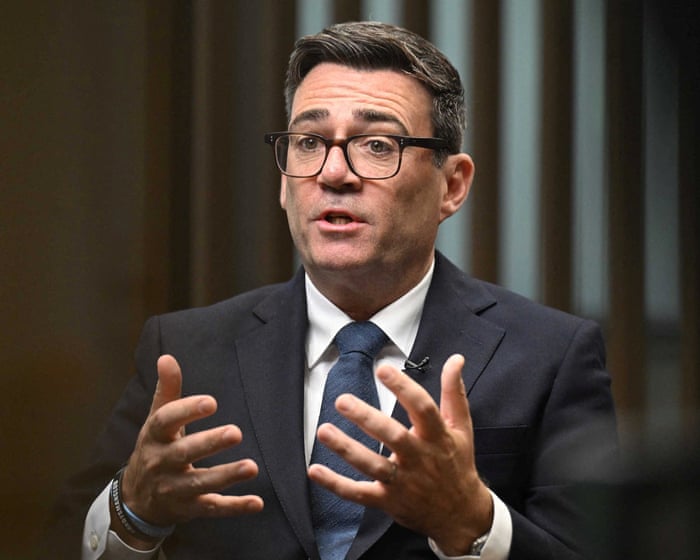
Reported facts: Andy Burnham, in his first major broadcast interview since becoming UK prime minister, said he would defend the national interest and would disagree with US president Donald Trump publicly if necessary. Defence secretary Wes Streeting was quoted saying he did not believe the Trump administration sought allies who 'suck up' but wanted those confident enough to state disagreements. Attributed claims: the article attributes the direct quotations and paraphrases to Burnham and Streeting. Uncertainty: the article does not specify policy areas where disagreement might occur, how often public disagreement is likely, nor does it include responses from the Trump administration.
Source and Framing Analysis
The piece is based on a single broadcast interview as reported by The Guardian. The framing emphasizes readiness to disagree with a prominent foreign leader, which can foreground tension over cooperation. Material uncertainties that affect interpretation include the absence of the full interview transcript, lack of contextual detail about specific policy disagreements, and no comment from the US administration; these gaps affect how consequential the reported intent may be in practice.
Biblical Reflection
As Christians, we should notice two tensions here: the weight of national leadership to protect the common good and the relational call to speak truth with humility. Burnham’s promise to defend national interests signals a leader prioritising sovereignty and duty; Streeting’s comments frame disagreement not as disloyalty but as a form of confident partnership. Both positions are understandable in diplomatic terms.
Viewed through a biblical lens, public disagreement among allied leaders is not inherently unchristian; the manner and motive matter. Scripture commends speaking truth, seeking justice, and protecting the vulnerable, but also calls for humility, measured speech, and reconciliation. Christians should therefore welcome leaders who will act courageously for their nation’s welfare while urging that courage be exercised in ways that preserve relationships, avoid needless provocation, and pursue peace when possible.
Practically, this story invites believers to watch how words translate into policy and consequence. Public disagreement can clarify moral boundaries and protect national interests, but it can also inflame tensions and make cooperation harder. Pray for wisdom for leaders to balance candor with restraint and for citizens to hold leaders accountable in ways that reflect truth, mercy, and neighbor-love.
Scripture in context
- 1Ephesians 4:15 — Paul is addressing divisions in the Ephesian church and urging believers toward maturity, speaking the truth in love so the community grows into Christ-like unity and stability. — Leadership and public disagreement should seek truth and clarity but be communicated in ways that pursue communal flourishing rather than merely winning an argument; truth-telling must be joined to love.
Faithful Response
Pray specifically for national and international leaders; read the full interview if available before forming a fixed opinion; encourage civil conversation that models speaking truth in love; support institutions and processes that enable accountable diplomacy; and weigh rhetoric against concrete policy outcomes rather than partisan soundbites.
Reflection and Discussion
- 1How should Christians weigh the moral duty to speak truth publicly against the call to pursue peace and maintain alliances?
- 2What signs should we look for to tell whether a leader’s public disagreement aims at protecting the vulnerable or at scoring political points?
- 3In what ways can ordinary Christians model speaking truth in love in civic conversations about foreign policy?
Sources
Reporting links are evidence inputs; Sanctuary News' biblical reflection is commentary.
This outlook currently relies on fewer than two linked sources. Broaden verification before teaching from it.
- 1.Andy Burnham says he will disagree with Trump in public if necessaryprimary_reporting