News Summary
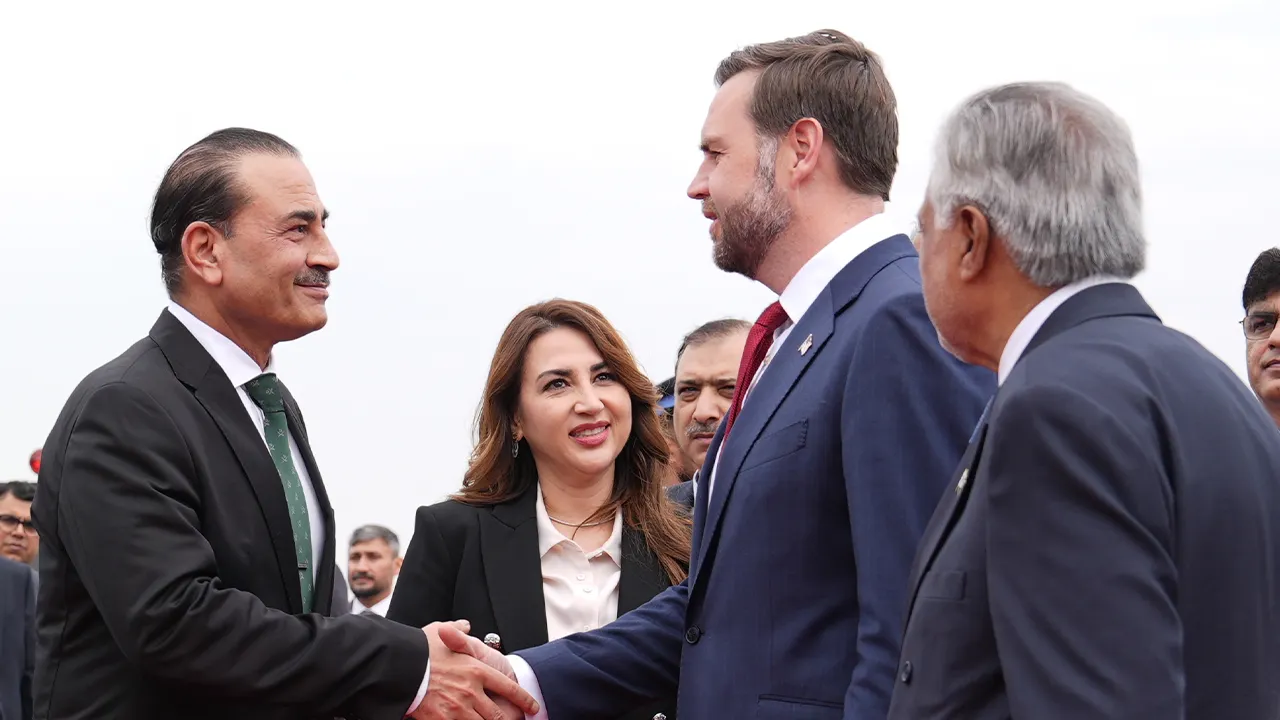
U.S. Vice President JD Vance arrived in Islamabad, Pakistan, on April 11, 2026, leading a senior U.S. delegation that includes Special Envoy Steve Witkoff and Jared Kushner to hold talks with Iranian officials aimed at preserving a two-week ceasefire. Iranian negotiators include Foreign Minister Abbas Araghchi and Parliament Speaker Mohammad Bagher Ghalibaf. The meetings follow the U.S. Operation Epic Fury, launched Feb. 28 against Iranian military infrastructure after nuclear talks collapsed. President Donald Trump announced a conditional two-week ceasefire that would suspend further U.S. strikes if Iran reopens the Strait of Hormuz; Iran signaled conditional acceptance but maritime traffic remained disrupted. Pakistani officials are facilitating the talks; however, Pakistan’s defense minister Khawaja Asif drew criticism for hostile social-media remarks about Israel, raising questions about Pakistan’s perceived neutrality. U.S. officials described the truce as fragile; Iranian statements warned the ceasefire does not mean the end of hostilities and tied success to developments in Lebanon (notably Israeli strikes on Hezbollah). Security concerns are significant for foreign delegations in Pakistan, and discussions are expected to cover nuclear restrictions, sanctions relief, and broader regional security. The talks’ outcome could determine whether the ceasefire holds or hostilities resume.
Biblical Reflection
The article reports a diplomatic effort intended to prevent wider war and preserve a fragile ceasefire. From a Christian perspective, the pursuit of negotiated peace and the prevention of further bloodshed is morally consonant with Scripture’s call to peace and the protection of the vulnerable. At the same time, the report reflects several common geopolitical assumptions: that state security is managed through a mix of military pressure and bargaining; that negotiations are led by powerful political actors whose motives include national interest, deterrence, and domestic politics; and that media framing often centers the actions and warnings of those in power while providing limited voice to civilians and noncombatants directly affected. Readers should note these possible biases: the piece foregrounds U.S. and Pakistani roles and highlights U.S. warnings and Iranian caveats, but it offers limited context on humanitarian conditions in affected areas or Iranian domestic political pressures. Biblically, Christians are called to pray for leaders and to favor measures that protect innocent life and pursue just peace (Jeremiah 29:7, Matthew 5:9). At the same time, Christians must hold both their own leaders and adversaries to moral scrutiny—seeking truth, justice, and repentance where wrongdoing occurs, and resisting dehumanizing rhetoric. Temperamentally, the story invites sober prayerfulness rather than triumphalism: peace achieved by forceful brinksmanship remains fragile; true peace requires trust-building, justice, and care for the suffering.
Scripture in context
This outlook does not yet include contextual Scripture citations. Do not treat a general biblical theme as an exegetical conclusion.
Faithful Response
No prescribed response is offered. Consider the reflection prompts below in your own church context.
Reflection and Discussion
- 1Whose perspectives are centered in the reporting (state actors, military officials, mediators) and whose voices are largely absent (civilians, displaced persons, non-state actors)?
- 2How does the framing of 'deterrence plus negotiation' shape our perception of what constitutes a just and lasting peace, compared with Scripture’s call to mercy and reconciliation?
- 3What assumptions about national interest, security, and moral legitimacy are driving the demands placed on each party (e.g., reopening the Strait of Hormuz), and how might those assumptions obscure long-term needs for justice and reconciliation?
Sources
Reporting links are evidence inputs; Sanctuary News' biblical reflection is commentary.
This outlook currently relies on fewer than two linked sources. Broaden verification before teaching from it.
- 1.Original reportprimary