News Summary
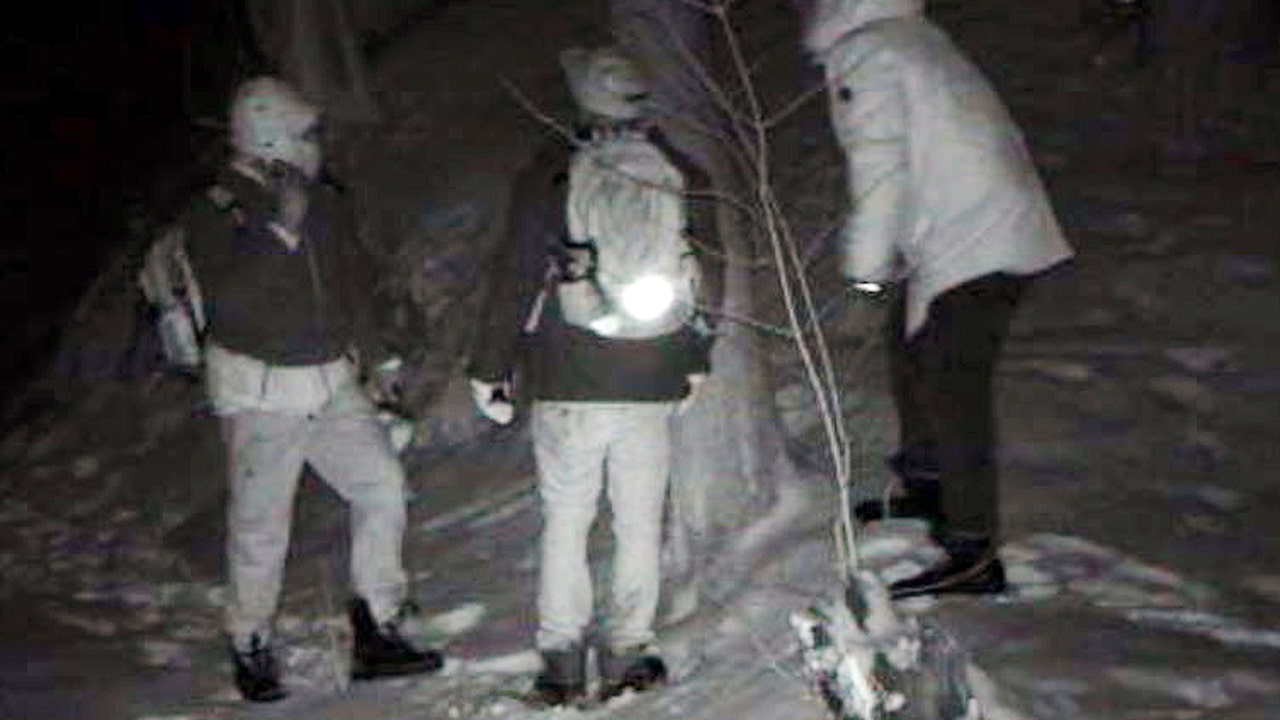
This is an opinion column by Chad F. Wolf, a former acting U.S. Department of Homeland Security official, arguing that the U.S.–Canada border is increasingly vulnerable and that Canada is not doing enough to stop organized criminal networks. The piece cites recent statements from Department of Homeland Security Secretary Markwayne Mullin that people from 78 countries have been apprehended at the northern border, that U.S. agents are arresting someone on a terrorism watch list at the northern border nearly every week, and that U.S. authorities seized an amount of fentanyl at the northern border that the author says could kill 17 million Americans. The column notes federal prosecutors have unsealed cases describing organized smuggling networks operating through the northern border and cites a Royal Canadian Mounted Police figure of 7,326 people intercepted between April and July. It links illicit tobacco contraband and cigarette revenues to the same criminal networks moving fentanyl, citing a Manitoba drug bust that reportedly included 1.35 million contraband cigarettes. Wolf argues the United States has leverage in trade talks—referencing the U.S. decision not to extend USMCA in its current form and opting for annual reviews until 2036—and urges tying trade certainty to stronger Canadian enforcement measures, legal tools, interdiction of small-package shipments, and reopening protected domestic markets. The piece criticizes Canadian sectoral protections in dairy, telecommunications, and aviation as examples of protectionism that the U.S. should press to change as part of a security-plus-trade approach.
Biblical Reflection
The column raises a legitimate concern: illicit drugs, transnational criminal organizations, and gaps in cross-border enforcement are threats to life and public safety that warrant cooperation. At the same time, this is an opinion piece with an advocacy posture—explicitly linking trade leverage to security demands—and so it selectively highlights facts that support a hardline negotiating stance. Christians should value truth-telling about harms (protecting the vulnerable from fentanyl) while resisting rhetoric that reduces a neighbor nation to a scapegoat or treats complex problems as solvable only by coercive leverage. Biblical wisdom calls for protecting life, pursuing justice, and seeking reconciliation: effective responses will blend firm law-enforcement cooperation, honest shared fact-finding, aid to reduce drug demand and addiction, and respect for diplomatic partnership. Be attentive to the column’s policy prescription (trade conditionality) as a legitimate tool but one that must be used with humility, fair negotiation, and care for ordinary people on both sides of the border who may be harmed by abrupt economic pressure or blunt security measures.
Scripture in context
This outlook does not yet include contextual Scripture citations. Do not treat a general biblical theme as an exegetical conclusion.
Faithful Response
No prescribed response is offered. Consider the reflection prompts below in your own church context.
Reflection and Discussion
- 1Which claims in the piece are presented as verified facts and which are advocacy or policy prescriptions tied to a particular negotiating stance?
- 2Does framing the problem primarily as a failure by Canada obscure shared responsibilities—such as U.S. drug demand, international trafficking networks, and cross-border coordination—that require cooperative solutions?
- 3If trade leverage is used to press for security measures, how can policymakers balance accountability with compassion for civilians and workers who would be affected by sudden economic changes?
Sources
Reporting links are evidence inputs; Sanctuary News' biblical reflection is commentary.
This outlook currently relies on fewer than two linked sources. Broaden verification before teaching from it.
- 1.Original reportprimary