News Summary
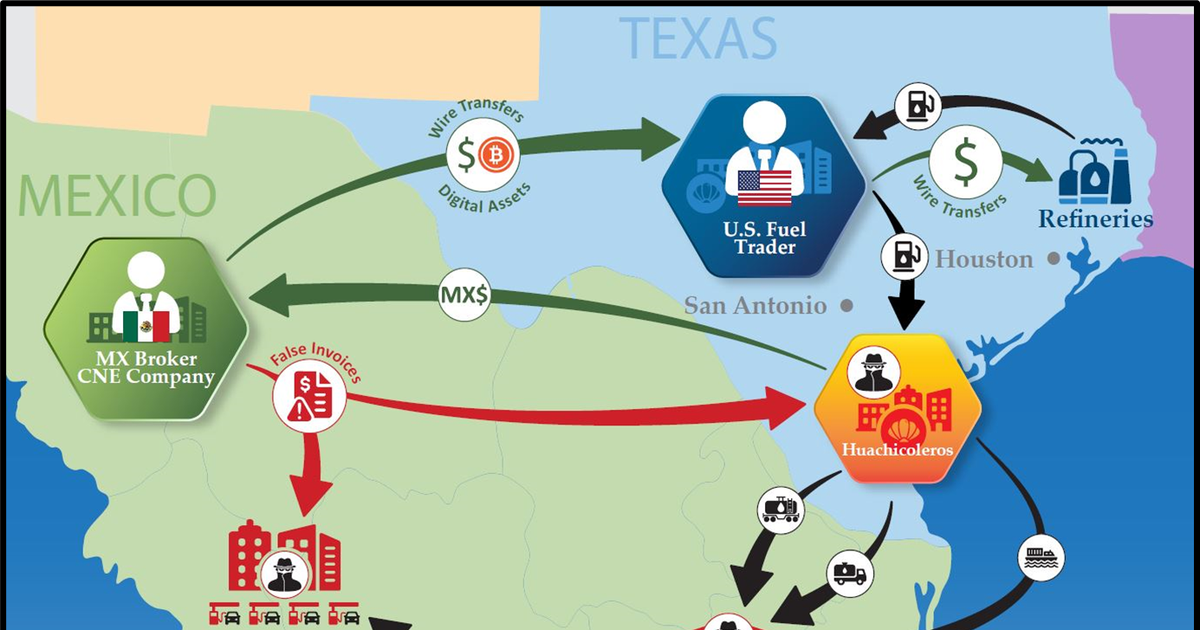
The U.S. Treasury announced sanctions and a financial institutions alert aimed at the Jalisco New Generation Cartel (CJNG). OFAC imposed sanctions on two Mexican men and nine companies tied to transportation, financial services and real estate that U.S. officials say were part of a cartel-linked fuel theft ring used to evade Mexican taxes and generate tens of millions of dollars annually. FinCEN issued an alert to banks describing red flags for schemes that smuggle fuel from the U.S. into Mexico and enable tax evasion. Treasury Secretary Scott Bessent said the action highlights cartels expanding revenue sources beyond drug trafficking. The DEA has reported the CJNG operates in 21 of Mexico’s 32 states, surpassing the Sinaloa Cartel’s presence. The article notes past Mexican seizures of millions of gallons of stolen fuel from states bordering Texas and reports that cartels tap pipelines, force service stations to buy from them or operate service stations themselves. Additional law-enforcement developments mentioned include expanded U.S. charges against the cartel’s second-in-command (nicknamed “The Gardener”) for meth trafficking and money laundering, the April 27 arrest of Audias Flores Silva by Mexican forces, and the February killing of CJNG leader Nemesio “El Mencho” Oseguera Cervantes, which preceded a wave of cartel violence that reportedly killed more than 70 people, including 25 National Guard members. The story references President Trump’s prior designation of the CJNG and other cartels as foreign terrorist organizations.
Biblical Reflection
From a Christian perspective, the U.S. action to target the cartel’s finances and warn banks aims at preventing harm and holding criminal actors accountable—objectives that align with seeking justice and protecting neighbors. The article’s emphasis on financial measures reflects a worldview that disrupting revenue streams can weaken violent groups; that is a legitimate policy approach but not a complete solution. The report largely presents official U.S. law‑enforcement and Treasury perspectives and includes strong language about cartel reach and danger; readers should note this institutional frame and the absence of deeper context about corruption, governance challenges in Mexico, or economic drivers that enable fuel theft. Christians should weigh both the need for firm measures against violent criminality and the call to mercy for victims caught between cartels and state responses. Pray for sober courage in pursuing justice, humility in assessing complex causes, and compassion for communities harmed by both criminal violence and destabilizing responses.
Scripture in context
This outlook does not yet include contextual Scripture citations. Do not treat a general biblical theme as an exegetical conclusion.
Faithful Response
No prescribed response is offered. Consider the reflection prompts below in your own church context.
Reflection and Discussion
- 1How does focusing on financial networks change our understanding of how organized crime operates and how it should be countered?
- 2What contexts—government corruption, economic need, cross‑border demand—are missing from headlines that name and punish criminal actors?
- 3Where should Christians place their trust and energy: in supporting law‑enforcement measures that prevent harm, in addressing root causes that enable crime, or in both?
Sources
Reporting links are evidence inputs; Sanctuary News' biblical reflection is commentary.
This outlook currently relies on fewer than two linked sources. Broaden verification before teaching from it.
- 1.Original reportprimary