News Summary
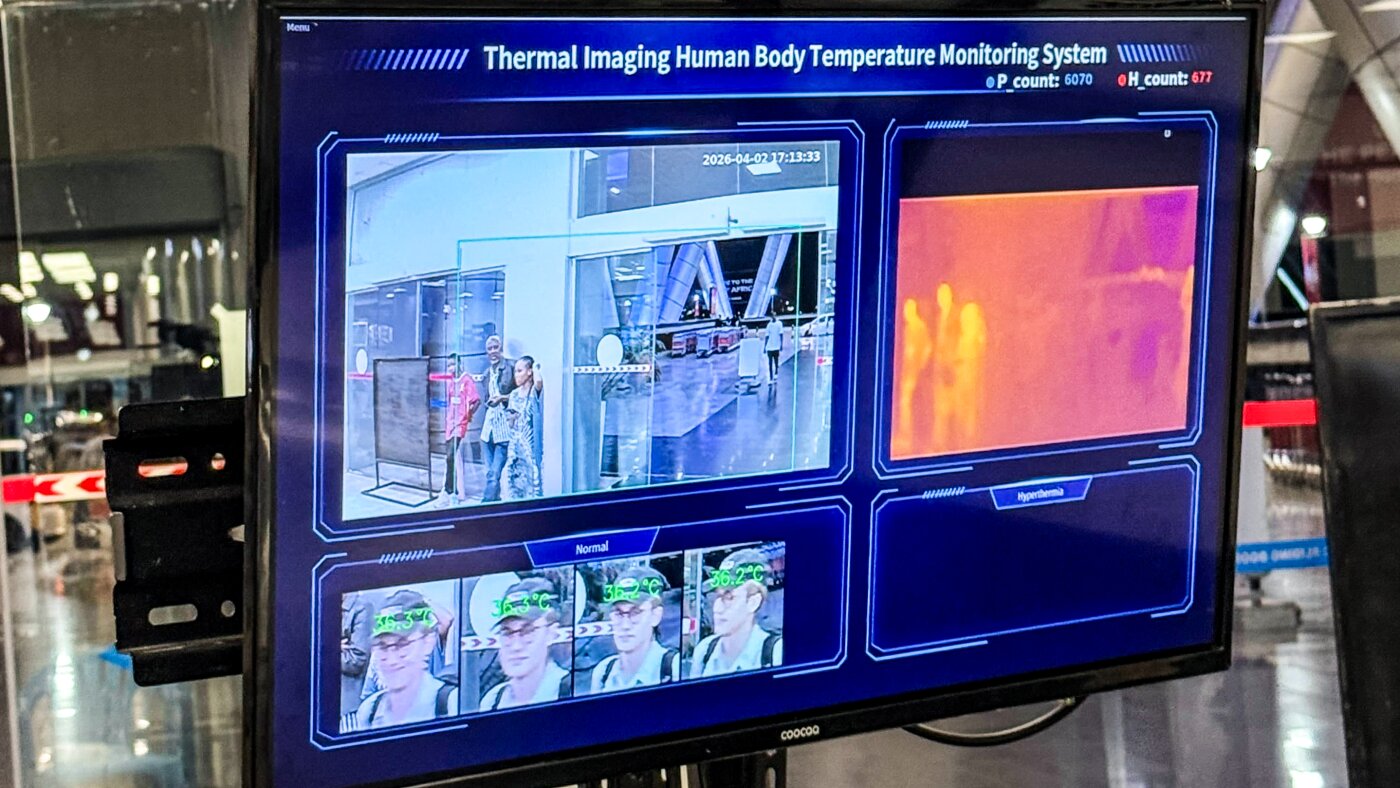
The U.S. announced a policy requiring Americans who have been in Uganda, the Democratic Republic of Congo (DRC), or South Sudan within the past 21 days to enter the United States through Washington Dulles International Airport (IAD). Hartsfield-Jackson Atlanta International Airport and George Bush Intercontinental Airport in Houston were added as screening ports soon after. The policy, part of the U.S. response to an Ebola outbreak in those countries (the WHO declared a public health emergency on May 17), routes travelers to specified entry points for CDC screening. Measures observed or described include thermal camera screening at departure points, temperature checks and symptom questionnaires by CDC staff at U.S. entry airports, collection of contact information, and follow-up notifications to state health departments. Travelers received CDC text messages describing Ebola symptoms and advising them to call local health departments if symptoms develop. The CDC invoked a Title 42 order that guarantees entry for U.S. citizens and nationals at the designated airports, allows consideration for green-card holders, and bars most other noncitizens coming from affected countries. Experts quoted note that entry screening and travel restrictions offer limited protection by themselves and emphasize the importance of surging resources to contain the outbreak at its source. The article also notes strains on U.S. public health capacity due to staffing and funding reductions since prior outbreaks and recalls the larger U.S. operational response during the 2014–2016 West Africa Ebola epidemic.
Biblical Reflection
From a Christian perspective, the policy reflects a responsible governmental attempt to protect public health and safeguard vulnerable populations—an objective consistent with the biblical mandate that authorities care for the common good (see Romans 13). At the same time, Christians should watch for and resist responses that trade legitimate caution for fear, stigma, or exclusion of the vulnerable. The article is broadly factual in reporting policy and procedures, and it includes expert critique that screening alone is insufficient. One underlying framing in the piece is security-first: it emphasizes border controls and logistics, which can obscure the parallel moral and practical imperative to support outbreak containment where it began. Biblical truth calls us both to protect our neighbors from harm and to bear one another's burdens (Galatians 6:2)—which points toward dual priorities: sound domestic screening and generous investment in stopping the disease at its source so that suffering is reduced internationally. Practically, Christians should be alert to narratives that single out travelers or foreign nationals as threats and should advocate for public-health measures that are evidence-based, transparent, and compassionate toward those affected.
Scripture in context
This outlook does not yet include contextual Scripture citations. Do not treat a general biblical theme as an exegetical conclusion.
Faithful Response
No prescribed response is offered. Consider the reflection prompts below in your own church context.
Reflection and Discussion
- 1Does the article primarily frame the response as a security problem (border control) or a public-health problem (containment at source), and what assumptions follow from that framing?
- 2Are the measures described likely to reduce overall harm, or do they risk stigmatizing travelers and diverting attention from international support needed to stop the outbreak?
- 3How can Christian civic concern balance protecting local communities with compassion and aid for those suffering where the disease originates?
Sources
Reporting links are evidence inputs; Sanctuary News' biblical reflection is commentary.
This outlook currently relies on fewer than two linked sources. Broaden verification before teaching from it.
- 1.Original reportprimary