A little more detail
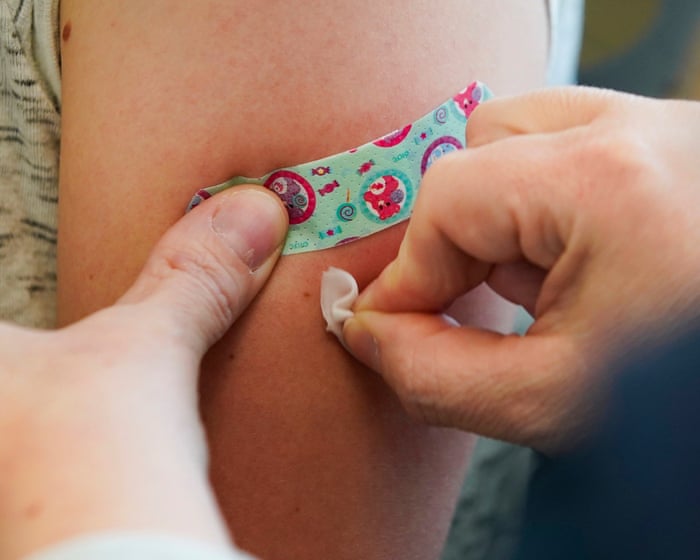
The Guardian reports that measles activity in the U.S. is increasing and that more parents are choosing to give the second MMR (measles, mumps, rubella) dose earlier than the usual schedule. The article says confirmed cases are about twice as many as at the same time last year and notes that the second dose may be given as soon as four weeks after the first. It attributes the availability of earlier dosing to CDC guidance and points out that some countries (Germany, the U.K., France) recommend earlier second-dose timing.
Source and Framing Analysis
Primary source: The Guardian (single primary report supplied). The article frames the story as a public-health response: rising measles activity is prompting some parents to accelerate the timing of the second MMR dose. Source strengths: concise reporting of behavioral change and a concrete, actionable interval (second dose as soon as four weeks after the first). Attributions are made to the CDC and to international practice. Gaps and limits: the piece as supplied does not include raw case counts, geographic or age-group breakdowns, direct quotations or links to CDC guidance, estimates of how many parents have changed timing, or discussion of contraindications, supply, or access barriers. Because reporting rests on a single supplied article and lacks primary-data citations, readers should treat numerical claims (e.g., "twice as many confirmed cases") as reported by that outlet rather than independently verified. There are no contrasting media sources in the supplied material to show disagreement; the framing is neutral and public-health oriented rather than sensationalist.
How sources covered this story
Sanctuary separately assesses reporting quality and alignment with Christian virtues. The virtues assessment considers truthfulness, dignity, compassion, justice, peacemaking, humility, and care for vulnerable people. It does not assess a publisher's faith or reward religious language.
Compare 1 reports
Reporting 76/100Virtues 82/100
- Distinctive contribution
- States that parents are opting for an earlier second MMR dose and specifies that it can be given as soon as four weeks after the first; notes the CDC says this is an option and that this timing aligns with guidance in Germany, the UK and France; reports measles cases are accelerating and are twice last year's count.
- Framing
- Neutral, public-health-oriented: presents rising case counts, parental behavior change, and alignment with domestic (CDC) and international guidance as information for readers rather than exhortation.
- Omissions or uncertainty
- No raw case counts or dates, no geographic or age-group breakdown, no direct quotes or named sources beyond a brief CDC reference, no context about whether the CDC recommends routine earlier dosing only during outbreaks or more generally, and no discussion of vaccine supply, contraindications, or efficacy/safety specifics.
- Why these scores
- Concise, factual, and appropriately attributes policy/option to the CDC while noting international alignment. Useful specifics (4-week interval) are provided. Lacks numeric case totals, local detail, direct sourcing/quotes, and deeper context about the CDC recommendation, which limits completeness but does not mislead. The excerpt advances truthful, non-sensational public-health information that can protect vulnerable people (children). It avoids dehumanizing language, shows concern for community welfare by explaining a preventive option, and attributes guidance to public-health authorities. It would score higher if it included explicit attention to equity or barriers to access.
Biblical Reflection
From a Christian pastoral perspective, the observable impulse—taking steps to protect children and vulnerable neighbors from a contagious illness—aligns with commitments to care for life and community wellbeing. Christians should balance truthful attention to public-health information with mercy and humility: encourage reliance on competent medical counsel, avoid fear-driven or punitive responses, and support those who are vulnerable or anxious. Congregations can respond practically (information-sharing, logistical help for families seeking vaccination, protecting at-risk members during outbreaks) while maintaining respect for conscience and preventing stigmatization.
Scripture in context
- 1–37 (Good Samaritan pericope) — Jesus answers a question about who is a 'neighbor' by illustrating compassionate action toward a wounded stranger, prioritizing mercy and practical care over abstract legalism. — This pericope calls believers to practical compassion that protects and cares for those who are vulnerable. Applied here, it supports prudent public-health measures and community care—seeking trustworthy medical advice, helping families obtain vaccination if appropriate, and attending to the needs of infants and immunocompromised persons—while resisting judgmental or exclusionary responses.
Faithful Response
Seek reliable medical information: encourage families to consult pediatricians, local public-health departments, or official CDC guidance for current, location-specific recommendations rather than relying on social media or hearsay.
Pray and practice pastoral care: listen to parents’ concerns with patience, offer emotional support to anxious families, and provide guidance toward trusted clinical counsel.
Provide practical neighbor-love: coordinate transportation, scheduling help, childcare, or financial assistance for families trying to access clinics or vaccination appointments.
Protect the vulnerable: adapt congregational practices (childcare policies, visitation, communal meals) when advised by public-health authorities to reduce risk to infants, the elderly, and immunocompromised members.
Avoid shaming and politicization: create space for questions and education rather than condemnation; refer hesitant people to medical professionals and community health resources.
Model humility: acknowledge limits of one’s own expertise, defer to clinicians on medical specifics, and prioritize mercy and justice in communal decisions about safety and inclusion.
Reflection and Discussion
- 1Are we seeking and sharing trustworthy, up-to-date public-health information when making congregational or family decisions about vaccination timing?
- 2How can our community protect the most vulnerable (infants, immunocompromised people) without alienating or shaming those who have questions or different choices?
- 3What practical steps can our congregation take to help families access recommended care quickly and equitably during disease upticks?
- 4How do truth and mercy together shape our response when public-health guidance changes or is presented incompletely in news reporting?
Sources
Reporting links are evidence inputs; Sanctuary News' biblical reflection is commentary.
This is a developing, single-source report. Details may change as more reporting becomes available.
- 1.Families in the US are opting for earlier measles vaccinations amid outbreakprimary_reporting