News Summary
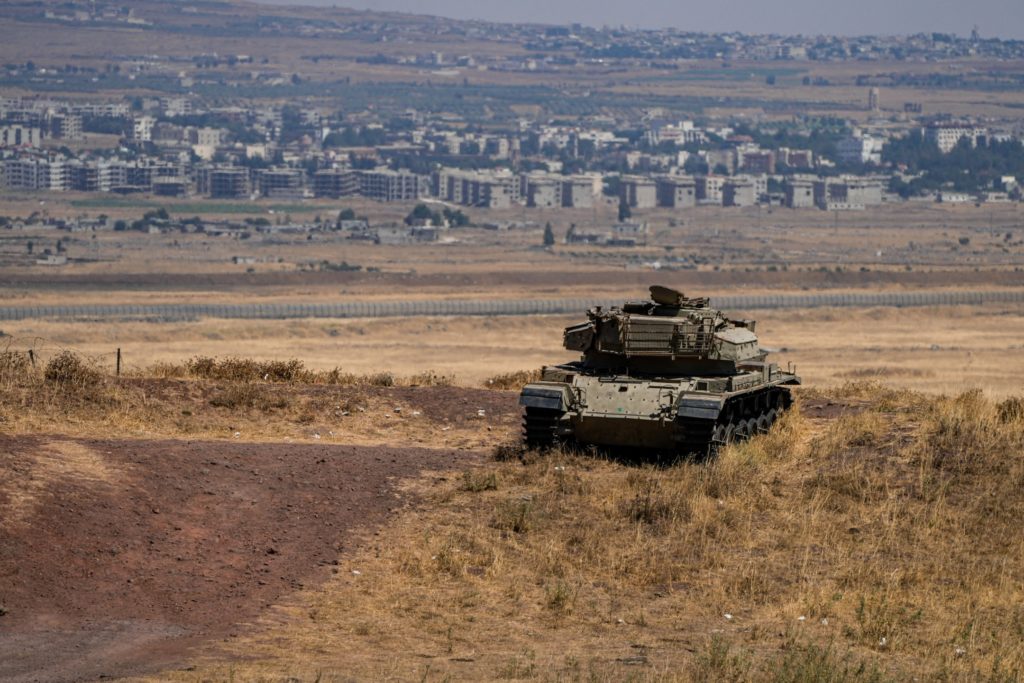
PBS reports that the Israeli military struck an airbase in Syria located "far from the Israeli border," prompting public condemnations from the Syrian government, Turkish officials, and members of the U.S. administration. In a PBS interview, U.S. Ambassador to Turkey Tom Barrack called the Israeli action an "unnecessary escalation that does not advance regional stability." The report does not provide independent verification of the strike’s precise location, casualties, the airbase’s identity or military significance, nor an Israeli statement or detailed rationale.
Source and Framing Analysis
The account of this incident in the supplied material relies on a single PBS NewsHour report and an on-the-record interview with Ambassador Tom Barrack. PBS’s framing emphasizes diplomatic reaction and characterization of the strike as an escalation; it attributes the critical assessment directly to Barrack. Important operational and humanitarian details are omitted in the piece: there is no independently verified identification of the airbase, no casualty or damage figures, no Israeli public justification quoted, and no corroboration from additional reporting or open-source imagery cited. That framing centers regional-stability concerns and diplomatic censure, which reasonably alerts readers to escalation risks but also leaves open significant evidentiary gaps that constrain firm conclusions about proportionality, targeting, and humanitarian impact. Readers should treat the reported claims as attributable statements rather than independently established facts and should look for follow-up reporting for confirmation and fuller context.
How sources covered this story
Sanctuary separately assesses reporting quality and alignment with Christian virtues. The virtues assessment considers truthfulness, dignity, compassion, justice, peacemaking, humility, and care for vulnerable people. It does not assess a publisher's faith or reward religious language.
Compare 1 reports
Reporting 74/100Virtues 78/100
- Distinctive contribution
- Provides an on-the-record quote from Ambassador Tom Barrack calling the Israeli action an "unnecessary escalation that does not advance regional stability," and explicitly links the strike to condemnation from Turkey and the U.S. administration.
- Framing
- The excerpt frames the event primarily as a diplomatic and regional-stability issue, emphasizing condemnation and escalation rather than operational or casualty details. It centers the U.S. diplomatic response through an ambassadorial interview.
- Omissions or uncertainty
- No date or time for the strike is given; the text lacks details about the airbase (location, military significance), casualties or damage, evidence attributing the strike to Israel beyond the claim, any Israeli statement or justification, and specifics about which Trump administration officials expressed condemnation. The short excerpt does not show broader context about the Syrian conflict or regional dynamics.
- Why these scores
- Concise and responsibly attributed: the key critical claim is quoted and tied to a named official (Barrack) and an identified interviewer. However, the brief excerpt omits important factual specifics (timing, location details, sources for attribution of the strike, Israeli response, and which U.S. officials spoke for the administration), limiting its completeness for readers seeking fuller context. The excerpt is measured and non‑sensational, attributes criticism to a named official rather than presenting inflammatory assertions as fact, and centers concerns about regional stability—aligning with peacemaking and prudence. It does not dehumanize parties or exploit suffering. Points are deducted because the excerpt lacks explicit attention to humanitarian consequences, victims, or calls for protections that would strengthen compassion and care for the vulnerable.
Biblical Reflection
Christians should hold these facts and reactions with sober humility: insist on truthful reporting and accountability while refusing to weaponize suffering for partisan ends. The Gospel summons us to pursue peace (peacemaking and reconciliation), to seek justice for the vulnerable, and to speak truth with mercy. That means pressing for transparent information about civilian harm and lawful conduct, advocating diplomatic de-escalation, supporting humanitarian care for those affected, and resisting the temptation to reduce complex state actions to simple moral binaries. Scriptural wisdom about peacemakers and mercy (e.g., the beatitudes and Jesus’ calls to love enemies and pray for rulers) can shape a posture of prayerful discernment, compassionate advocacy, and disciplined public witness.
Scripture in context
- 1Sermon on the Mount (e.g., Matthew 5) — Jesus’ teaching that peacemakers are blessed and that his followers are to seek reconciliation and mercy in relationships that span enmity. — In international tensions Christians are called to pray for peace, urge restraint from leaders, attend to the needs of civilians, and prioritize acts that reduce harm rather than inflame hostility.
Faithful Response
Pray for truth, protection for civilians, wisdom for diplomats, and restraint among military actors.
Seek additional reputable reporting before amplifying claims; distinguish clearly between attributed statements (e.g., Barrack’s remark) and independently verified facts.
Advocate to public officials for transparent investigations into the strike’s effects, protection for noncombatants, and diplomatic avenues to de-escalate tensions.
Support vetted humanitarian agencies working to aid civilians in Syria and neighboring areas affected by military activity.
Cultivate congregational practices of humility in discussion—name uncertainties, refuse inflammatory rhetoric, and prioritize care for people harmed by conflict.
Reflection and Discussion
- 1How does the command to love my neighbor shape my response to news of violence involving foreign governments and civilians?
- 2What information do I need before making a public judgment about the strike, and where can I responsibly seek it?
- 3When officials label an action an "escalation," what practical steps can Christians advocate that concretely reduce harm and promote stability?
- 4How can my congregation balance prophetic critique of wrongdoing with mercy toward individuals who are citizens of the nations involved?
Sources
Reporting links are evidence inputs; Sanctuary News' biblical reflection is commentary.
This outlook currently relies on fewer than two linked sources. Broaden verification before teaching from it.
- 1.U.S. ambassador responds to rising tensions between Israel, Turkey and Syriaprimary_reporting