News Summary
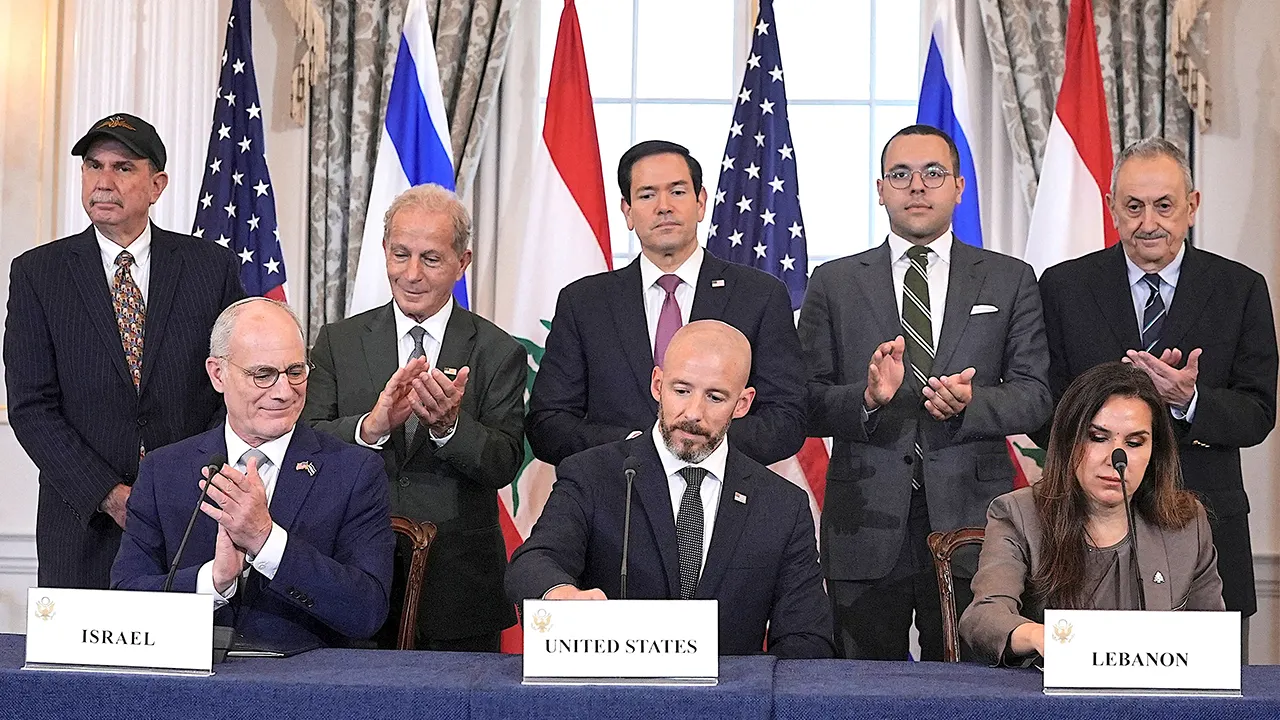
U.S. Secretary of State Marco Rubio announced a U.S.-brokered framework agreement between the governments of Israel and Lebanon intended as a first step toward lasting peace and security. Israeli Prime Minister Benjamin Netanyahu and Lebanon’s president publicly welcomed the framework; U.S. and Israeli officials described it as a rebuff to Iranian influence in southern Lebanon. Experts and commentators called the agreement historic if implemented, noting it is the first direct Israel–Lebanon agreement since 1983. The framework aims to limit armed actors like Hezbollah in southern Lebanon and could open a path toward diplomatic normalization, but implementation details and enforcement were not spelled out in the article. Several analysts warned Iran and Hezbollah are likely to oppose or try to sabotage the pact, that disarming Hezbollah poses political and security challenges inside Lebanon, and that the accord may amount to a ceasefire rather than a comprehensive peace. Voices quoted include victims of Hezbollah kidnappings, regional policy experts, and U.S. officials; the piece also notes prior escalations involving Hezbollah and Israel since Oct. 7, 2023 and after U.S.-Israeli strikes on Iran.
Biblical Reflection
From a Christian perspective, the announcement is a hopeful development because peacemaking aligns with the call to seek peace and protect the vulnerable. At the same time Christians should practice sober discernment: the reporting foregrounds political leaders and hawkish actors and frames the agreement primarily as a geopolitical defeat of Iran, which may underplay the complex internal Lebanese realities and the legitimate concerns of civilians on both sides. The article leans toward a security-first worldview—prioritizing state sovereignty and disarmament of nonstate armed groups—while giving less space to longer-term reconciliation, justice, and reconciliation measures that sustain peace. Christians should welcome steps that reduce violence and restore dignity to civilians, but also resist triumphalism, scapegoating, or dehumanizing rhetoric about political opponents. Pray for truthfulness from negotiators, protection for civilians, humility from leaders, and commitments to justice and institution-building in Lebanon so the framework can move beyond a temporary ceasefire toward lasting reconciliation.
Scripture in context
This outlook does not yet include contextual Scripture citations. Do not treat a general biblical theme as an exegetical conclusion.
Faithful Response
No prescribed response is offered. Consider the reflection prompts below in your own church context.
Reflection and Discussion
- 1Whose voices are centered in this coverage—national leaders and foreign backers, or ordinary Lebanese and Israeli civilians affected by the fighting?
- 2How does framing the agreement chiefly as a setback for Iran shape our judgment about its prospects and the needs of Lebanese sovereignty?
- 3What institutional and moral work (disarmament, rule of law, economic opportunity, reconciliation) must follow any framework for it to become durable?
Sources
Reporting links are evidence inputs; Sanctuary News' biblical reflection is commentary.
This outlook currently relies on fewer than two linked sources. Broaden verification before teaching from it.
- 1.Original reportprimary