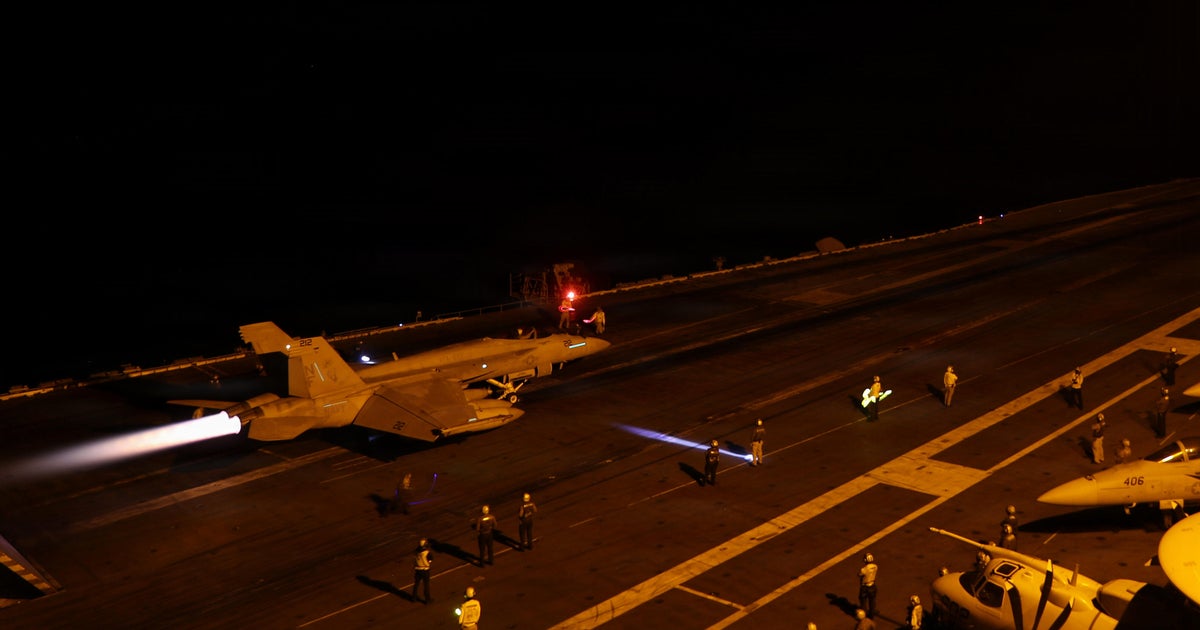
News Summary
U.S. Central Command (CENTCOM) announced that U.S. strikes hit rocket launchers on Larak Island in the Strait of Hormuz. Iranian authorities publicly said they struck what they described as U.S. bases in Jordan. The BBC reported that the strike on Larak Island killed two people and injured two others. Reporting relies chiefly on official statements and a small number of major outlets; independent, on-the-ground verification of some claims (notably Iran’s asserted strikes in Jordan and the identities/status of the casualties on Larak Island) is not present in the supplied coverage.
Source and Framing Analysis
Key sources in the supplied coverage present competing official claims and a few distinct details: CBS News relayed CENTCOM’s announcement about U.S. strikes on rocket launchers and also reported Iran’s claim that it struck U.S. bases in Jordan; the BBC supplied casualty figures for the Larak Island strike (two killed, two injured) but the excerpt did not attribute those figures to a named local source; PBS reported broader consequences including missile launches, a spike in oil prices, and that President Trump shared an AI-generated video (PBS is the only supplied outlet noting the AI-video detail). Framing patterns and limitations: (1) Attribution is generally preserved—actions are presented as claims by CENTCOM or Iran—so readers can see competing narratives; (2) Official voices dominate (military and government statements), while local witnesses, neutral observers, and humanitarian actors are largely absent from the supplied texts; (3) Human-impact data (the BBC casualty numbers) appear but lack clear sourcing in the supplied excerpt; (4) There is asymmetry in corroboration: CENTCOM’s announcement is reported as an official claim, Iran’s reported strikes in Jordan remain unconfirmed by independent sources in the supplied reporting, and some high-impact details (casualties, economic effects, AI-generated media) are reported by single outlets. Readers should treat operational claims and casualty figures as attributed reports pending further independent verification and note which voices are present and missing.
Free every morning
Get the Daily Briefing
The stories shaping today—sourced carefully and considered through Scripture. No outrage bait.
Confirm by email. Unsubscribe at any time.
How sources covered this story
Sanctuary separately assesses reporting quality and alignment with Christian virtues. The virtues assessment considers truthfulness, dignity, compassion, justice, peacemaking, humility, and care for vulnerable people. It does not assess a publisher's faith or reward religious language.
Compare 3 reports
Rank 1
PBS NewsHour: U.S. and Iran trade strikes for first time in weeks over Strait of Hormuz controlReporting 72/100Virtues 76/100
- Distinctive contribution
- Reports the involvement of an AI-generated video shared by President Trump and links the exchange of fire to missile launches and a spike in global oil prices.
- Framing
- Framed to emphasize increased regional tension ('The Middle East is again on edge') and links military action to economic consequences; mixes factual summary with a somewhat alarming tone.
- Omissions or uncertainty
- No specific dates or locations for the exchange of fire, no source attribution for missile launches or oil-price data, no casualty information, and no sourcing for the claim that the video is AI-generated.
- Why these scores
- Concise and newsworthy: it names a high-impact detail (AI-generated video) and ties military events to market effects. However, it lacks granular sourcing, timing, and attribution for key claims and does not provide evidence for the AI-generation assertion in the supplied excerpt. Neutral, non‑sensational reporting of events and reactions that does not dehumanize parties; highlights a potentially misleading media artifact (AI video) which is relevant to truthfulness and humility. Score is moderated because the excerpt lacks attribution and fuller context.
Reporting 74/100Virtues 74/100
- Distinctive contribution
- Specifies that Iran reported striking U.S. bases in Jordan and that CENTCOM described strikes targeting rocket launchers on an Iranian island in the Strait of Hormuz.
- Framing
- Matter-of-fact, transactional framing that conveys sequential claims by the two parties (Iran's claim and CENTCOM's announcement) without evident editorializing in the excerpt.
- Omissions or uncertainty
- No timing, no independent verification of Iran's claim, no detail on damage or casualties, and no sourcing for CENTCOM's announcement beyond the label.
- Why these scores
- Clear attribution (Iran says ... after CENTCOM announced ...) and useful specificity about locations. The excerpt is short and leaves important verification and contextual details unspecified, but it responsibly distinguishes claims by different actors. Neutral, factual presentation that preserves distinctions between competing claims (promoting truthfulness and humility). Lacks explicit compassion language or context about civilian harm, so score is moderate.
Reporting 68/100Virtues 73/100
- Distinctive contribution
- Names Larak Island as the site of the attack and reports two deaths and two injuries, plus notes this was the first known US strike since late July.
- Framing
- Straightforward casualty reporting with a temporal frame (first known US strike since late July) that implies escalation but remains concise and factual in the excerpt.
- Omissions or uncertainty
- No sourcing or attribution for casualty numbers, no information on who conducted the strike (explicitly says 'US strike' but the excerpt doesn't show sourcing), no timing beyond 'since late July' and no broader context or eyewitness detail.
- Why these scores
- Provides important factual details (location, casualties), but the excerpt lacks attribution for casualty figures and the basis for labeling this the 'first known US strike since late July.' Useful but limited by absence of sourcing and context in the supplied text. Focuses on human harm (deaths and injuries), which aligns with concern for vulnerable people and truthfulness. The excerpt is factual and non‑dehumanizing, but it does not provide additional empathetic context or sourcing that would raise the score further.
Biblical Reflection
This exchange should be named honestly as an escalation with moral weight and likely human cost. Christians are called to center truth, mercy, justice, peacemaking, humility, human dignity, and care for vulnerable neighbors in responses to these events. That means: pray for truth and restraint from leaders on all sides; lament and offer pastoral care for people harmed or anxious; advocate for protection of civilians and humanitarian access; resist triumphalism and dehumanizing language; and press for independent verification before amplifying claims. Practically, faith communities can organize informed prayer, coordinate with reputable relief agencies if humanitarian needs are confirmed, offer counseling for trauma or news-fatigue, and publicly urge diplomatic avenues to reduce further harm.
Scripture in context
- 1Matthew 5:9 — Part of the Sermon on the Mount, addressing the ethic of the kingdom and the call to be peacemakers amid conflict and injustice. — This passage calls Christians to value and pursue peace actively; applied to these strikes it encourages prayerful advocacy for de-escalation, compassionate care for victims, and resisting impulses that glorify retaliation or harden hearts.
Faithful Response
Pray specifically for those killed, injured, displaced, and for wisdom for leaders and military commanders on all sides.
Avoid amplifying unverified claims; share only well-sourced updates and correct misinformation when encountered.
Support reputable humanitarian organizations assisting civilians affected by conflict in the region and prepare congregational giving or relief plans if needs are confirmed.
Provide pastoral care: hold congregational lament services, offer counseling for anxiety or trauma, and create spaces for honest conversation that resist politicization.
Advocate publicly and privately for de-escalation, protection of civilians, and transparent investigation of reported incidents; press civic and faith leaders to prioritize nonviolent conflict-mitigation where possible.
Free every morning
Get the Daily Briefing
The stories shaping today—sourced carefully and considered through Scripture. No outrage bait.
Confirm by email. Unsubscribe at any time.
Reflection and Discussion
- 1How does reliance on official military statements versus on-the-ground reporting shape who we see as responsible and who we see as a victim in this exchange?
- 2In what ways should concern for civilian life, including noncombatants on islands and in nearby states, shape our personal and congregational responses to these reports?
- 3What concrete steps can our congregation take to offer tangible care for people harmed by this exchange (prayer, giving, advocacy, hospitality to refugees) while avoiding partisan posturing?
- 4What questions should we ask news outlets and leaders to press for independent verification, humanitarian access, and efforts to contain escalation rather than seek revenge?
Sources
Reporting links are evidence inputs; Sanctuary News' biblical reflection is commentary.
- 1.U.S. and Iran trade strikes for the first time in a monthprimary_reporting
- 2.US and Iran trade strikes for first time in weeksadditional_reporting