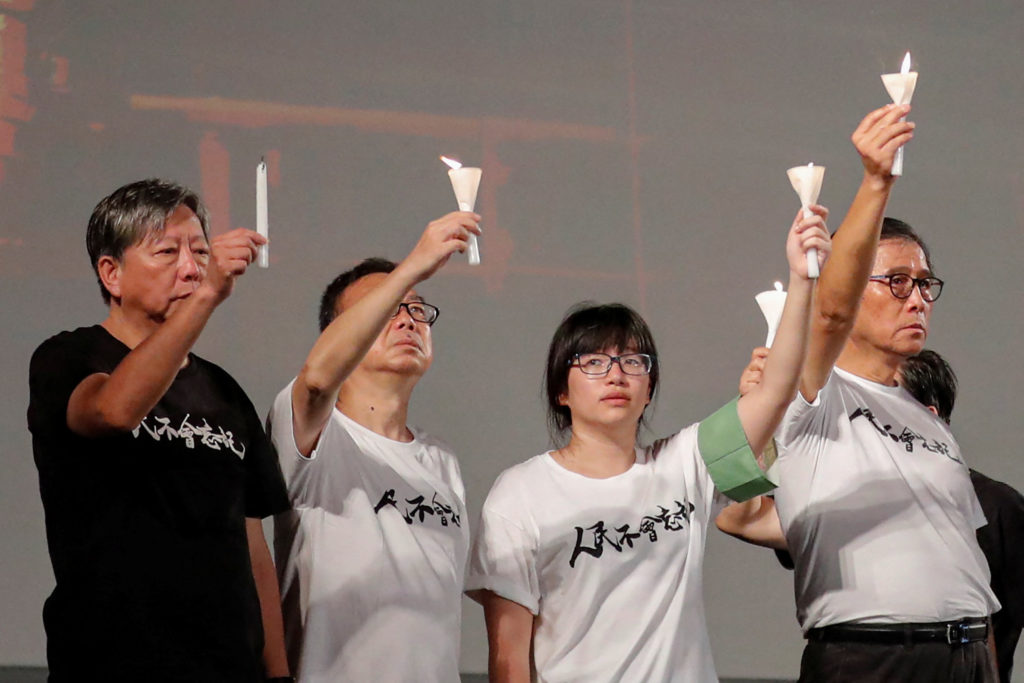
News Summary
PBS NewsHour reports that Lee Cheuk-yan and Chow Hang-tung, former leaders of the Hong Kong Alliance in Support of Patriotic Democratic Movements of China, were convicted in a national security case. The report says they had been charged in 2021 with inciting subversion under a China-imposed national security law. The article situates these prosecutions in the broader context of the law's constraining effect on Hong Kong's pro-democracy movement. The supplied reporting does not include trial transcripts, sentencing details, the specific counts or evidence, statements from defendants or prosecutors, or a government response, leaving important factual gaps.
Source and Framing Analysis
Primary source: PBS NewsHour (single supplied report). What the source contributes: clear naming of the two individuals (Lee Cheuk-yan and Chow Hang-tung), their affiliation as former leaders of the Hong Kong Alliance, the charge label (inciting subversion) and the year the charges were filed (2021), and a contextual framing that the national security law is China-imposed and has sharply curtailed the city's pro-democracy movement. Framing and evaluative language: the phrase that the law has "effectively crushed" the movement is evaluative framing present in the report. Gaps and limitations: the supplied excerpt and reporting lack conviction dates and sentencing information, the court’s factual findings or evidentiary summary, direct quotations from the accused, defense counsel, prosecutors, or Hong Kong/mainland authorities, and any documentation (court filings or transcripts) that would support legal specifics. The headline indicates convictions while the excerpt emphasizes the 2021 charges; the available text does not supply primary court records to corroborate conviction details. Because only one report is supplied, alternative accounts or official rebuttals are not present in the material and therefore cannot be treated as corroborated here.
How sources covered this story
Sanctuary separately assesses reporting quality and alignment with Christian virtues. The virtues assessment considers truthfulness, dignity, compassion, justice, peacemaking, humility, and care for vulnerable people. It does not assess a publisher's faith or reward religious language.
Compare 1 reports
Rank 1
PBS NewsHour: 2 organizers of Hong Kong's Tiananmen vigils convicted in national security caseReporting 78/100Virtues 82/100
- Distinctive contribution
- Provides the specific names (Lee Cheuk-yan and Chow Hang-tung), their organizational affiliation and leadership role, the criminal charge (inciting subversion), the year of the charges (2021), and a succinct characterization that the national security law has effectively crushed Hong Kong's once-thriving pro-democracy movement.
- Framing
- Presents the facts concisely with a critical contextual framing that the China-imposed national security law has effectively crushed the city's pro-democracy movement; the phrasing is factual but includes an evaluative characterization of the law's impact.
- Omissions or uncertainty
- The excerpt does not provide details of the convictions (dates, sentences), evidence or specifics of the alleged conduct, statements from the accused or their lawyers, government justification or attribution, sources or reporting methods, or international reactions. It also states they were "charged in 2021" while the article title references convictions—this excerpt does not itself confirm conviction or sentencing.
- Why these scores
- The supplied excerpt is concise and fact-focused: it names actors, specifies the charge and situates it within the national security law's broader effect. It responsibly conveys a clear point without sensational language. Deductions reflect the brevity and lack of immediate attribution, sourcing, and detail about the legal outcome and evidentiary basis in the excerpt. The excerpt uses non-dehumanizing language, highlights harm to a civic movement, and treats the subjects as named individuals with roles—aligning with honesty and respect for human dignity. It refrains from inflammatory rhetoric. Points are modestly reduced because the excerpt lacks explicit attention to the accused individuals' circumstances, suffering, or voices that would demonstrate stronger compassion or restorative-justice emphasis.
Biblical Reflection
A Christian response should hold together commitments to truth, mercy, justice, peacemaking, humility, and care for vulnerable neighbors. Factually, the reporting—if accurate—shows state action that narrows civic space and penalizes organizers of a longstanding public commemoration. Spiritually and pastorally, believers are called to lament the suffering of those harmed by political repression, to seek truthful understanding rather than partisan simplification, and to pursue practical care (legal aid, family support, pastoral counseling) for affected people. Christians should avoid triumphalism or vilification; instead bear witness to human dignity, advocate for fair legal process, and pray for wisdom for leaders and protection for the vulnerable. Such an outlook recognizes legitimate concerns about public order while insisting that security claims not be used to silence conscience and peaceful assembly.
Scripture in context
- 1Isaiah 1:17 (theme) — Isaiah calls God's people to learn to do good, seek justice, correct oppression, and defend the afflicted in a period of moral and institutional failure. — Applied to this story, the passage urges Christians to notice when civic institutions silence dissent or harm the vulnerable and to respond with practical care for those affected and principled advocacy for justice.
- 2Micah 6:8 (theme) — Micah summarizes God’s expectations as doing justice, loving mercy, and walking humbly with God. — This guidance shapes a balanced Christian posture here: pursue justice for those harmed, show mercy to all persons involved, and practice humility in public witness and judgment.
Faithful Response
Pray for Lee Cheuk-yan, Chow Hang-tung, their families, and others affected by these prosecutions; pray also for judges, lawyers, and leaders to act with integrity and compassion.
Seek reliable, multiple-source reporting before drawing firm conclusions; be cautious about amplifying unverified claims or partisan rhetoric.
Support vetted organizations that provide legal assistance, humanitarian relief, and pastoral care to people harmed by political repression when appropriate and safe.
Create compassionate pastoral spaces for congregants with ties to Hong Kong to lament, ask questions, and receive counsel without forcing political conformity.
When speaking publicly, model truthfulness and restraint: name injustices where warranted, avoid dehumanizing language, and prioritize protection of vulnerable neighbors over partisan ends.
Reflection and Discussion
- 1What does this case teach me about the limits of state power and the biblical call to defend the vulnerable?
- 2How can my congregation provide concrete pastoral and material support to people affected by political repression while avoiding partisan entanglement?
- 3Which sources will I consult to distinguish confirmed facts from evaluative framing in reports about national security and civil liberties?
- 4How do we hold both a concern for public order and a commitment to free conscience and peaceful assembly in tension without defaulting to simplistic slogans?
Sources
Reporting links are evidence inputs; Sanctuary News' biblical reflection is commentary.
This outlook currently relies on fewer than two linked sources. Broaden verification before teaching from it.
Download source notes