News Summary
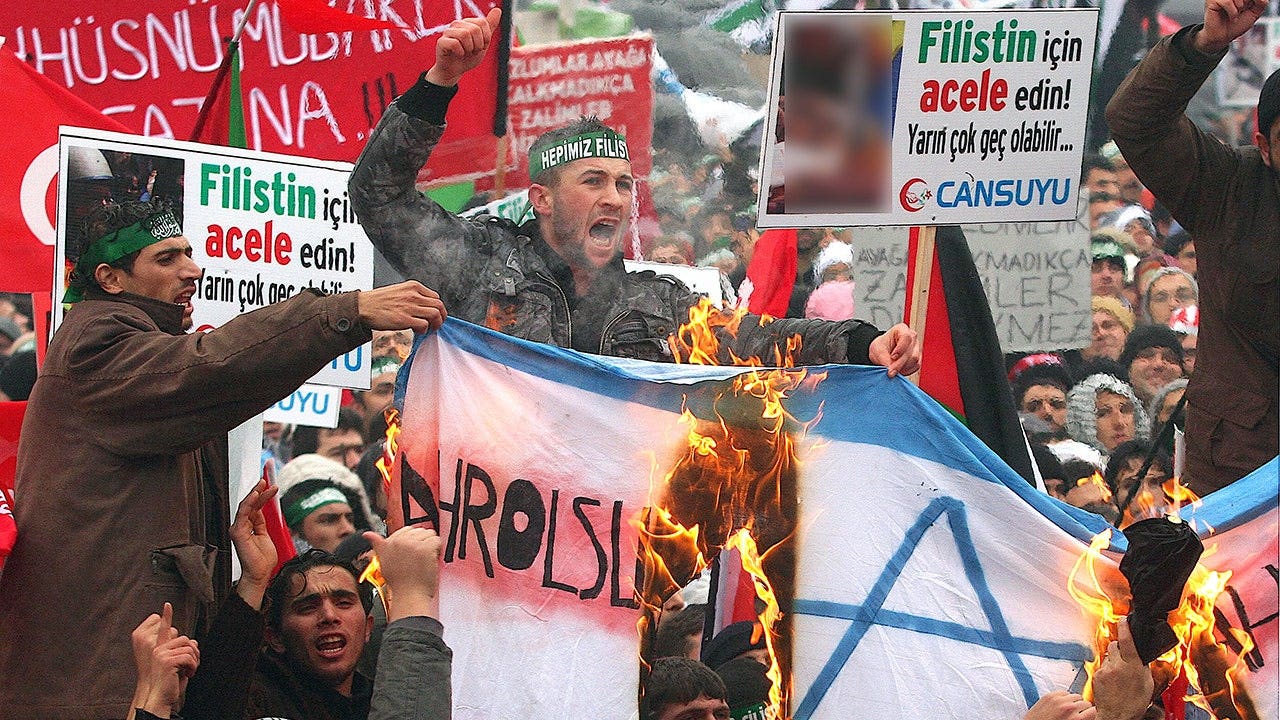
At a NATO summit in Ankara, Turkish Foreign Minister Hakan Fidan told CNN Türk on July 2 that Israel has “become a burden that humanity can no longer bear,” statements later publicized by several outlets. Israeli Foreign Minister Gideon Sa’ar characterized Fidan’s remark as dehumanizing and likened it to rhetoric that precedes mass violence. Analysts and critics quoted in the article — including Sinan Ciddi of the Foundation for Defense of Democracies — described the Turkish leadership’s public statements about Israel as escalatory and, in some cases, antisemitic. The article cites prior harsh comments from President Recep Tayyip Erdoğan and other Turkish ministers calling Israel a “terror state” or using violent imagery, while also noting Erdoğan has at times publicly condemned antisemitism. A June Pew Research poll is referenced showing very high levels of unfavorable opinion toward Israel among the Turkish public. The U.S. State Department is quoted as affirming continued engagement with Türkiye as a NATO ally; Turkish officials did not respond to Fox News Digital’s request for comment. The piece situates this rhetoric alongside broader summit topics such as Iran, Russia’s war in Ukraine, and NATO defense spending.
Biblical Reflection
Christian discernment should recognize two truths at once: dehumanizing language toward any people is morally wrong and dangerous, and sober geopolitical realities make such rhetoric consequential beyond words. The article documents repeated hostile statements by senior Turkish officials toward Israel and includes credible reactions that label some comments as dehumanizing or antisemitic. At the same time, the piece is sourced through a U.S. news outlet that predominantly cites critics and Western analysts; it includes limited direct response from Turkish authorities and does not fully separate criticism of Israeli policy from rhetoric aimed at Jewish people, which risks conflating political opposition with ethnic or religious hatred. From a pastoral perspective, Christians are called to oppose hatred and protect vulnerable communities, to speak truth without vengeance, and to pursue peace where possible. Dehumanizing language corrodes neighbor-love, increases the risk of violence, and weakens the trust needed for alliance diplomacy and conflict resolution. Readers should weigh the documented statements and poll data seriously while noting the article’s emphasis on critical voices and the absence of a fuller range of Turkish perspectives.
Scripture in context
This outlook does not yet include contextual Scripture citations. Do not treat a general biblical theme as an exegetical conclusion.
Faithful Response
No prescribed response is offered. Consider the reflection prompts below in your own church context.
Reflection and Discussion
- 1Are the statements described targeting a government’s policies or describing a whole people, and how does that distinction change the moral assessment?
- 2What perspectives or facts are missing in this coverage (e.g., Turkish government responses, broader regional context) that would help you judge intent and consequence?
- 3How should Christian communities balance speaking prophetically against hatred with pursuing reconciliation and protecting vulnerable neighbors?
Sources
Reporting links are evidence inputs; Sanctuary News' biblical reflection is commentary.
This outlook currently relies on fewer than two linked sources. Broaden verification before teaching from it.
- 1.Original reportprimary