News Summary
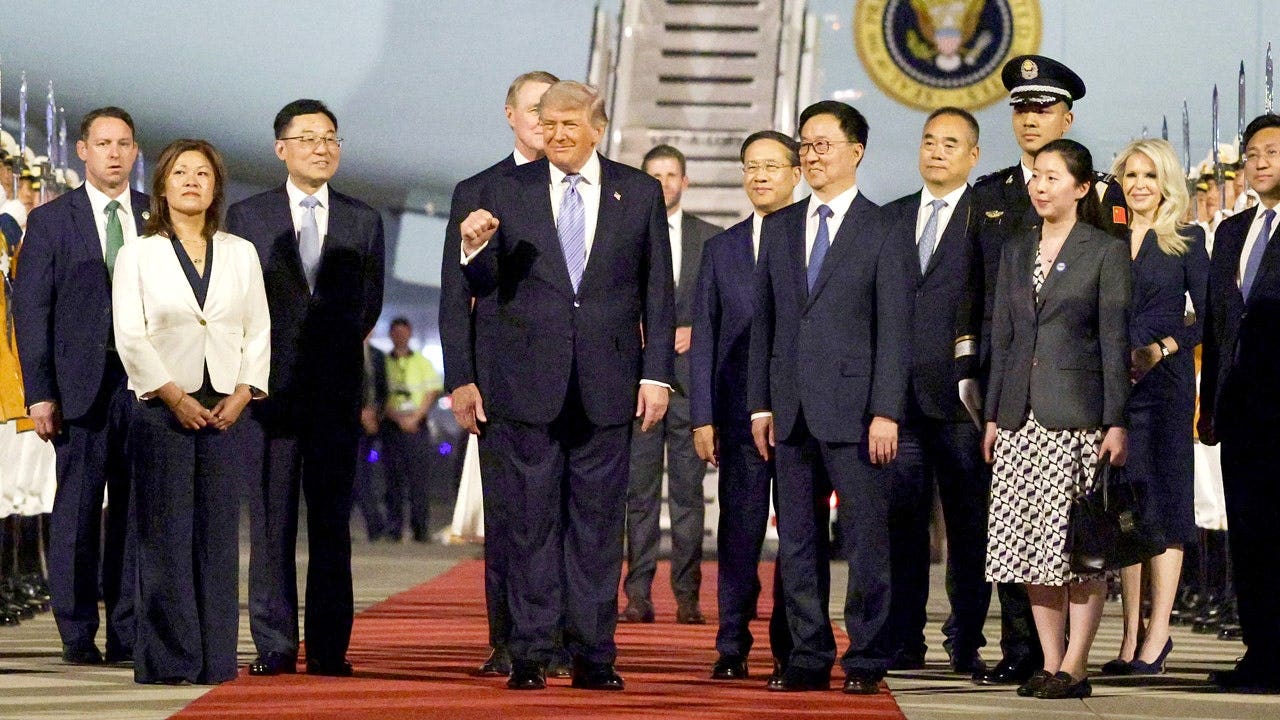
This Fox News opinion piece (by Robert Maginnis) covers President Donald Trump’s visit to Beijing on May 13–14, 2026 for a two‑day summit with Chinese President Xi Jinping. Reported discussion topics include tariffs, trade, artificial intelligence (AI), semiconductors, rare earths, computing infrastructure, Taiwan, Iran, and military stability. The article frames the meeting as a high‑stakes contest for technological and geopolitical influence—characterizing U.S.–China rivalry as a “new Cold War” focused on chips, data, automated systems, and digital control rather than nuclear arms. It cites concerns about Chinese industrial policy, surveillance exports (e.g., “Safe City” platforms), and allegations of large‑scale efforts to extract U.S. AI capabilities via fraudulent accounts (referencing claims by U.S. officials and companies such as Anthropic). The piece warns against concessions on Taiwan or strategic compromises that could weaken U.S. leverage, notes China’s ties to Iran and energy leverage following disruptions in the Strait of Hormuz, and emphasizes the stakes for U.S. allies. It concludes by urging American clarity, resolve, and strategic patience. The article is an opinion column drawing on the author’s military/security background and on reporting from outlets like Reuters and statements from U.S. officials.
Biblical Reflection
A Christian reading should first distinguish factual reporting from opinion and advocacy. The article raises legitimate national‑security questions: AI, semiconductors, surveillance technology, intellectual‑property theft claims, and Taiwan’s strategic role are real issues requiring sober policy attention. At the same time, this is an opinion piece on a conservative news platform written by a former military officer and national‑security fellow; its language and metaphors (e.g., “new Cold War,” “battlefield”) reflect a security‑first worldview that can amplify threat perceptions and push toward zero‑sum framing. Christians should test such framing against truth and prudence: be alert to selective sourcing, emotive rhetoric, and the tendency to simplify complex diplomatic choices into binary moral narratives. Biblically, wisdom calls for both stewardship and restraint—protecting the vulnerable and pursuing peace (Romans 12:18), while exercising prudent vigilance (Proverbs 27:12). The article aligns with the biblical duty to seek justice and defend the innocent (e.g., protecting allies and preventing exploitation), yet Christians must avoid letting fear or nationalism override commitments to truth, reconciliation, and the image of God in all peoples. Pray for leaders to have wise counsel, for transparent evidence where accusations are made, and for policy decisions that honor both security and the common good. Finally, hold competing goods in tension: deterrence and diplomacy, firmness and mercy, technological stewardship and ethical restraint.
Scripture in context
This outlook does not yet include contextual Scripture citations. Do not treat a general biblical theme as an exegetical conclusion.
Faithful Response
No prescribed response is offered. Consider the reflection prompts below in your own church context.
Reflection and Discussion
- 1What assumptions or strategic lenses (e.g., militarized, economic, ideological) shape how this article frames U.S.–China relations, and which facts are highlighted or downplayed as a result?
- 2Where does prudence call for firmness versus where might Christian witness call for restraint, truthful engagement, and careful verification of claims about wrongdoing?
- 3How can Christians distinguish legitimate concern for global security from fear‑driven rhetoric that dehumanizes another people or collapses complex diplomatic choices into moral absolutes?
Sources
Reporting links are evidence inputs; Sanctuary News' biblical reflection is commentary.
This outlook currently relies on fewer than two linked sources. Broaden verification before teaching from it.
- 1.Original reportprimary