News Summary
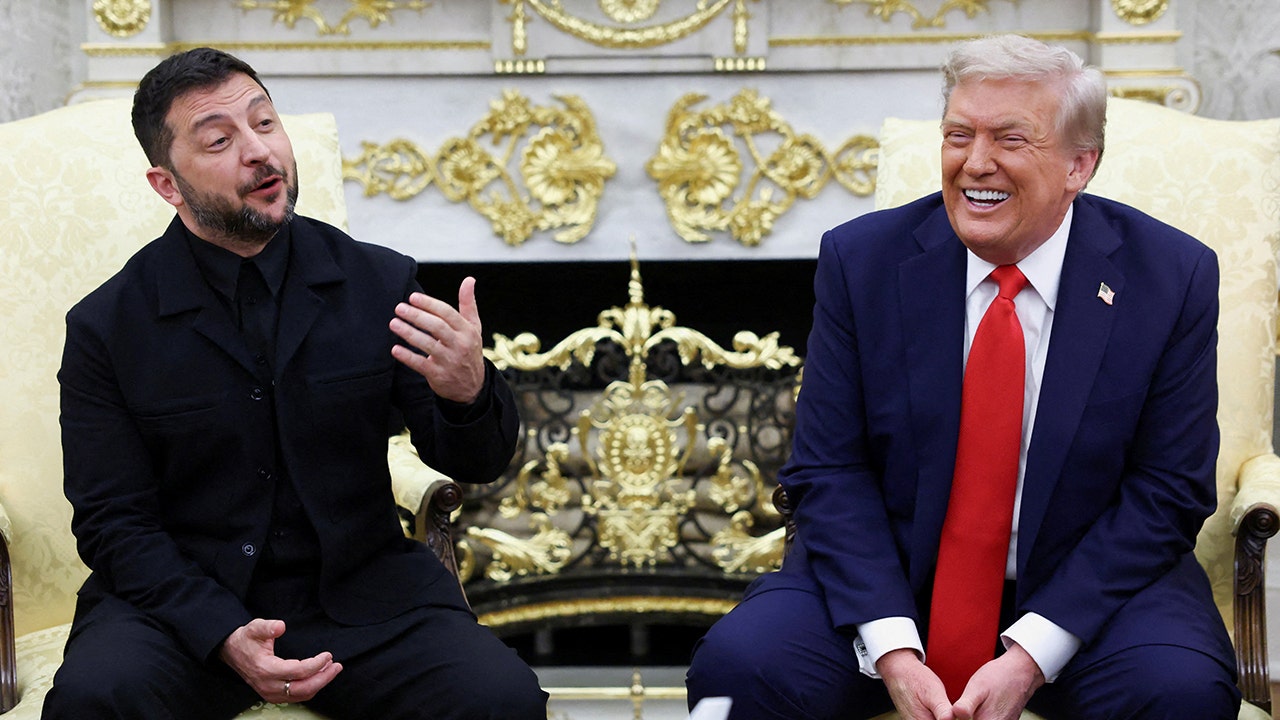
This Fox News opinion piece argues that recent Ukrainian battlefield gains and a positive meeting between President Donald Trump and President Volodymyr Zelenskyy at the G7 indicate a shift in the Trump administration’s approach to the Russia–Ukraine war. The author cites statements by U.S. officials (including Marco Rubio, Pete Hegseth, and Ambassador Dan Negrea) describing Russia’s invasion as a strategic failure and notes Ukraine’s outreach to Gulf states offering help against Iranian drones. The piece warns that Russian threats often follow Ukrainian advances and says strong U.S. commitments to NATO would deter Moscow and sustain European weapons support for Ukraine. The article cites media reports that a Pentagon staffer said the U.S. will reduce strategic assets assigned to NATO and recounts recent Pentagon actions: a planned removal of 5,000 troops from Germany, cancellation of some long-range weapon deployments and rotational brigades in Eastern Europe (with at least one reversal after intervention), and the cancellation of a planned long-range strike brigade. The author urges the Trump administration to maintain and reallocate U.S. forces in Europe, deploy Tomahawk missiles and long-range capabilities to Germany, encourage allies to buy U.S. arms, reverse cancellations, and robustly back NATO ahead of the 2026 summit. The piece is authored by Rebeccah Heinrichs of the Hudson Institute and appears as opinion content on Fox News.
Biblical Reflection
This is an advocacy opinion that emphasizes deterrence and alliance reassurance. Its core claim—that a credible U.S. commitment to NATO can deter further Russian coercion—is a longstanding strategic argument with real plausibility, but the piece selectively emphasizes military tools and risks downplaying other costs and escalation risks. The article displays clear policy preferences: favoring forward posture, weapons sales, and visible commitments while critiquing withdrawals or perceived risk aversion. As Christian readers, we should test both the factual claims (troop movements, cancellations, public statements) and the implied assumptions (that stronger posture will reliably produce de-escalation and that transactional pressure on allies is prudent). Christian wisdom calls for protecting the vulnerable and pursuing peace, but also for humility about the limits of power and the unseen consequences of military escalation. The article rightly highlights the need to defend nations under attack and to keep commitments to allies, which aligns with neighbor-love and justice; yet it also reflects a worldview that prizes strategic strength and deterrence as primary means to peace. Discernment requires balancing the legitimate moral urgency to stop aggression with careful attention to prudence, the humanitarian cost of war, and the importance of honest, non-partisan evaluation of policy claims.
Scripture in context
This outlook does not yet include contextual Scripture citations. Do not treat a general biblical theme as an exegetical conclusion.
Faithful Response
No prescribed response is offered. Consider the reflection prompts below in your own church context.
Reflection and Discussion
- 1Whose security and suffering are centered in this argument — Ukraine’s civilians, allied publics, U.S. political interests, or the defense industry?
- 2Which assumptions about deterrence and escalation are presented as givens, and what evidence would you seek to test them?
- 3How would a posture of strength be paired with active diplomacy and care for those harmed by the conflict to reflect both justice and mercy?
Sources
Reporting links are evidence inputs; Sanctuary News' biblical reflection is commentary.
This outlook currently relies on fewer than two linked sources. Broaden verification before teaching from it.
- 1.Original reportprimary