News Summary
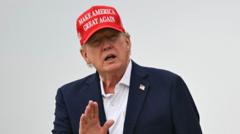
BBC reported that, in a Fox News interview, President Trump said he threatened to bomb Oman if it "gets in the way" on an Iran-related matter and also asserted the U.S. maintained a direct backchannel with Iran's Islamic Revolutionary Guard Corps (IRGC); the BBC noted the IRGC denied such a backchannel. Separately, CBS reported that a 60-day negotiating window between the U.S. and Iran to reach a deal and reopen the Strait of Hormuz expired with no agreement. The most consequential claims (the threat to Oman and the alleged IRGC backchannel) are attributed to Trump; independent confirmation, a Fox News transcript/clip, and any response from Omani authorities are not included in the supplied sources.
Source and Framing Analysis
Primary reporting here rests on two supplied items with different emphases. BBC attributes the provocative statements to President Trump from a Fox News interview and inserts the IRGC denial, which frames the piece around competing claims. CBS supplies situational context about stalled U.S.–Iran negotiations and the expired 60-day window, but does not confirm the Oman threat or the backchannel. Key framing issues and gaps: (1) reliance on a single reported interview for the most consequential allegation without a supplied transcript or clip limits verification of wording and tone; (2) the BBC responsibly records the IRGC denial but provides no U.S. government confirmation or Omani response in the supplied excerpts; (3) CBS contextualizes diplomatic stakes but omits sourcing and details about the negotiations. These sourcing and framing choices matter because attribution of a literal threat to a neutral Gulf state and confirmation of secret backchannels would carry very different legal, diplomatic, and humanitarian consequences than rhetorical or mistaken claims.
How sources covered this story
Sanctuary separately assesses reporting quality and alignment with Christian virtues. The virtues assessment considers truthfulness, dignity, compassion, justice, peacemaking, humility, and care for vulnerable people. It does not assess a publisher's faith or reward religious language.
Compare 2 reports
Reporting 78/100Virtues 78/100
- Distinctive contribution
- Reports that the president told Fox News the U.S. had a direct backchannel with the Islamic Revolutionary Guard Corps and that the IRGC denies this.
- Framing
- Concise, attribution-based framing: presents the president's assertion and immediately gives the IRGC denial. Uses neutral wording but a vague pronoun ('something it denies') creates slight ambiguity.
- Omissions or uncertainty
- No date/time or fuller context for when or why the claim was made.No direct quote from the president or from the IRGC is provided in the excerpt.No supporting evidence or corroboration of the alleged backchannel is offered.Pronoun 'it' is slightly ambiguous in isolation (though likely refers to the IRGC).No U.S. government response or independent verification included.
- Why these scores
- The excerpt responsibly attributes the controversial claim to the president and records the IRGC denial, which is appropriate and clear. It is concise and avoids sensational language. Points are lost for lack of direct quotes, contextual detail (timing, sources), and absence of corroboration. The excerpt is truthful in attributing claims and includes the opposing denial, which respects accuracy and fairness. It avoids dehumanizing language and does not exploit suffering. Score reduced slightly because the excerpt lacks broader context or attention to potential consequences for affected people.
Reporting 74/100Virtues 75/100
- Distinctive contribution
- States that the 60-day deadline for U.S.–Iran talks to produce a peace deal and reopen the Strait of Hormuz is expiring and that no agreement is in sight.
- Framing
- Matter-of-fact, succinct framing that emphasizes the deadline and the lack of an agreement; implies stalemate without editorializing.
- Omissions or uncertainty
- No attribution for who set the 60-day deadline or when it began.No details on what was being negotiated or what terms were under consideration.No sourcing, quotes, or evidence supporting the status claim in the excerpt.No information on likely next steps or immediate consequences for the Strait of Hormuz.
- Why these scores
- The line is clear and useful for situational awareness and avoids sensational language. It lacks sourcing, dates, and finer detail in the excerpt, which limits its completeness but not its basic reliability as a status update. The excerpt is factual, non-inflammatory, and respectful in tone. It neither dehumanizes nor sensationalizes parties involved. Slight deduction because the excerpt does not highlight humanitarian implications or affected civilians.
Biblical Reflection
Christian judgment should distinguish truthful reporting from partisan heat. A public claim that a leader threatened a neutral interlocutor and an unverified assertion of secret backchannels raise risks to diplomacy and to civilian safety. Christians are called to truthfulness and to work for peace: we should insist leaders be held to factual accountability, pray for restraint and protection for vulnerable civilians, and press for transparent diplomacy rather than rhetoric that normalizes coercion. Mercy requires concern for those who would bear the costs of escalation; justice and peacemaking urge advocacy for negotiation, clear facts, and protections for noncombatants.
Scripture in context
- 1Matthew 5:9 — Jesus teaches in the Sermon on the Mount about how his followers are to live amid conflict and promises that peacemakers are recognized as God's children. — This story invites Christians to prioritize peacemaking—advocating for de-escalation, truthful speech by leaders, and protection for neutral parties—rather than celebrating aggressive rhetoric.
- 2Romans 12:17-18 — Paul instructs believers not to repay evil for evil and to seek peace with all people as far as it depends on them. — Even when security concerns are real, Christians should press for peaceful, just responses and resist language or actions that unnecessarily inflame conflict.
Faithful Response
Pray for leaders, diplomats, and civilians in Oman, Iran, and neighboring states; ask for wisdom, restraint, and protection for noncombatants.
Seek and share verified reporting before repeating serious claims; request primary sources such as the Fox News interview clip or transcript and any official statements from Omani or U.S. authorities.
Advocate to elected representatives for transparent diplomacy, verification of claims about threats and backchannels, and humanitarian measures to protect civilians and maritime commerce if tensions rise.
Refuse to amplify unverified threatening rhetoric on social platforms; instead, encourage sober analysis and prayerful engagement.
Prepare pastoral and practical care for congregants anxious about war, and support reputable relief organizations that assist civilians affected by Gulf tensions.
Reflection and Discussion
- 1How should Christians respond when a political leader's public language may increase the risk of harm to a neutral country or to civilians?
- 2What standards of evidence and accountability should we require before accepting or repeating claims of secret diplomacy or military threats?
- 3In what ways does the call to be peacemakers shape our public posture when national security rhetoric polarizes a congregation?
- 4How can congregations support truth, mercy, and care for vulnerable neighbors in moments of international tension?
Sources
Reporting links are evidence inputs; Sanctuary News' biblical reflection is commentary.
- 1.Trump threatens to bomb Oman if it 'gets in the way' over Iran issueprimary_reporting
- 2.Trump threatens Oman, Iran war in stalemate as 60-day talks window endsadditional_reporting