News Summary
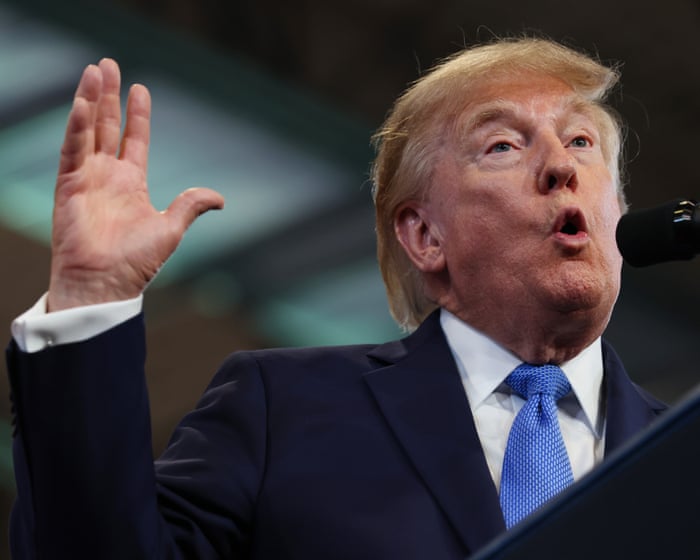
Several news outlets report that President Donald Trump made attention‑getting public remarks about the Strait of Hormuz. The Guardian reported he said he would “pretty soon” designate the Strait of Hormuz “a territory of the United States” during a speech at a police academy on Long Island; that report noted the strait is a critical global shipping chokepoint (roughly one‑fifth of seaborne oil transit) and said it was unclear whether the remark signaled any formal change in U.S. policy. BBC reporting in the same cluster records related presidential assertions (including that the U.S. had a direct backchannel with Iran’s IRGC) and notes denials from the IRGC. CBS provided situational context that a 60‑day negotiation window tied to reopening the strait was expiring with no agreement. Key omissions across coverage include no White House policy statement formalizing the claim, no detailed legal analysis of how a unilateral U.S. claim on the strait would operate under international law, and limited allied or Iranian responses in the pieces supplied.
How sources covered this story
Sanctuary separately assesses reporting quality and alignment with Christian virtues. The virtues assessment considers truthfulness, dignity, compassion, justice, peacemaking, humility, and care for vulnerable people. It does not assess a publisher's faith or reward religious language.
Compare 4 reports
Reporting 80/100Virtues 80/100
- Distinctive contribution
- Documents a concrete factual dispute: Trump told Fox News there was a direct backchannel with the IRGC, and the excerpt records the IRGC's denial of that claim.
- Framing
- Straightforward, factual presentation of a claimed backchannel and the denial; framed as a contested assertion rather than accepted fact.
- Omissions or uncertainty
- Doesn't include the exact wording of Trump's statement, timing or context of the Fox News interview, any evidence for the backchannel claim, nor responses from US officials or independent corroboration.
- Why these scores
- Concise and responsibility-minded: the excerpt attributes the claim and records the denial, appropriately signaling uncertainty. Limited detail in the excerpt reduces depth but not basic reliability. Neutral, balanced reporting that highlights disagreement and avoids sensationalism or dehumanizing language; presents competing claims so readers can see uncertainty and contestation.
Reporting 82/100Virtues 75/100
- Distinctive contribution
- Places the comment in a different setting (Long Island police academy), records the president saying he would 'pretty soon' designate the waterway, and provides the statistic that about one-fifth of seaborne oil typically passes through the strait; also signals uncertainty about whether this is a new policy position.
- Framing
- Cautious and evaluative: flags the remark's seriousness and notes ambiguity about whether it represents an actual policy shift, while emphasizing the strait's strategic/global economic importance.
- Omissions or uncertainty
- Does not include reactions from allies or legal/operational explanations for how such a designation could be implemented; the excerpt doesn't provide evidence that the president's statement reflects formal policy or authority to make the designation.
- Why these scores
- Provides helpful context, attribution, and an economic/statistical frame that aids reader understanding; responsibly notes uncertainty about policy significance. The excerpt is thoughtful though not exhaustive. Responsible, measured reporting that highlights potential consequences and uncertainty without inflammatory language; shows attention to public-interest implications though it does not foreground humanitarian perspectives in the excerpt.
Reporting 78/100Virtues 70/100
- Distinctive contribution
- Gives the president's explicit quoted line about viewing the strait as 'an American territory', and states the US is conducting a military blockade of Iran's shipping and ports; also notes he joked about bombing Iran.
- Framing
- Frames the remarks as provocative and newsworthy, tying them to active US military measures and the broader failure to end the war with Iran; language ('jokes about bombing') signals critical/concerned tone.
- Omissions or uncertainty
- Does not provide date/time of the rally beyond 'Friday' or full verbatim of the 'joke' about bombing; offers no sourcing for the assertion of a US blockade (no official citation) nor reactions from allies, legal analysis, or Iranian response in this excerpt.
- Why these scores
- Includes a clear attributable quote and situates it within ongoing military actions and the administration's struggle to end the war, which aids reader understanding. Lacks sourcing for the blockade claim and fuller documentary context; some evaluative language introduces mild editorial tone. Reporting is direct and attributes the quote, raising public-safety concerns without dehumanizing language. The critical framing shows care for truth and potential harm, but the excerpt offers limited attention to affected civilians or humanitarian consequences.
Reporting 72/100Virtues 70/100
- Distinctive contribution
- Specifies that a 60-day deadline tied to US–Iran talks to negotiate a peace deal (and reopen the strait) is expiring without an agreement—clarifies temporal pressure on negotiations.
- Framing
- Factual, situates the situation as a stalemate and time-sensitive diplomatic failure.
- Omissions or uncertainty
- Doesn't explain who set the 60-day deadline, the terms under discussion, what reopening would require, or the consequences of failure; no primary sourcing shown in the excerpt.
- Why these scores
- A clear, concise factual update appropriate for live coverage; useful for timeline but limited in detail and sourcing in the excerpt provided. Neutral and informative reporting that avoids inflammatory language; does not explicitly address humanitarian impacts or justice concerns in the excerpt provided.
Biblical Reflection
Christian concern insists on distinguishing descriptive reporting from moral judgment while insisting on truth, mercy, justice, peacemaking, humility, dignity, and care for vulnerable neighbors. Rhetoric from leaders can have real consequences: it may inflame fears, influence military and diplomatic calculations, and place civilians and global commerce at risk. Christians should press for clarity and accountability from leaders, pray for and support diplomatic channels and de‑escalatory measures, provide pastoral care to those anxious or harmed by rising tensions, and advocate for policies that protect noncombatants and uphold international norms. Our calling is to pursue peace and justice without excusing unlawful or dangerous policy moves, and to hold public figures accountable for words that may increase peril for others.
Scripture in context
- 1Matthew 5:9 — Jesus pronounces blessing on those who make peace (Sermon on the Mount). — This passage encourages Christians to favor de‑escalation and reconciliation; applied to public rhetoric, it calls for careful speech, support for diplomacy, and prayer for those who work to prevent violence.
- 2Romans 13 (selective context) — Paul reflects on governing authorities and their role while locating civil power within moral constraints tied to justice and protection of the vulnerable. — This material invites Christians to recognize the existence of governments while evaluating leaders and policies by how they promote justice, protect civilians, and pursue the common good rather than unlawful or violent expansion of power.
Faithful Response
Pray specifically for restraint, wisdom, and de‑escalatory judgment among U.S. leaders, diplomats, regional partners, and Iranian leaders.
Seek reliable, corroborated information before sharing or reacting; avoid amplifying unverified claims or partisan interpretations.
Advocate through peaceful civic channels (contact elected representatives, support diplomatic initiatives, back humanitarian protections) for policies that minimize harm and protect civilians and maritime safety.
Provide pastoral care and clear briefings in congregations for those distressed by the rhetoric, especially veterans, immigrants, and families with ties to the region.
Support humanitarian and monitoring organizations that protect maritime commerce, humanitarian access, and civilians affected by rising tensions.
Reflection and Discussion
- 1How should Christians distinguish between provocative political rhetoric and enacted policy so we can pray and act responsibly?
- 2What does being a peacemaker look like when national leaders use escalatory language that could endanger civilians and global commerce?
- 3What concrete steps can our congregation take to care for people most likely to be harmed if tensions around the Strait of Hormuz escalate?
- 4How can we hold leaders accountable for speech that risks lives while avoiding partisan demonization?
Sources
Reporting links are evidence inputs; Sanctuary News' biblical reflection is commentary.
This outlook currently relies on fewer than two linked sources. Broaden verification before teaching from it.
- 1.Trump threatens to declare strait of Hormuz ‘territory of the United States’primary_reporting