News Summary
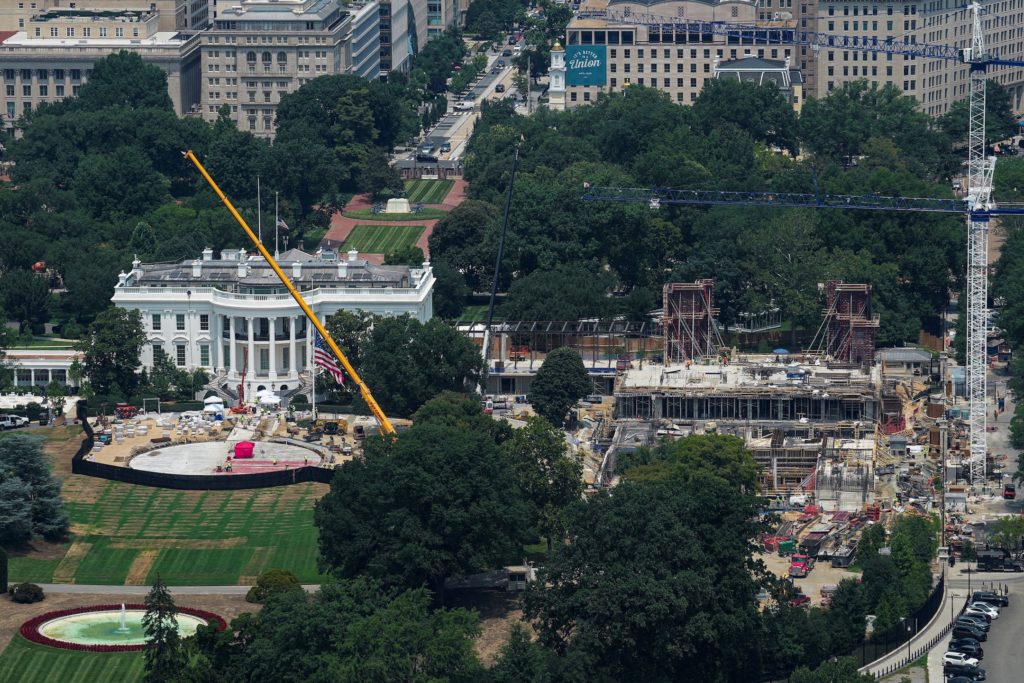
PBS NewsHour reports that President Trump is pressing ahead with construction and renovation projects in Washington, D.C., and that the White House projects alone are now estimated at least $900 million. The piece says taxpayers are funding a significant portion of those costs, contrasted with earlier public statements that private donors would cover most of the bill. The supplied excerpt does not include an itemized budget, donor contracts, or audit documentation to confirm the estimate or the precise taxpayer share.
Source and Framing Analysis
This cluster is based on a single PBS NewsHour report that frames the story around fiscal cost and public accountability. The report contributes a concrete aggregate estimate ("at least $900 million") and highlights a contrast between past public promises about private donor funding and current taxpayer involvement. The supplied excerpt does not attribute the $900 million figure to a named accounting method, source document, or breakdown of included projects or timeline. That omission leaves open material uncertainties: which projects are included in the total, how the figure was calculated, what share taxpayers will actually bear, and what donor commitments exist in writing. The framing emphasizes stewardship and potential discrepancy between promises and outcomes; readers should note the difference between the report's stated facts and the underlying documents that would fully substantiate scope and funding structure. Additional reporting or primary financial records would be needed to corroborate and detail the claims.
How sources covered this story
Sanctuary separately assesses reporting quality and alignment with Christian virtues. The virtues assessment considers truthfulness, dignity, compassion, justice, peacemaking, humility, and care for vulnerable people. It does not assess a publisher's faith or reward religious language.
Compare 1 reports
Reporting 75/100Virtues 78/100
- Distinctive contribution
- Gives a concrete cost estimate for White House construction projects (at least $900 million) and explicitly states that taxpayers are covering a significant portion despite earlier promises of private donor funding.
- Framing
- Framed around fiscal accountability and a contrast between earlier promises and current funding realities; presents the projects as ambitious and costly, implying critical scrutiny of public cost and administration commitments.
- Omissions or uncertainty
- The excerpt does not cite the source or methodology for the $900 million estimate, does not specify which projects are included, the time frame, the exact taxpayer share, nor examples or dates of the earlier promises; limited excerpt leaves uncertain who provided the estimate and what line items drive costs.
- Why these scores
- Concise, specific claim (a dollar figure) and clear angle (promise vs reality), suitable for a news brief. Score reflects responsible concise reporting but is downgraded because the supplied excerpt does not attribute the cost estimate or provide necessary detail and sourcing; the full report may address those gaps. The excerpt advances accountability and truth-seeking by highlighting a discrepancy between promises and public costs, avoids dehumanizing language, and addresses stewardship of public resources — aligning with virtues of truthfulness, care for the common good, and justice. Score is not higher because the excerpt lacks explicit attention to affected individuals or steps toward remedy.
Biblical Reflection
Public stewardship is a matter of faithfulness for Christian disciples. This report raises legitimate concerns about how public resources are allocated and whether commitments made about private funding were honored. Christians should pursue both truth and mercy: press for transparent accounting and fair oversight while avoiding demonization. Advocate for the common good, protect the vulnerable who may be affected by budgetary trade-offs, and insist on accountability delivered with humility, charity, and a commitment to restorative justice.
Scripture in context
- 1Luke 12:13–21 (Parable of the Rich Fool) — A teaching that warns against prioritizing accumulation and legacy over being 'rich toward God' and responsible toward neighbors. — The story cautions leaders and citizens to evaluate large projects in light of communal needs and honest stewardship, asking whether priorities serve the common good rather than personal legacy.
- 2Micah 6:8 (summative call to act justly, love mercy, walk humbly) — A prophetic summary of what God requires of people: justice, mercy, and humility. — Applied to public finance and civic life, it calls Christians to seek transparent, just processes and to hold leaders accountable in ways that embody mercy and humility.
Faithful Response
Pray for clarity, stewardship, and the welfare of all affected by public budgeting decisions.
Request documentation: ask elected officials or relevant offices for an itemized budget, donor pledge agreements, procurement records, and any independent audits or cost estimates supporting the $900 million figure.
Encourage and support independent, nonpartisan oversight and audits to verify costs and funding sources.
Engage charitably with civic processes: write or call representatives asking for transparency; attend public briefings; support FOIA requests or public-records inquiries if appropriate.
Support local ministries and public programs that serve those most likely affected by fiscal trade-offs, remembering that accountability should not replace neighbor care.
Reflection and Discussion
- 1How does love of neighbor shape the questions we ask about major public construction projects?
- 2What information do we need to judge whether a proposed public expenditure is responsible stewardship of shared resources?
- 3How can we demand transparency and accountability while preserving dignity and avoiding partisan demonization?
- 4When public reports are incomplete, what habits of humility and prudence should shape Christian civic engagement?
Sources
Reporting links are evidence inputs; Sanctuary News' biblical reflection is commentary.
This outlook currently relies on fewer than two linked sources. Broaden verification before teaching from it.
Download source notes