News Summary
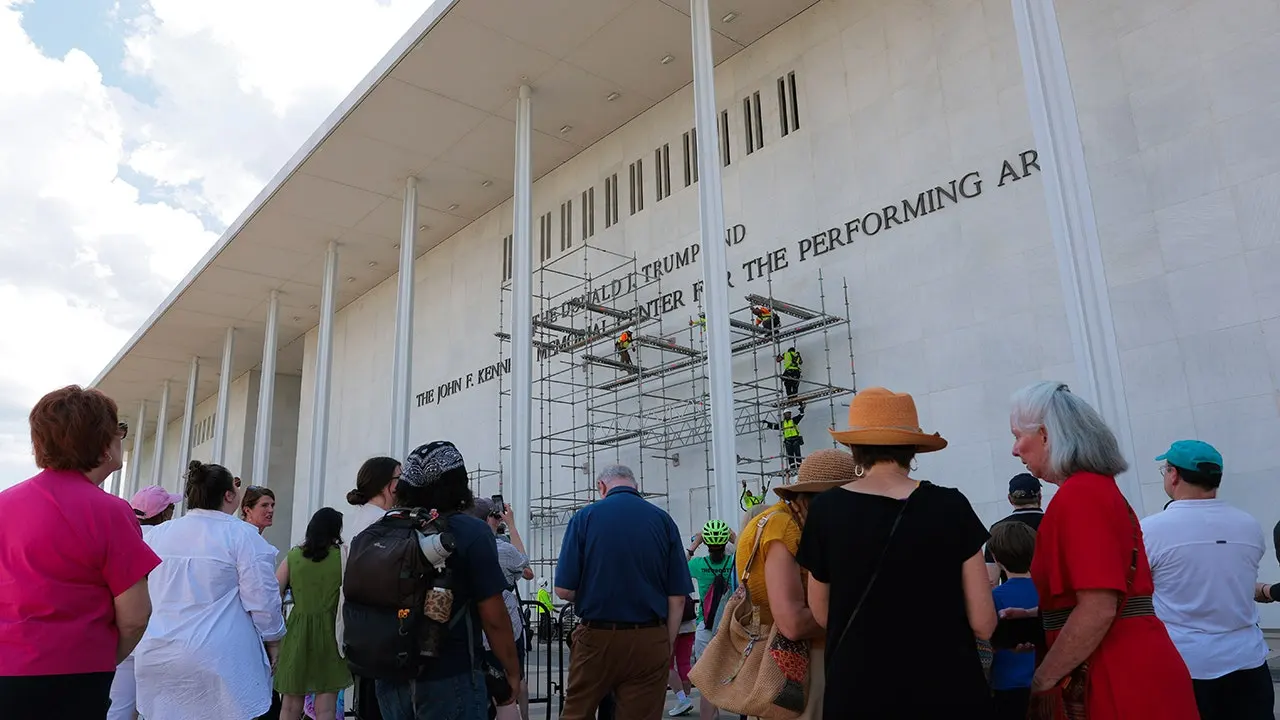
The Kennedy Center's board added "Donald J. Trump" to the building's facade in December after a unanimous board vote, saying the addition recognized Trump's role in preventing financial harm to the institution. The name was affixed to the facade the following day. In a later court challenge, U.S. District Judge Christopher Cooper ruled that the Kennedy Center's name may only be changed or modified by an act of Congress and ordered that Trump's name be removed. The Kennedy Center board sought an immediate administrative stay and a stay pending appeal; both the district judge and a three-judge panel of the D.C. Circuit denied those requests. After the appeals court denied the board's emergency motion, workers erected scaffolding and began removing Trump's name from the Kennedy Center facade. Separately, former President Trump publicly criticized Judge Cooper on social media. The article reports these events and notes the board's legal attempts to block enforcement of the judge's order.
Biblical Reflection
This story exposes tensions between civic institutions, legal authority, and partisan loyalties. Legally, the court's decision rests on institutional governance and statutory authority — a reminder that changes to national memorials and named public institutions often require formal legislative or governing-process steps. Spiritually and pastorally, the episode invites reflection on the dangers of conflating political loyalty with cultural stewardship. When cultural institutions become vehicles for partisan honor, they risk deepening division and undermining public trust. The article's reporting includes elements that can signal bias (emphasizing the judge's appointing president and personal connections, and quoting partisan criticism), so readers should separate documented legal rulings and timelines from partisan commentary. Christians should prize truth and the rule of law, resist elevating political figures into civic idols, and advocate for humility and reconciliation in public life.
Scripture in context
This outlook does not yet include contextual Scripture citations. Do not treat a general biblical theme as an exegetical conclusion.
Faithful Response
No prescribed response is offered. Consider the reflection prompts below in your own church context.
Reflection and Discussion
- 1Does naming civic cultural institutions after living political figures strengthen stewardship or encourage partisan capture of public heritage?
- 2How should Christians weigh respect for lawful process against frustration with outcomes that feel politically motivated?
- 3What cues in media framing (mentioning appointing presidents or personal relationships) should alert us to potential bias rather than facts?
Sources
Reporting links are evidence inputs; Sanctuary News' biblical reflection is commentary.
This outlook currently relies on fewer than two linked sources. Broaden verification before teaching from it.
- 1.Original reportprimary