News Summary
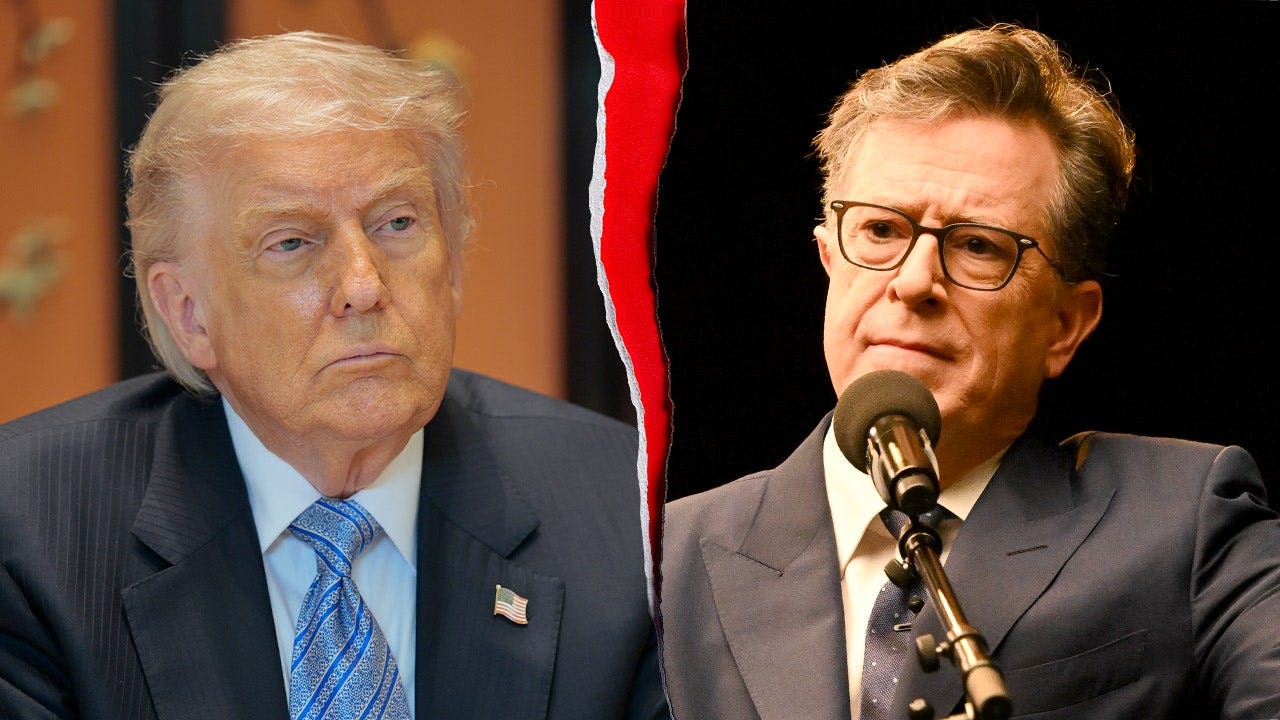
After Stephen Colbert's series finale of The Late Show on CBS, which capped his 11-year tenure and featured multiple celebrity cameos and a largely nonpolitical farewell, former President Donald Trump posted a critical message on Truth Social at nearly 2 a.m. The Truth Social post called Colbert "finished" and included personal insults about his talent and life. The article reports reactions across the political spectrum: conservative commentators and public figures mocked or celebrated Colbert's exit (examples cited include Tom Elliott, Stephen Miller, and Sen. Mike Lee), while Democrats and liberal commentators praised Colbert and paid tribute (including Rep. Hakeem Jeffries, Sen. Amy Klobuchar, and Nancy Pelosi). The piece notes that Colbert did not mention Trump by name during his finale and that Paul McCartney was the last guest. The article frames Colbert as a longtime critic of Trump and cites CNN commentary that described Colbert as a prominent voice of opposition but also as a comforting nightly presence beyond politics.
Biblical Reflection
This story sits at the intersection of celebrity culture and political polarization. Factually, the article reports two clear events: Colbert's Late Show finale and Trump's critical post on his platform. The broader narrative—portraying Colbert as a partisan cultural figure and highlighting gloating from political opponents—illustrates how media coverage often highlights conflict and personal attacks because they attract attention. From a Christian perspective, the episode is an opportunity to consider how Christians should read and react to public speech. Scripture calls us to speak truthfully and lovingly; public leaders and influencers are not exempt from moral evaluation, but Christians should avoid rejoicing in personal denigration. The article includes subjective judgments (e.g., "no talent, no ratings") that are opinion rather than verifiable fact; readers should note where reporting recounts assertions versus demonstrable data. The coverage also selectively highlights voices that fit a conflict narrative—both celebratory and condemnatory reactions are included, but the emphasis on ridicule fuels tribal division. Practically, Christians are invited to reject schadenfreude, model gracious speech (Ephesians 4:29), and evaluate public figures by their actions and character rather than by partisan scorekeeping. We should seek truth without amplifying cruelty and remember that measured critique and restorative correction differ from demeaning attacks.
Scripture in context
This outlook does not yet include contextual Scripture citations. Do not treat a general biblical theme as an exegetical conclusion.
Faithful Response
No prescribed response is offered. Consider the reflection prompts below in your own church context.
Reflection and Discussion
- 1Which parts of this story are verifiable facts and which are expressions of opinion or partisan reaction, and how should that distinction shape my response?
- 2How does celebrating or mocking another person's public exit reflect the values of the kingdom of God, and what alternative responses might better reflect Christian witness?
- 3What role should humility and charity play when assessing public figures who have been both critics and entertainers in a politically charged environment?
Sources
Reporting links are evidence inputs; Sanctuary News' biblical reflection is commentary.
This outlook currently relies on fewer than two linked sources. Broaden verification before teaching from it.
- 1.Original reportprimary