News Summary
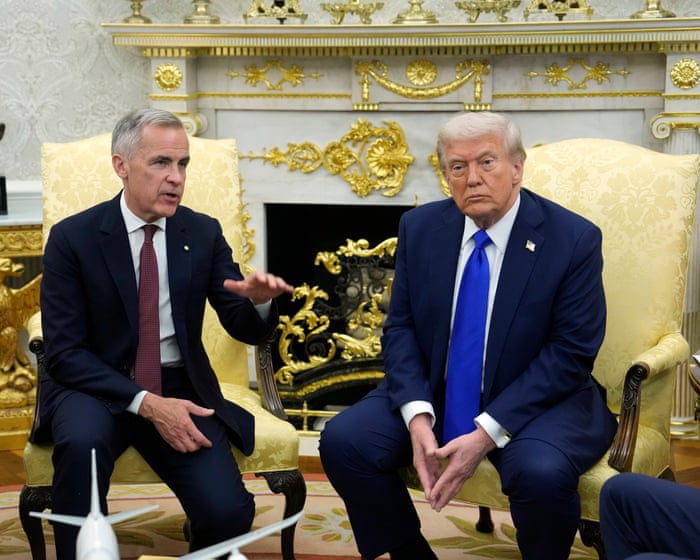
The Guardian reports that President Donald Trump announced a three-day pause in planned 50% U.S. tariffs on certain Canadian goods, saying the pause was “based on the fact that Canada and the USA, subject to the finalization of documents, have a DEAL.” The tariffs would have applied to roughly $20 billion of Canadian goods. The article says Canadian and U.S. officials reached an agreement hours before the tariff increase was to take effect. In the same announcement the president suggested the Keystone XL pipeline “may be awoken from the grave,” indicating he might pursue revival of the project. The Guardian article does not publish the underlying agreement text or cite an on-the-record Canadian government statement in the supplied excerpt.
Source and Framing Analysis
Primary source: The Guardian article supplied for this cluster. The piece attributes the core factual claims to the president’s social-media announcement and to reports of talks between Canadian and U.S. officials. Strengths: it records a concrete pause length (three days), an estimated exposure ($20bn), and the president’s phrasing about a deal and Keystone XL. Limitations and framing cautions: the article excerpt does not include the text of any agreement, detailed terms, or quoted Canadian officials; it therefore leaves open whether the ‘DEAL’ is finalized or what obligations it imposes. The president’s social-media language is rhetorically charged and should be read as a political statement pending documentary confirmation. Readers should distinguish (a) the reported announcement and its quoted language and (b) the undocumented underlying commitments that the article says remain “subject to the finalization of documents.”
How sources covered this story
Sanctuary separately assesses reporting quality and alignment with Christian virtues. The virtues assessment considers truthfulness, dignity, compassion, justice, peacemaking, humility, and care for vulnerable people. It does not assess a publisher's faith or reward religious language.
Compare 1 reports
Reporting 78/100Virtues 75/100
- Distinctive contribution
- Specifies the tariff pause length (three days), quantifies the exposure ($20bn of goods) and quotes the president’s social-media wording about a tentative DEAL; explicitly links the development to a hint about reviving Keystone XL.
- Framing
- Presented as a last-minute temporary avoidance of a 'bruising' tariff and a dramatic, potentially consequential political turn (Keystone XL 'may be awoken from the grave'). Emphasis is on urgency and high stakes.
- Omissions or uncertainty
- The excerpt does not explain the deal’s substantive terms, which goods or sectors are included, Canadian government response or officials quoted, legal or timing steps required to finalize the deal, or details on what would be required to revive Keystone XL. It also does not cite the source for the $20bn figure beyond the narrative.
- Why these scores
- The excerpt is concise and attributes the key claim (the pause) directly to the president’s social-media post and gives a concrete dollar figure and timeframe, which aids clarity. As an excerpt, it lacks corroborating quotes from Canadian officials, documentary detail about the agreement, and specifics about Keystone XL mechanics, limiting depth but not undermining the factual claims presented. The excerpt reports a factual development without dehumanizing language or sensational exploitation of suffering; it includes an attributed presidential quote and avoids inflammatory rhetoric beyond evocative phrasing. Its neutrality and straightforward reporting support virtues of truthfulness and respect for persons, though it offers limited context that would better serve justice and compassion by explaining implications for affected workers, communities, or cross-border relations.
Biblical Reflection
As Christians we should separate reporting of events from moral and pastoral response. The temporary de-escalation in trade rhetoric can protect jobs and livelihoods, but any revival of a cross-border pipeline raises stewardship, environmental, and indigenous-rights concerns. Seek truth and transparency about the deal’s terms; show mercy to workers and communities affected by trade and energy policy; pursue justice for those who bear disproportionate harms; practice humility in public judgment; and care for vulnerable neighbors and creation when weighing economic benefits against environmental and social costs.
Scripture in context
- 1Matthew 22:37–40 (summarized context) — Jesus summarizes the law and prophets by placing love of God and neighbour at the center of moral responsibility. — Use this relational test when evaluating trade and energy policy: does a proposed course of action protect and serve neighbours — including cross-border communities, workers, indigenous peoples, and future generations — or does it privilege short-term advantage without accounting for human and ecological costs?
Faithful Response
Pray for honest wisdom for leaders and for protection and provision for families and workers affected by trade or pipeline decisions.
Seek primary documents and multiple reputable sources before drawing firm conclusions or mobilizing advocacy; request transparency from governments about deal terms and affected sectors.
Provide pastoral and practical support to those at economic risk (listening, referral to services, congregational mutual aid).
Facilitate local forums that center economic, environmental, and indigenous perspectives so congregations can learn the likely human impacts of policy choices.
Advocate for policies that balance economic welfare with environmental stewardship and respect for indigenous rights, using civic channels (letters, public comment, meetings) and nonpartisan engagement.
Reflection and Discussion
- 1How does the command to love our neighbor reshape our assessment of economic tools such as tariffs and trade threats?
- 2What responsibilities do we have as stewards of creation when energy projects promise jobs but carry environmental and social risks?
- 3What signs or documents would make you confident that a reported diplomatic ‘deal’ is genuine and pursued in good faith rather than primarily political theater?
Sources
Reporting links are evidence inputs; Sanctuary News' biblical reflection is commentary.
This outlook currently relies on fewer than two linked sources. Broaden verification before teaching from it.
- 1.Trump hits pause on Canada tariffs threat, and hints at revival of Keystone XL oil pipeline projectprimary_reporting