News Summary
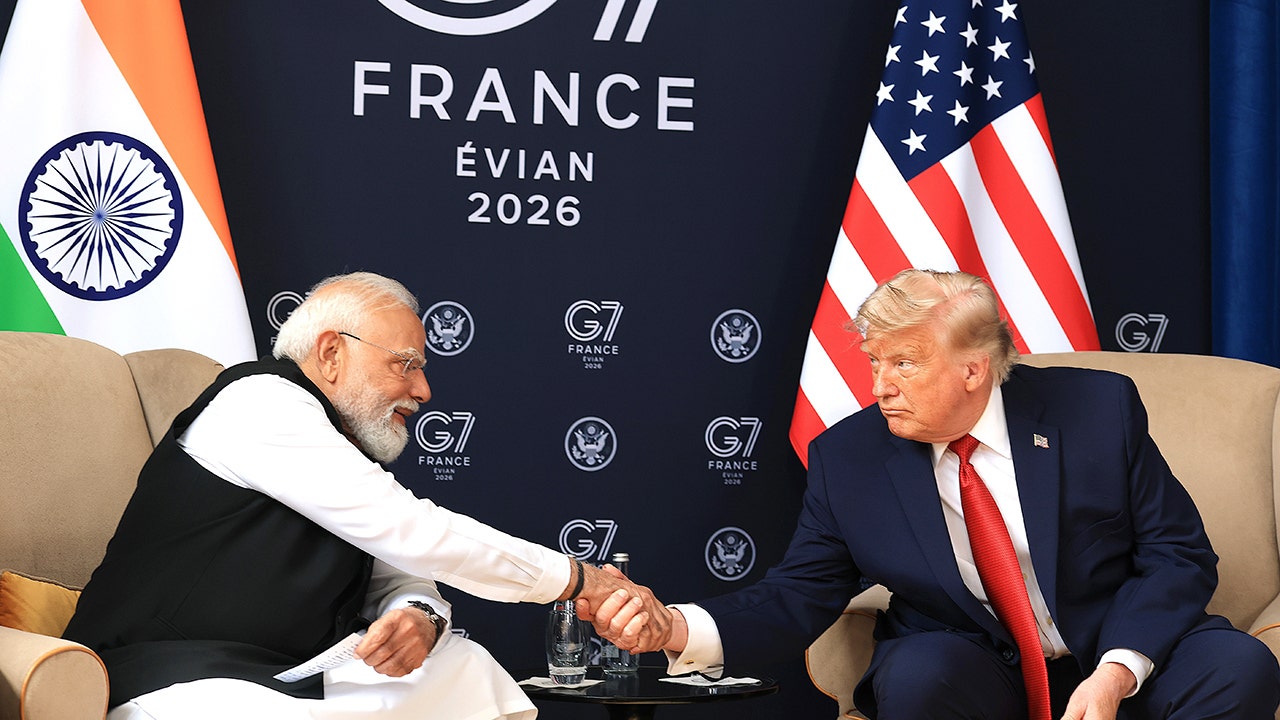
At the June 2026 G7 summit in France, President Donald Trump and Indian Prime Minister Narendra Modi met for a bilateral discussion; Modi greeted Trump with a handshake rather than the more familiar embrace. The meeting occurred amid growing strains in U.S.-India ties following events since May 2025: Trump claimed credit for brokering a ceasefire between India and Pakistan over fighting in Kashmir, which New Delhi rejected; the U.S. later imposed steep tariffs on India and pursued policies (including sanctions on Russian oil and disputes over H-1B visas) that India viewed as economically and politically damaging. Separately, a U.S. strike tied to the Iran conflict killed three Indian seafarers, prompting India to summon Washington’s chargé d’affaires and register diplomatic concern. Meanwhile, Pakistan has increased its diplomatic profile: its leadership, including army chief Asim Munir and Prime Minister Shehbaz Sharif, received high-level engagement with the U.S. (Munir was invited to the White House), Islamabad participated in mediation between the U.S. and Iran, and Pakistan has strengthened ties with China, Gulf states, and regional partners. Analysts quoted in the piece argue Pakistan has maneuvered to gain credibility while India has struggled to maintain influence with Washington; several commentators say these dynamics are evolving and reversible. The article quotes analysts and officials and notes both countries seeking to reset ties with the U.S.; Trump praised Modi publicly and said the United States would defend India if attacked.
Biblical Reflection
The article describes shifting diplomatic currents where personality-driven U.S. engagement and transactional policies have reshaped partnerships in South Asia. Read plainly, this is geopolitics driven by national interest, praise and blame, and tactical mediation — not always by consistent principles. As Christians assessing the report, we should notice several things: first, the premium placed on personal rapport (flattery, invitations, labels like “favorite”) can obscure deeper moral evaluation of policies and costs to civilians; second, transactional moves (tariffs, sanctions, public credit-taking) often produce real human consequences — economic strain, energy insecurity, and loss of civilian life — that demand moral concern; third, peacemaking and mediation carried out for strategic advantage can nonetheless open opportunities to reduce suffering, but require integrity and accountability. The article’s framing leans into personality and competition, with language that privileges a U.S.-centered narrative and quotes that personalize outcomes. Christians should weigh the truth of reported facts, remain cautious of narratives that celebrate strategic gain without attending to victims, and call leaders to pursue humility, justice, and protection for the vulnerable rather than purely reputational wins.
Scripture in context
This outlook does not yet include contextual Scripture citations. Do not treat a general biblical theme as an exegetical conclusion.
Faithful Response
No prescribed response is offered. Consider the reflection prompts below in your own church context.
Reflection and Discussion
- 1Am I absorbing a story framed around personalities and national prestige rather than the concrete costs and needs of ordinary people affected by these policies?
- 2Where does flattery or personal rapport shape diplomatic outcomes here, and does that make those outcomes more or less likely to protect the vulnerable?
- 3Are we giving attention to opportunities for honest peacemaking and humanitarian care, or only to which country ‘won’ influence?
Sources
Reporting links are evidence inputs; Sanctuary News' biblical reflection is commentary.
This outlook currently relies on fewer than two linked sources. Broaden verification before teaching from it.
- 1.Original reportprimary