News Summary
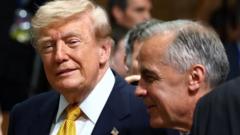
Reported facts: The BBC reports President Donald Trump has imposed 50% tariffs on Canada and that an official named Carney has vowed to 'intensify' trade talks; the report characterizes the duties as a major escalation. Attributed claims: The article attributes the tariff action and Carney's comment to named actors (Trump and Carney) and attributes the characterization of 'major escalation' to the report. Uncertainties: The BBC piece as supplied does not identify which goods or sectors are targeted, the legal basis or effective date of the tariffs, the identity and official role of Carney, or detailed economic projections and responses from Canadian federal authorities or industry groups.
Source and Framing Analysis
The supplied BBC report is brief and framed around the escalation between neighbours. Material uncertainties left unresolved by the piece—product coverage, timing, exemptions, legal justification, and authoritative Canadian government response—significantly affect how consequential the measure will be in practice. Because the story is consequential, reliance on a single short report limits ability to evaluate scope and motives; additional reporting is needed to judge legality, sectoral impact, and diplomatic context.
Biblical Reflection
The reported imposition of large tariffs between close trading partners is a factual development with immediate economic and relational consequences. Christian discernment calls us to weigh both truth and neighbor-love: truth in assessing facts accurately and neighbor-love in recognizing that trade measures affect workers, families, and vulnerable communities on both sides of the border. Escalatory rhetoric and punitive economic measures are likely to sow harm among everyday people who depend on integrated supply chains and cross-border commerce.
Scripture consistently urges peacemaking, justice, and wise stewardship. When governments act in ways that risk hurting neighbors, Christians should seek clarity, advocate for constructive diplomacy, and care for those most likely to suffer. That means pressing for truthful information about what was done and why, urging negotiation over retaliation, and supporting practical relief for affected workers and small businesses. Humility is also necessary: political actors may act from legitimate concerns (security, unfair subsidies, votes), but policy should be judged by its real-world effects, not only its intent.
Finally, followers of Christ are called to pray for leaders, resist dehumanizing opponents, and be ready to help neighbors who bear the brunt of economic conflict. Public life requires courage to speak for justice and mercy together: hold leaders accountable for truth and for policies that protect the vulnerable while pursuing peaceful, fair solutions to disputes.
Scripture in context
- 1Matthew 5:9 — Part of the Sermon on the Mount where Jesus teaches about the character and beatitudes of those who belong to God's kingdom, emphasizing the blessing on peacemakers within a framework of righteousness and mercy. — This passage calls Christians to work for reconciliation and peaceful solutions; when nations escalate economic conflict, Christians are reminded to pursue and pray for diplomacy, repair of relationships, and policies that protect neighbours.
- 2Luke 10:27 (law of love) — Jesus affirms the twin commands to love God and love neighbour as central to righteous living, which shapes ethical decisions about how we treat others practically. — Policy choices that impose economic pain should be evaluated by how they bear on love of neighbour—asking who is harmed and what relief or justice is owed to those affected.
Faithful Response
Pray for national leaders in both countries for wisdom, humility, and a commitment to the common good.
Seek reliable, detailed reporting about which goods and sectors are affected and what exemptions or timelines apply before concluding the full impact.
Support or volunteer with local ministries and networks that assist workers and families likely to be hit by trade disruptions (food banks, emergency relief, job placement services).
Engage elected representatives with specific, fact-based questions about mitigation plans for affected communities and accountability for transparent negotiation.
Reflection and Discussion
- 1Who are the most vulnerable people likely to suffer from these tariffs, and how should that shape our public and private responses?
- 2How can our church faithfully advocate for both honest accountability from leaders and compassionate support for those harmed?
- 3What steps should Christians take to verify claims and resist simplistic narratives when economic policy is described as 'escalation' or 'retaliation'?
Sources
Reporting links are evidence inputs; Sanctuary News' biblical reflection is commentary.
This outlook currently relies on fewer than two linked sources. Broaden verification before teaching from it.
- 1.Trump slaps 50% tariffs on Canada and Carney vows to 'intensify' trade talksprimary_reporting