News Summary
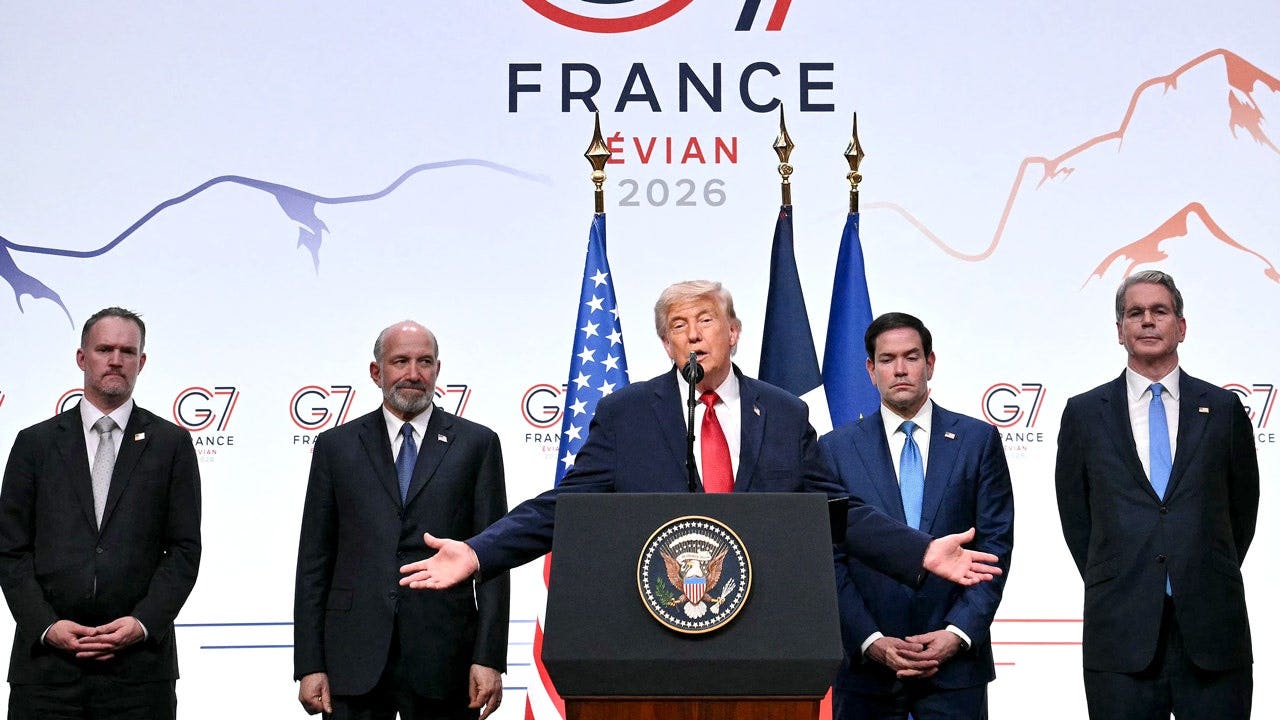
At a G7 press conference, President Donald Trump rejected comparisons between a newly announced U.S.-Iran memorandum of understanding (MOU) and the 2015 JCPOA. He said he had terminated the Obama-era JCPOA and argued that, had it remained in force, Israel and much of the Middle East could have been endangered. Trump said Israeli Prime Minister Benjamin Netanyahu previously lobbied Congress against the JCPOA without success and credited himself with finishing what Netanyahu had failed to stop. The president described the new MOU as fundamentally different from the JCPOA, designed to permanently block Iran's path to a nuclear weapon rather than provide temporary limits with sunset clauses. The article notes the MOU offers Iran potential sanctions relief and investment conditional on proving it has abandoned nuclear ambitions and support for terrorist organizations during a 60-day negotiating period, and it cites Barack Obama’s view that any new agreement is unlikely to look dramatically different from the 2015 deal.
Biblical Reflection
This report mixes direct quotes from the president with broad factual claims about two different diplomatic arrangements. Politically charged language—calling the JCPOA a 'catastrophe' and suggesting that Israel 'would have been terminated'—is rhetorical and speculative rather than a factual, evidence-backed causal claim. Christians should note two things: first, decisive security concerns and the desire to protect allies are legitimate moral considerations; second, political rhetoric often simplifies complex policy choices and can obscure where genuine risks and trade-offs lie. The underlying worldview is realist and securitarian—prioritizing immediate prevention of threats and crediting decisive action—while downplaying the technical and diplomatic mechanisms of verification and restraint. A faithful, wise Christian response is to seek truthful evaluation of policy claims, to listen to expert analysis about whether structural limits or verification measures meaningfully reduce nuclear risk, and to insist that both security and the human costs of conflict be weighed. Speak and pray for leaders to act with humility, pursue durable peace, and prioritize the protection of civilians on all sides rather than partisan victory framing.
Scripture in context
This outlook does not yet include contextual Scripture citations. Do not treat a general biblical theme as an exegetical conclusion.
Faithful Response
No prescribed response is offered. Consider the reflection prompts below in your own church context.
Reflection and Discussion
- 1What specific evidence supports the claim that the 2015 JCPOA would have led to Israel's destruction, and which experts or sources confirm or dispute that outcome?
- 2How does political rhetoric in security debates shape public willingness to accept diplomacy versus force, and whose safety is centered or marginalized by that rhetoric?
- 3When leaders frame foreign policy as a moral triumph, what checks—technical, ethical, or institutional—should Christians look for to ensure claims match concrete safeguards?
Sources
Reporting links are evidence inputs; Sanctuary News' biblical reflection is commentary.
This outlook currently relies on fewer than two linked sources. Broaden verification before teaching from it.
- 1.Original reportprimary