News Summary
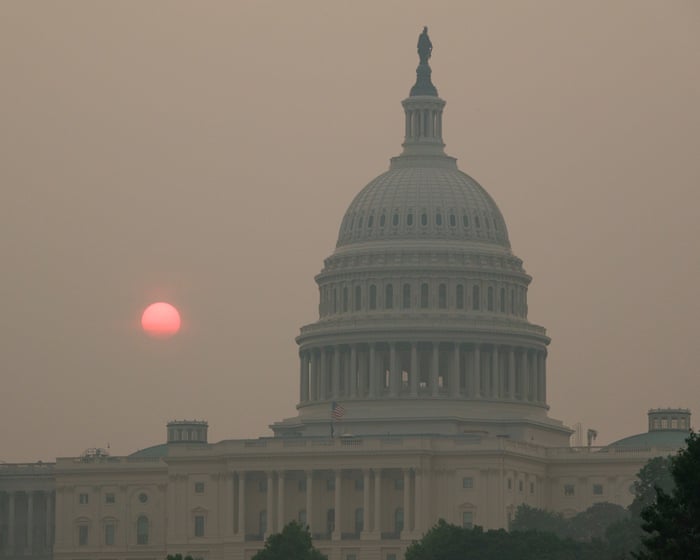
Reported facts: The Guardian column states Canadian wildfires produced smoke prompting air-quality alerts across more than 20 U.S. states and describes unhealthy conditions in Philadelphia that led to canceled outdoor preschool time and interrupted municipal services. Attributed claims: The article reports that the U.S. president publicly blamed Canada’s “filthy, polluted and unhealthy air.” Uncertainty: The supplied article is an opinion piece relying on the author’s anecdote and reporting; it does not link to independent governmental notices or scientific data within the text provided here.
Source and Framing Analysis
This is an opinion column that blends reporting of cross-border smoke impacts with personal anecdote and political critique. The framing emphasizes political blame and moral urgency about climate action; it uses humor and personal narrative to make a normative point. Material uncertainties that affect the story include the absence of primary public-health or meteorological documents in the supplied text and reliance on the author’s local experience rather than systematically sourced data.
Biblical Reflection
As Christians we should resist scapegoating and short-term political finger-pointing when communities face environmental harms. The article highlights a real harm — smoky air that affects health and disrupts civic life — and calls attention to leadership rhetoric that focuses blame outward rather than on prevention and care. Truth-telling requires distinguishing verifiable facts (wildfire smoke crossed the border and degraded air quality) from political rhetoric and opinion.
Biblical faith calls for stewardship of creation and compassionate care for vulnerable neighbors. Smoke events disproportionately harm children, the elderly, and people with respiratory illness; a Christian response centers mercy and practical protection for those at risk, advocacy for policies that reduce future harm, and humility about the limits of national blame for complex, climate-linked disasters. At the same time we should hold leaders accountable for honest, constructive responses rather than cheap blame.
Scripture in context
- 1Genesis 2:15 — In the early chapters of Genesis, humans are placed in a garden and given responsibility to 'work' and 'keep' it—language traditionally understood to assign stewardship of the created order. — The passage supports a theological basis for environmental stewardship: Christians can read the crisis of smoke and wildfire as a reminder of our responsibility to care for creation and to promote policies and practices that prevent harm to neighbors.
- 2Luke 10 (the Good Samaritan) — Jesus tells a parable in which a Samaritan cares for a wounded stranger; the story reframes neighborliness as active compassion across social boundaries. — When smoke harms children, elderly, or low-income communities, the Good Samaritan pattern calls Christians to practical care—relief, advocacy, and protection—rather than partisan blame.
Faithful Response
Pray for those affected and for wise public leadership.
Support local relief efforts and check on neighbors who are medically vulnerable during poor air-quality events.
Advocate for science-based public-health alerts, wildfire mitigation, and policies that address climate risk and emissions.
Resist partisan scapegoating; demand accountable, constructive responses from elected officials while practicing neighborly care.
Reflection and Discussion
- 1How does Scripture shape the way we respond when political leaders point fingers for harms that have complex causes?
- 2In what concrete ways can the church protect and advocate for the medically vulnerable during environmental crises?
- 3What distinctions should Christians make between righteous critique of leadership and uncharitable scapegoating?
Sources
Reporting links are evidence inputs; Sanctuary News' biblical reflection is commentary.
This outlook currently relies on fewer than two linked sources. Broaden verification before teaching from it.
- 1.The world is on fire, and who does Trump blame? The Canadians | Arwa Mahdawiprimary_reporting