News Summary
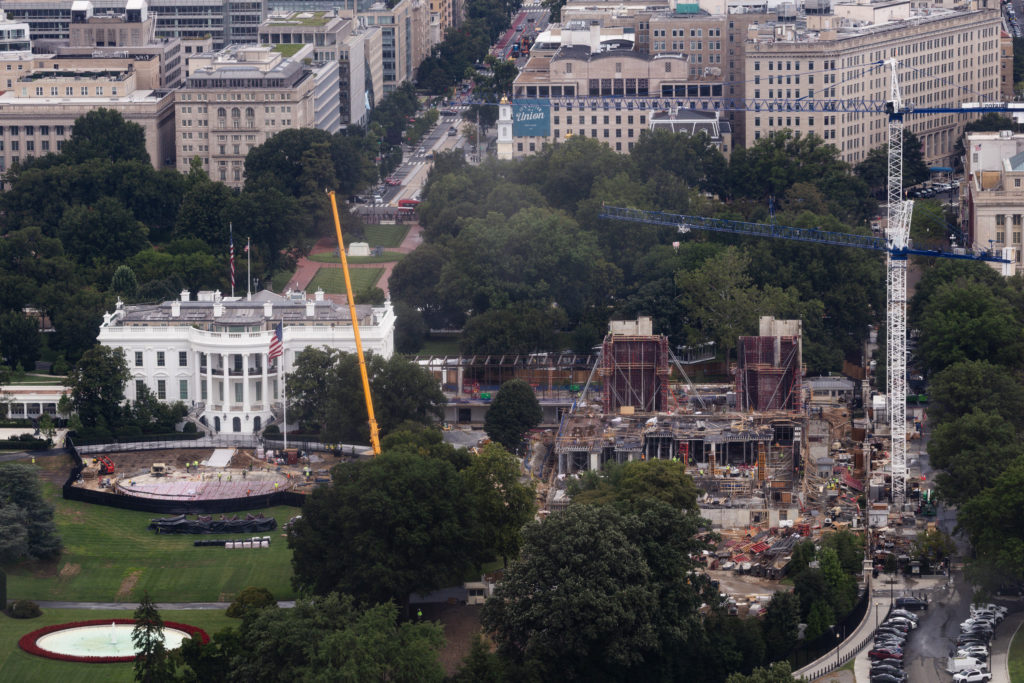
The Trump administration asked the U.S. Supreme Court to permit resumption of construction on a reported $400 million White House ballroom project while it appeals a lower-court order that had halted the work. The National Trust for Historic Preservation, which sued to block the project, filed with the Supreme Court seeking suspension of construction. Subsequent reporting indicates the Supreme Court issued a temporary order allowing construction to continue while it considers the administration’s emergency appeal; some accounts attribute that temporary order to Chief Justice John Roberts and note it arrived hours before lower-court rulings would have halted aboveground work. Available coverage is procedural and chronological; supplied excerpts do not include the full lower-court opinion, the full texts of the parties’ filings, or detailed findings about procurement, preservation assessments, or on-the-ground impacts.
Source and Framing Analysis
Primary supplied reporting comes from PBS NewsHour, The Guardian, and NPR. PBS NewsHour supplied the central procedural fact that the administration asked the Supreme Court to permit resumption of work during an appeal and reported the $400 million project figure; it also emphasized the immediacy of a near-term halt that the order forestalled. The Guardian supplied details that the National Trust for Historic Preservation filed to suspend the project and later attributed the temporary Supreme Court order to Chief Justice John Roberts. NPR corroborated that the dispute followed months of back-and-forth between the administration and the National Trust. Across sources the framing is legalistic and sequential—emphasizing emergency filings, temporary stays, and timing—rather than adjudicating substantive merits. Common omissions across the supplied coverage include: the identity and full legal reasoning of the lower court that issued the halt; the full text and precise legal grounds of the parties’ filings to the Supreme Court; specific findings or records about procurement, transparency, or historic-preservation analyses; and clear documentation of who would be materially affected and how. Where sources differ, the distinctions are mostly emphasis and timing (for example, PBS stresses the $400M figure and the near-term timing; The Guardian emphasizes the preservation group’s filing and names the Chief Justice as the signer of a temporary order).
How sources covered this story
Sanctuary separately assesses reporting quality and alignment with Christian virtues. The virtues assessment considers truthfulness, dignity, compassion, justice, peacemaking, humility, and care for vulnerable people. It does not assess a publisher's faith or reward religious language.
Compare 5 reports
Rank 1
The Guardian: Preservation group urges supreme court to suspend Trump White House ballroom projectReporting 78/100Virtues 80/100
- Distinctive contribution
- Identifies the National Trust for Historic Preservation's filing urging suspension and provides the $400m project cost and proximate timing relative to the administration's emergency request.
- Framing
- Frames the piece around preservation-group advocacy and the legal back-and-forth between the group and the administration.
- Omissions or uncertainty
- Does not include the Supreme Court's response or the lower-court rulings; excerpt focuses on the preservation group's filing rather than outcomes.
- Why these scores
- Gives clear context about plaintiffs and defendants, includes a concrete cost figure, and situates filings in time—solid contextual reporting though not exhaustive in a short excerpt. Highlights advocacy on behalf of historic preservation and documents civic engagement; respectful tone and factual presentation align with values of stewardship and care for shared heritage.
Reporting 82/100Virtues 78/100
- Distinctive contribution
- Names Chief Justice John Roberts as the signer of the temporary order and explicitly states the order pauses a lower-court directive that would have halted much of the project.
- Framing
- Emphasizes the temporary and procedural character of the decision and frames the project as controversial.
- Omissions or uncertainty
- Excerpt does not give full legal rationale, timeline for the court's further consideration, or financial figures for the project in this passage.
- Why these scores
- Provides specific attributions (Chief Justice John Roberts), clearly describes the legal effect (pausing lower-court order), and signals ongoing review—solid, responsible reporting in a short excerpt. Accurate attribution and sober description of legal process support truthfulness and respect for institutions; language is measured and non-exploitative.
Reporting 78/100Virtues 75/100
- Distinctive contribution
- Makes clear the order is temporary and highlights the timing (hours before lower-court rulings) and that the threatened halt would have applied to aboveground construction.
- Framing
- Focused on legal timing and immediate practical consequences, neutral in tone.
- Omissions or uncertainty
- Does not state who issued the order (chief justice name), broader case background, or the project's overall cost in this excerpt.
- Why these scores
- Provides specific, actionable detail about timing and scope (aboveground work) which helps readers understand impact; concise and appropriately cautious. Factual, non-inflammatory reporting that clarifies consequences without sensationalism; respects transparency about legal process.
Reporting 75/100Virtues 75/100
- Distinctive contribution
- Notes the ruling follows "months of back and forth" between the Trump administration and the National Trust for Historic Preservation, emphasizing the protracted nature of the dispute.
- Framing
- Neutral, concise reportage emphasizing continuity of a dispute between parties rather than legal technicalities.
- Omissions or uncertainty
- Does not specify the form of the order (temporary/emergency), who issued it (chief justice), the dollar value of the project, or details about lower-court orders and scope of work permitted.
- Why these scores
- Clear and accurate as far as the excerpt goes; provides useful context. Lacks some specific legal detail and attribution that would make the short excerpt more informative. Neutral, factual language without dehumanizing or sensationalist elements; acknowledges ongoing institutional disagreement which respects civic processes.
Rank 5
PBS NewsHour: Trump asks Supreme Court to let White House resume ballroom construction during appealReporting 75/100Virtues 75/100
- Distinctive contribution
- Explicitly describes the administration's emergency request to resume work during its appeal and includes the $400 million figure.
- Framing
- Neutral, procedural framing focused on the administration's legal request and appeal status.
- Omissions or uncertainty
- Does not report the court's response, which parts of the project would be allowed, or the preservation group's counterarguments in this excerpt.
- Why these scores
- Clear, factual statement of the administration's action and the project's cost; concise but limited to the specific legal request without broader context in the excerpt. Even-handed reporting of a legal filing without inflammatory language; respects procedural transparency and avoids sensationalism.
Biblical Reflection
Two complementary Christian concerns should shape our posture toward the Supreme Court filing to allow resumption of White House ballroom construction. First, respect for lawful process: Christians should pray for impartial adjudication, honor courts as legitimate instruments for resolving disputes, and avoid extralegal pressure while advocating for justice when rights or the common good are at stake. Second, public stewardship and care for vulnerable neighbors: a high-cost government renovation raises moral questions about prudence, transparency, historic preservation, and allocation of shared resources. For this specific story, Christians should (a) seek primary documents before strong public judgments, (b) critique systems and procedures rather than dehumanizing individuals, and (c) advocate for accountability and stewardship consistent with mercy and justice. This pastoral outlook is intentionally distinct from factual reporting and aims to guide faithful civic engagement rather than litigate legal points.
Scripture in context
- 1Romans 13:1-7 — Paul addresses Christians living under civil authorities and the role of lawful order in societies where believers must navigate competing loyalties. — The passage counsels respect for lawful institutions and the use of recognized legal processes to resolve disputes. It supports trusting courts to adjudicate contested public projects while also calling the faithful to pursue justice and protection of the common good through lawful means.
Faithful Response
Pray for wisdom, impartiality, and humility for judges, lawyers, advisors, public leaders, and those directly affected by the White House ballroom dispute.
Seek primary documents before forming or widely sharing firm judgments: obtain the lower-court order halting work, the administration’s emergency filing to the Supreme Court, the National Trust for Historic Preservation’s filing, and the Supreme Court docket entries.
Focus critique on processes, policy, and stewardship rather than personal attacks; keep discussion fact-based and avoid partisan invective.
If concerned about stewardship or preservation, pursue lawful, constructive civic engagement: request public records, contact preservation or oversight officials, support reputable preservation or transparency organizations, or participate in public comment opportunities if and when they are available.
Church leaders can use this episode to teach about civic responsibility, stewardship of communal resources, and the role of lawful institutions while avoiding partisan advocacy from the pulpit.
Reflection and Discussion
- 1How can our congregation call for both respect for legal processes and honest scrutiny of how public resources are used in the context of the White House ballroom project?
- 2When should Christians press for immediate public action versus trusting deliberative legal appeals and institutional checks in cases like this?
- 3What concrete steps can our congregation take to promote transparency, prudent stewardship, and care for those affected by government construction projects?
- 4How do we balance civic engagement with a posture of humility when reporting and public records are incomplete?
Sources
Reporting links are evidence inputs; Sanctuary News' biblical reflection is commentary.
This outlook currently relies on fewer than two linked sources. Broaden verification before teaching from it.
- 1.Trump asks Supreme Court to let White House resume ballroom construction during appealprimary_reporting