News Summary
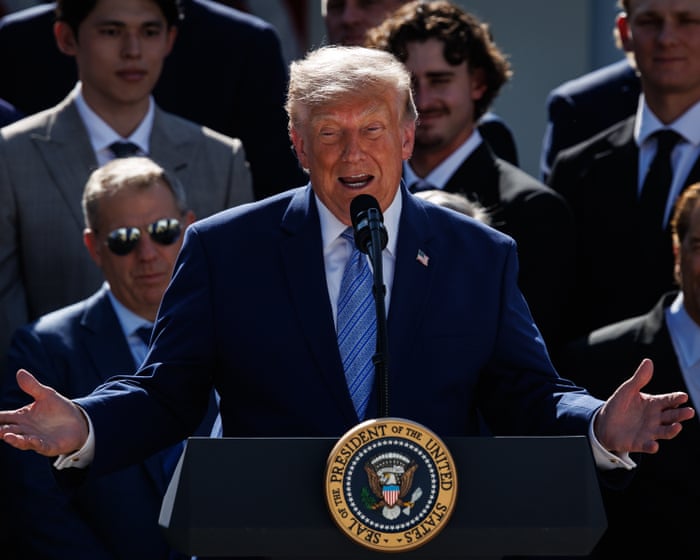
Reported facts: Administration officials announced tariffs of about 10%–12.5% on imports from more than 80 countries and cited forced labor concerns as the justification. Attribution: The Guardian reports Democrats accused President Trump of using forced labor as a pretext to advance his tariff agenda and to make signature economic policy permanent after legal setbacks; some Republicans also expressed concern. Uncertainty: The article does not publish the administration’s detailed evidence tying particular imports to forced labor, nor does it supply a full list of affected goods, the specific legal setbacks referenced, or independent economic impact studies.
Source and Framing Analysis
Material uncertainties that affect interpretation include the absence of primary evidence in the article demonstrating which imported products or supply chains are linked to forced labor and the lack of an administration statement or documentation in the report explaining enforcement mechanics. Framing centers on political reaction (Democratic criticism) and warns of domestic price effects; that emphasis highlights partisan dispute and economic risk but leaves factual questions about the forced-labor connection unanswered. These gaps materially affect whether the policy is primarily a human-rights intervention or a trade/economic maneuver.
Biblical Reflection
Forced labor is a grave moral wrong that Christians should oppose; using genuine human-rights abuses as a basis for policy is appropriate when supported by clear evidence and pursued with justice and compassion. When moral claims appear instrumental to partisan or economic ends, Christians should be wary: truth and mercy require that accusations of exploitation be investigated rigorously and that remedies protect the vulnerable they claim to serve.
Economic measures like tariffs can have mixed effects: they may pressure abusive suppliers and signal moral seriousness, but they also can raise costs for ordinary consumers—often hitting lower-income households hardest. A Christian assessment weighs both the pursuit of justice for exploited workers and the covenantal duty to care for neighbors who may suffer collateral harm.
Practically, Christians should insist on accurate public facts, transparent processes, and policy designs that prioritize the protection of exploited people while minimizing unintended harm to the poor. In public conversation, pursue truth boldly but speak with humility and a posture toward reconciliation rather than partisan score‑settling.
Scripture in context
- 1Amos 5:21–24 (context: prophetic critique of empty worship and call for justice) — Amos rebukes religious actions that coexist with social injustice, emphasizing that ritual without righteousness is unacceptable; the book calls God’s people to seek justice, defend the oppressed, and make their public life reflect covenantal faithfulness. — The passage reminds Christians that moral claims (like opposing forced labor) must be accompanied by authentic justice—measured, concrete action that protects the oppressed rather than serving political ends—so policy must be scrutinized for real remedy and not rhetoric alone.
Faithful Response
Seek verified information: ask for the administration’s documentation linking specific imports to forced labor and demand transparency on enforcement and exemptions.
Pray and advocate for policies that pair accountability for exploitative supply chains with measures to offset harm to low-income consumers (e.g., targeted assistance, exemptions for essential goods).
Support credible anti–forced labor organizations and supply‑chain transparency efforts that pursue real remediation for exploited workers, not only symbolic policy moves.
Reflection and Discussion
- 1How should Christians weigh public claims of moral wrongdoing against the evidence provided—what standards of proof do we demand before endorsing policy?
- 2When a policy framed as righteous may cause real suffering for the poor, how do we prioritize and advocate for both justice for the oppressed and protection for the vulnerable?
- 3Are we more compelled by political allegiance or by consistent concern for human dignity across borders and economic classes?
Sources
Reporting links are evidence inputs; Sanctuary News' biblical reflection is commentary.
This outlook currently relies on fewer than two linked sources. Broaden verification before teaching from it.
- 1.Democrats accuse Trump of using forced labor as ‘convenient’ justification for tariffsprimary_reporting