News Summary
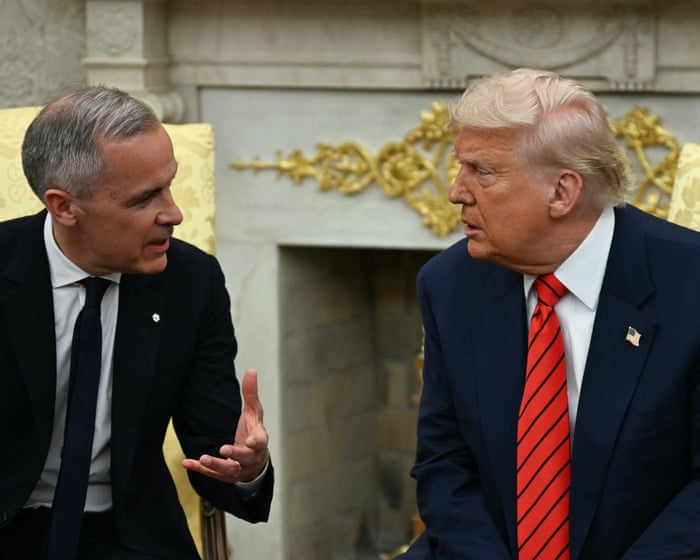
Reported facts: The White House announced new import duties described as 50% tariffs on most Canadian goods, scheduled to start next month; President Trump publicly defended the tariffs and said Canada ‘cannot survive without the US’; Mark Carney said Canada is ‘united’ in the face of threats; leaders agreed to talks before the tariffs take effect. Attributed claims: The president’s statement about Canada’s inability to survive is reported as his claim. Uncertainties: The Guardian article does not provide full details on the legal basis for the tariffs, the complete list of affected goods, exemptions, economic impact estimates, or the precise schedule and format for the planned talks.
Source and Framing Analysis
The report is a single primary news piece from The Guardian summarizing the announcement and reactions. Material uncertainties that affect the story include the lack of detailed legal justification for the tariffs, absence of a full list of affected goods and exemptions, missing economic impact modeling, and limited detail about the planned talks. The article highlights the president’s rhetoric, which is newsworthy, but readers should note the difference between reported quotations and independently verified facts about economic or legal consequences.
Biblical Reflection
This story highlights the exercise of national power in the economic sphere and the real human consequences that follow. Christians are called to weigh truth, justice, and neighbor-love when political leaders use economic coercion. When policies are defended with sweeping assertions about another nation's dependence, we should test those statements against facts and consider who is likely to bear the cost—workers, families, and communities often pay most when trade is disrupted.
Biblical wisdom calls leaders to steward power with humility and to pursue peace and the flourishing of neighbors (both domestic and foreign). Economic policy is not morally neutral; it shapes livelihoods, supply chains, and international trust. Christians should be wary of rhetoric that treats other nations as mere instruments of advantage rather than neighbors made in God’s image.
At the same time, advocating for justice requires careful attention to evidence and proportionality. Public Christians can press for transparent explanations of the legal basis and likely impacts of such tariffs, support bipartisan diplomacy that seeks to de-escalate harm, and offer practical care to those who will be materially affected. Faithful witness means demanding truth from leaders, pursuing peace through dialogue, and protecting the vulnerable who suffer when power is wielded without restraint.
Scripture in context
- 1Luke 10:25–37 (The Good Samaritan) — In this parable Jesus answers a question about who qualifies as a 'neighbor' by showing mercy across ethnic and social boundaries; the story challenges listeners to act compassionately toward those in need regardless of political or cultural distance. — Leaders and citizens alike are called to shape policies and reactions by concern for the vulnerable and by active compassion—measuring decisions by whether they protect and restore neighbors rather than exploit advantage.
Faithful Response
Pray for leaders on both sides and for those likely to be affected by trade disruption (workers, families, small businesses).
Seek reliable, technical information about which goods and regions will be hit and what legal processes are being used.
Support local congregational relief or assistance for workers facing layoffs or price shocks (foodbanks, emergency funds).
Advocate respectfully for diplomacy and transparent, proportionate policy—contact elected officials asking for negotiation and impact assessments.
Reflection and Discussion
- 1How does the Christian practice of loving the neighbor challenge the way nations use economic leverage?
- 2When leaders make sweeping claims about another people’s dependence, what signs should Christians look for to test those claims against truth and justice?
- 3In what concrete ways should the church respond when government policies, however justified, produce harm to vulnerable workers?
Sources
Reporting links are evidence inputs; Sanctuary News' biblical reflection is commentary.
This outlook currently relies on fewer than two linked sources. Broaden verification before teaching from it.
- 1.Trump defends 50% tariffs on Canada, saying ‘they need us to survive’primary_reporting