News Summary
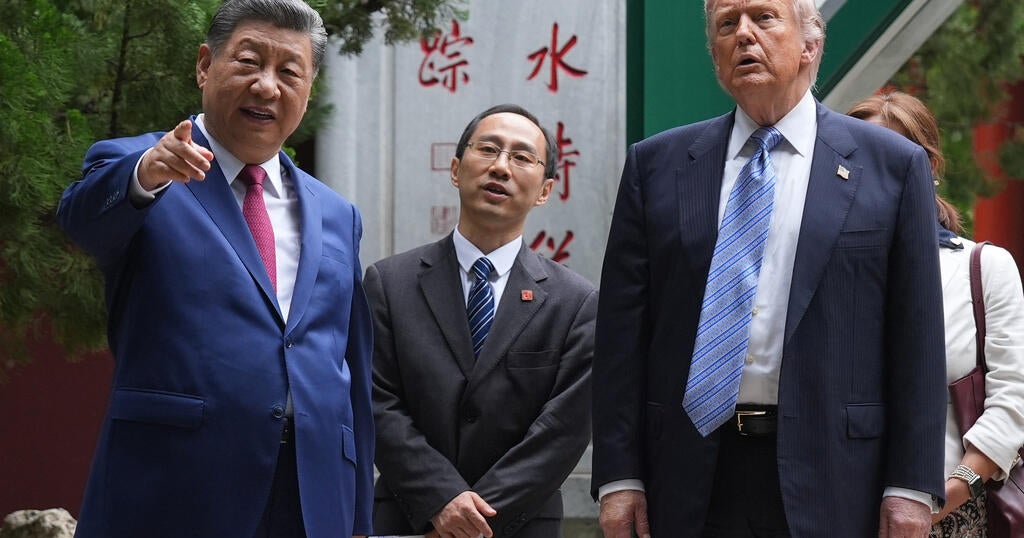
President Donald Trump and Chinese President Xi Jinping held a summit in Beijing that concluded Friday. The meetings included private and public sessions at Zhongnanhai, a state banquet, and a bilateral lunch. Trump said the two leaders made "fantastic trade deals," without offering detailed, verifiable terms in his public remarks; he previously said China had agreed to buy American planes, oil and agricultural products. U.S. officials also discussed the idea of a U.S.-China "Board of Trade" and a "Board of Investment." Both presidents said they reached "important common understandings" on stabilizing economic and trade ties and expanding cooperation. Trump said the leaders "feel very similar on Iran" and expressed a shared desire to reopen the Strait of Hormuz; he also said Xi told him China would not supply military equipment to Iran, a claim not independently verified in the article. Xi warned of possible "clashes and even conflicts" if Taiwan is not "handled properly," according to Chinese state media; the U.S. readout noted both sides reiterated their long‑standing positions on Taiwan. Business executives accompanied the U.S. delegation and publicly praised the talks. Xi is said to be expected to visit the U.S. in September; Trump extended a reciprocal invitation for a September White House visit. The article notes uncertainty about whether broad, enforceable trade agreements were concluded and that many claims remain to be confirmed.
Biblical Reflection
From a Christian perspective, diplomatic engagement and efforts to reduce conflict are generally praiseworthy—peacemaking aligns with Christlike priorities. At the same time, the article mainly reports leaders' public claims and mutual praise without independent verification of concrete commitments. Christians should therefore weigh statements of success against observable evidence and the likely motives at play: national interest, economic advantage for businesses, geopolitical positioning, and domestic political messaging. The framing in the article reflects two common media tendencies: (1) a focus on leaders' soundbites and ceremonial optics (state dinners, gardens, thumbs‑up from executives) that can obscure substance, and (2) bipartisan or bilateral efforts presented as bilateral wins without attention to human costs or moral implications (for example, Taiwan security and human rights concerns in China). Scripture calls believers to seek peace and pursue justice; true reconciliation requires truth and accountability (not merely publicity). Prayful discernment asks whether proposed trade and security understandings will protect vulnerable peoples, uphold truth, and reduce violence, or whether they primarily consolidate power and economic gain. Christians should neither uncritically celebrate diplomatic theater nor reflexively condemn engagement; instead, hold leaders accountable to measurable commitments that serve the common good and protect the oppressed.
Scripture in context
This outlook does not yet include contextual Scripture citations. Do not treat a general biblical theme as an exegetical conclusion.
Faithful Response
No prescribed response is offered. Consider the reflection prompts below in your own church context.
Reflection and Discussion
- 1Which claims reported by leaders are verified by independent facts, and which are political rhetoric designed to shape public perception?
- 2How might economic agreements or diplomatic understandings affect vulnerable populations (e.g., people in Taiwan, Iranians, or those suffering under authoritarian governance), and are those human consequences being considered?
- 3Are we tempted to equate diplomatic ceremony and business praise with substantive moral improvement? What evidence should we seek to judge whether these talks promote genuine peace and justice?
Sources
Reporting links are evidence inputs; Sanctuary News' biblical reflection is commentary.
This outlook currently relies on fewer than two linked sources. Broaden verification before teaching from it.
- 1.Original reportprimary