News Summary
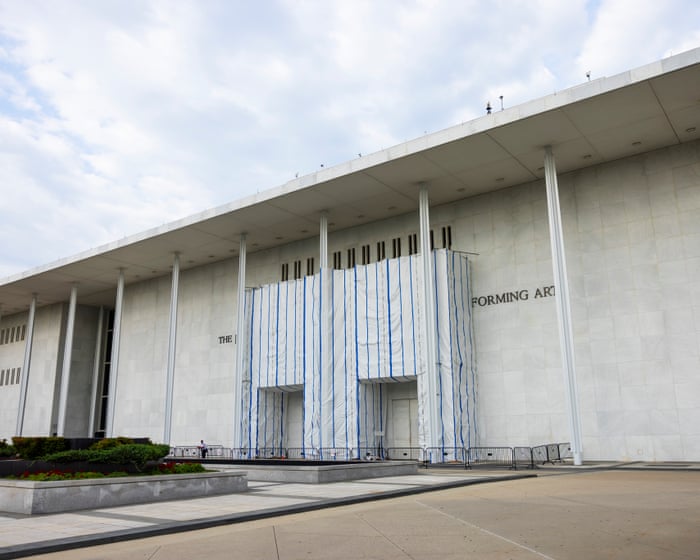
The Guardian reports that lawyers for President Donald Trump filed a court document saying the John F. Kennedy Center for the Performing Arts in Washington, D.C., requires a $250 million renovation and that, absent those repairs, the building could be demolished. The claim is attributed to language in a court filing dated Monday in the Guardian piece; the underlying court filing, engineering assessments, and a response from the Kennedy Center are not included in the supplied report.
Source and Framing Analysis
Primary source: a single news report in The Guardian summarizing an asserted court filing by the president’s lawyers. Strengths: the report attributes the demolition warning to a legal filing and supplies a concrete dollar figure ($250 million). Limits and framing: the story rests on one secondary account; The Guardian excerpt uses strong, alarmed language (e.g., "risk facing the wrecking ball") that may reflect phrasing in the filing or the reporter’s emphasis. Missing material context includes the full text of the court filing, the legal basis for any demolition claim, the identity of the party who filed suit or against whom the filing was made, engineering or safety assessments of the Kennedy Center, a timeline for repairs or demolition, who would pay for renovations or a demolition, and any response from the Kennedy Center or other officials. Because those elements are absent, the claim is materially uncertain and should be treated as asserted but not independently verified.
How sources covered this story
Sanctuary separately assesses reporting quality and alignment with Christian virtues. The virtues assessment considers truthfulness, dignity, compassion, justice, peacemaking, humility, and care for vulnerable people. It does not assess a publisher's faith or reward religious language.
Compare 1 reports
Reporting 75/100Virtues 75/100
- Distinctive contribution
- Reports that the warning appeared in a court filing by the president’s lawyers and gives the specific $250m renovation figure and the explicit consequence (risk of demolition).
- Framing
- Legalistic and alarmed — frames the situation as a formal legal threat from the president’s team against a national arts institution, using words like “must” and “risk” to emphasize urgency and severity.
- Omissions or uncertainty
- The excerpt does not include the date of the court filing, the legal basis for a demolition threat, who filed the lawsuit or suit context, any quotes or documents from the filing, the Kennedy Center’s response, the timeline for repairs or demolition, nor corroborating evidence (e.g., link to the filing). It’s unclear whether the statement is a legal argument, rhetorical posture, or a factual assertion about imminent demolition.
- Why these scores
- The brief excerpt responsibly attributes the claim to the president’s lawyers and specifies the form of the claim (court filing) and a concrete dollar figure, which are valuable specifics. However, it lacks helpful contextual details (legal basis, timeline, direct quotes, Kennedy Center perspective) that would make the report more informative and reduce potential sensationalism. For a short news item this is solid but limited. The excerpt is fact-focused and not dehumanizing; it attributes claims and does not sensationalize beyond the strong language of the reported warning. It lacks explicit attention to the human impact on artists, staff, or the public and provides minimal context that could foster compassion or justice-oriented understanding, so it merits a positive but not top-tier score.
Biblical Reflection
Christian concern should center truth, mercy, justice, peacemaking, humility, dignity, and care for vulnerable neighbors. If the filing’s claim is accurate, the situation raises questions about stewardship of public cultural goods, the livelihoods of artists and staff, and how political and legal processes affect communal heritage. Christians are called to pursue facts before assigning motives, to defend the common good (including cultural institutions that serve many neighbors), and to seek practical care for those whose work or income could be affected. That means pressing for transparency, advocating for fair processes and protections for workers, and offering pastoral and material support without partisan amplification.
Scripture in context
- 1Parable of the Talents (Matthew 25:14–30) — A teaching of Jesus where servants are entrusted with resources (talents) by their master and held accountable for how they use and protect them; historically addressed to faithfulness and stewardship within the community of believers. — The episode emphasizes faithful stewardship of what is entrusted to us — including shared cultural resources — and warns against neglecting responsibilities that affect others’ wellbeing.
- 2The command to love your neighbor (Mark 12:28–31, wider Hebrew Bible ethic) — Jesus summarizes the law by citing love of God and love of neighbor as central obligations, rooted in the wider Scriptural concern for justice and compassion in community life. — Policy decisions about public institutions should be judged by how they affect neighbors: employees, artists, audiences, and future generations who inherit cultural assets.
Faithful Response
Seek primary documents and independent expertise before drawing firm conclusions: obtain the actual court filing, engineering or safety assessments, and any official Kennedy Center statements.
Pray for clarity and for those directly affected (staff, artists, families).
Advocate for transparent decision-making that protects workers and public heritage — contact elected representatives with informed, civil questions about preservation, funding, and worker protections.
Provide practical support to affected individuals and organizations (information about resources, emergency relief, donations, volunteer help) rather than amplifying partisan narratives.
Host or attend community conversations that share verified facts and include legal/technical experts to reduce rumor and anxiety.
Reflection and Discussion
- 1What further documents or expert input do I need to evaluate the claim responsibly?
- 2How does the call to steward common goods shape my response to threats against public cultural institutions?
- 3Who are the vulnerable neighbors affected by this dispute, and how can I or my community offer them practical care?
- 4Am I letting partisan loyalties shape my acceptance or rejection of dramatic claims without seeking evidence?
Sources
Reporting links are evidence inputs; Sanctuary News' biblical reflection is commentary.
This outlook currently relies on fewer than two linked sources. Broaden verification before teaching from it.
- 1.Trump threatens to demolish Kennedy Center if $250m renovation not doneprimary_reporting