News Summary
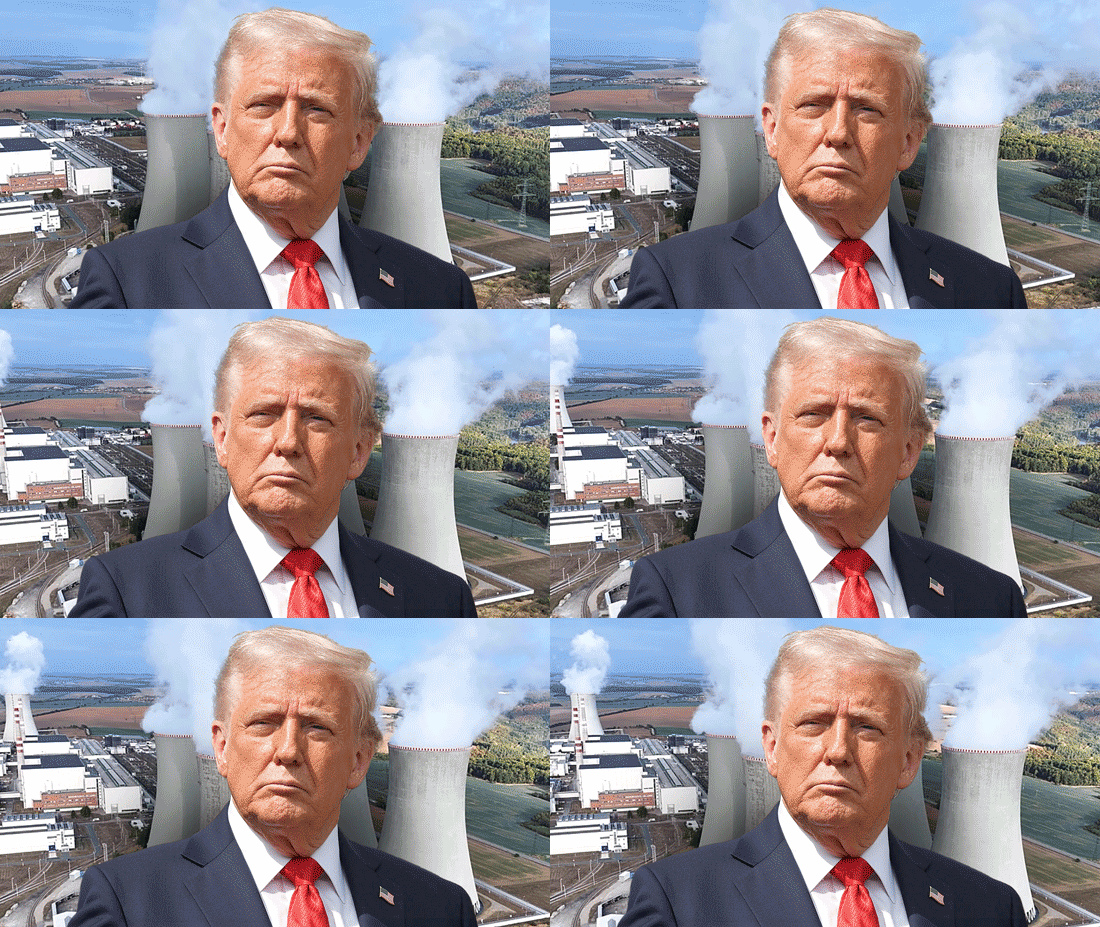
The article describes a White House and Department of Energy push—backed by President Donald Trump and DOE leaders such as Under Secretary Chris Wright—for a state-led strategy to rebuild the U.S. nuclear fuel cycle. The core proposal is the 'Nuclear Lifecycle Innovation Campus' model: regional hubs where fuel fabrication, recycling, advanced reactor demonstration, materials testing, waste management, and workforce training co-locate. The piece frames this state-based approach as learning from the mid-20th-century integrated U.S. nuclear enterprise and as a response to decades of decline due to regulation, public opposition, market forces (cheap natural gas), and policy decisions such as the 1977 Carter-era deferral of commercial reprocessing. The article argues that restoring domestic enrichment and fuel-cycle capabilities is a matter of economic growth, regional job creation, technological leadership, and national sovereignty—citing concern over foreign (notably Russian) dominance of enrichment services. The administration is reported to be expanding domestic enrichment capacity and supporting production of high-assay low-enriched uranium (HALEU), while proposing private-sector partnerships and state incentives to attract investment and rebuild supply chains.
Biblical Reflection
Viewed through a Christian/scriptural lens, several moral and spiritual considerations arise. The pursuit of reliable, affordable energy and national security are legitimate goods—caring for neighbors and providing for the common good are responsibilities Scripture supports (e.g., wise stewardship of resources). Yet the article also raises questions the Bible would press: Are the risks being honestly acknowledged and shared fairly, especially by communities near proposed sites? Is the pursuit driven by prudence and humility or by national pride and short-term advantage? Scripture calls leaders to seek wise counsel and count the cost before major undertakings (Luke 14:28), to steward creation responsibly (Genesis 2:15), and to protect the vulnerable (James 1:27). Nuclear development promises benefits—jobs, technological renewal, reduced dependence on hostile suppliers—but also real hazards: waste, potential for accidents, environmental and health impacts, and proliferation risks. Christians should welcome efforts that genuinely pursue sustainable stewardship and the common good while demanding transparency, rigorous safety, fair compensation and consultation for affected communities, ethical oversight to prevent militarization or unjust harm, and humility before the limits of human control. Politicization and boosterish rhetoric should be tested against truthfulness, accountability, and whether policies serve the least advantaged, not merely regional economic growth or geopolitical prestige. In short: support developments that reflect prudence, justice, and care for creation; resist rhetoric or policy that elevates power, profit, or partisan triumphalism above conscience and neighbor-love.
Scripture in context
This outlook does not yet include contextual Scripture citations. Do not treat a general biblical theme as an exegetical conclusion.
Faithful Response
No prescribed response is offered. Consider the reflection prompts below in your own church context.
Reflection and Discussion
- 1How does the goal of energy security weigh against responsibilities to environmental stewardship and the wellbeing of local communities near nuclear sites?
- 2What practices of transparency, counsel, and accountability would make a large public project like this more consistent with Christian virtues?
- 3Am I inclined to equate national strength or technological prowess with moral rightness, and how should humility reshape that impulse?
Sources
Reporting links are evidence inputs; Sanctuary News' biblical reflection is commentary.
This outlook currently relies on fewer than two linked sources. Broaden verification before teaching from it.
- 1.Original reportprimary