News Summary
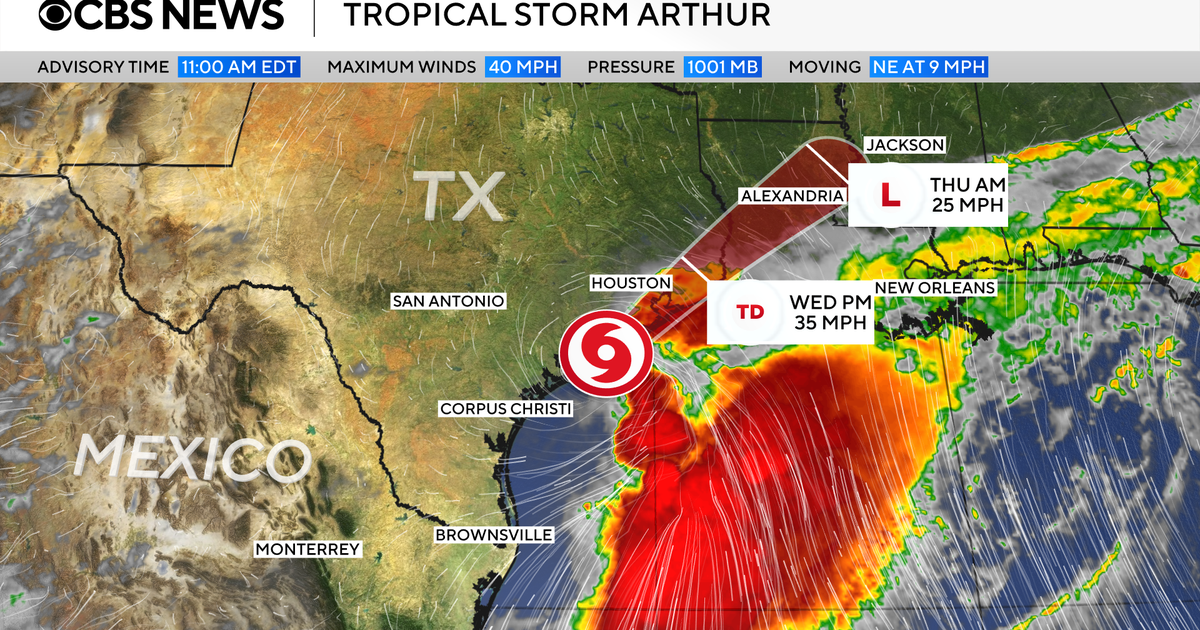
Tropical Storm Arthur formed off the central Texas coast on Wednesday, June 17, 2026, becoming the first named storm of the Atlantic season. At formation the center was roughly 40 miles from Port O'Connor, Texas, and about 190 miles from Lake Charles, Louisiana, moving northeast with maximum sustained winds near 40 mph. The National Hurricane Center forecast minimal change in strength as Arthur moves along or onto the Texas coast and then into southern Louisiana before turning inland and weakening. Tropical storm warnings were issued from High Island, Texas, to Morgan City, Louisiana, and a tropical storm watch extended from Sargent to High Island. Forecasters warned of heavy rainfall (forecast 5–10 inches in parts of Texas, Louisiana, Mississippi, Alabama and western Florida Panhandle), life-threatening flooding, storm surge up to about 4 feet in some coastal locations depending on tide, dangerous surf and rip currents, and the possibility of tornadoes. NOAA outlooks for the season predict fewer-than-average storms overall (8–14 named storms, 3–5 becoming hurricanes).
Biblical Reflection
The article is a straightforward report based on National Hurricane Center advisories and focuses on imminent hazards—wind, rain, surge, and flooding—without apparent partisan slant. Its purpose is informational and to prompt public awareness and preparedness. From a Christian perspective, this event reminds us of human vulnerability and the limits of control; it calls for sober stewardship (preparing practically and supporting emergency responders), compassion for those in harm's way, and truthful communication from authorities and media so people can act wisely. Be cautious of two impulses: sensationalizing storms for attention, which can create panic, and minimizing warnings, which can cost lives. Christians are called both to heed expert guidance that protects neighbors and to respond generously to suffering—providing shelter, resources, and calm leadership where needed.
Scripture in context
This outlook does not yet include contextual Scripture citations. Do not treat a general biblical theme as an exegetical conclusion.
Faithful Response
No prescribed response is offered. Consider the reflection prompts below in your own church context.
Reflection and Discussion
- 1Does the way we name and cover storms make us more aware or more complacent about risk—how should that shape public and personal response?
- 2Whose needs and vulnerabilities are most likely to be overlooked in warnings and evacuations, and how can communities better protect them?
- 3How does reliance on forecasts and institutions interact with our spiritual responsibility to care for others when disaster strikes?
Sources
Reporting links are evidence inputs; Sanctuary News' biblical reflection is commentary.
This outlook currently relies on fewer than two linked sources. Broaden verification before teaching from it.
- 1.Original reportprimary