News Summary
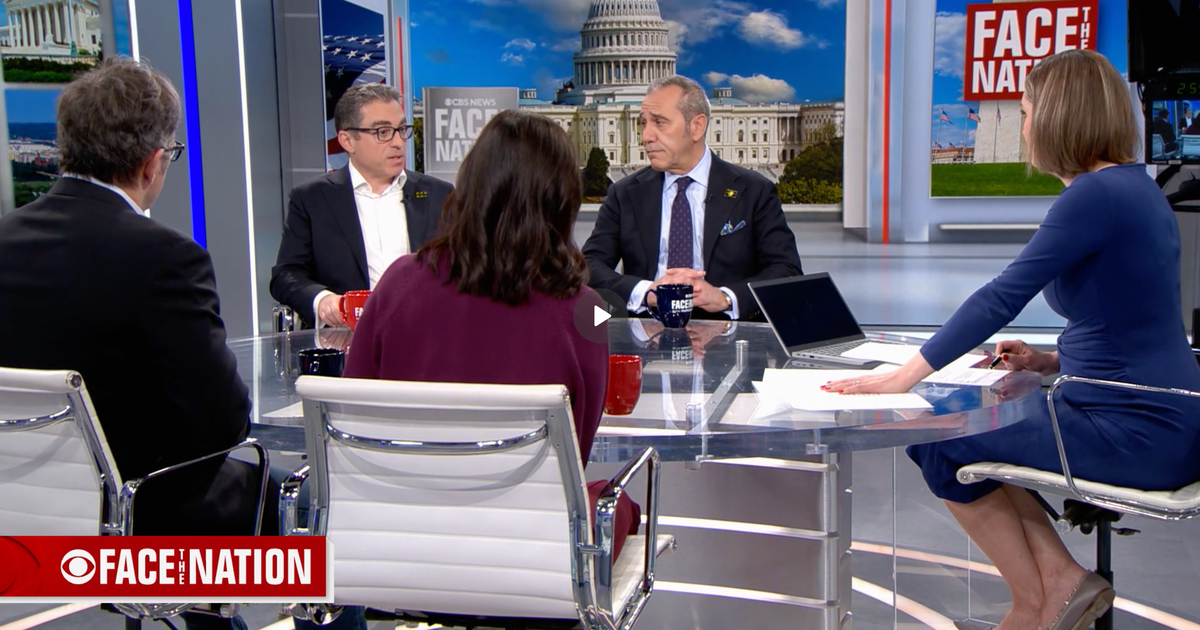
This is a transcript of a Face the Nation panel (March 22, 2026) featuring former Iran detainees Siamak Namazi and Emad Shargi, Roger Carstens (former U.S. special envoy for hostage affairs), and Neda Sharghi (Emad’s sister). The discussion centers on at least four Americans believed to be held in Iran’s Evin Prison (families and officials estimate the number may be higher). Panelists warn detainees face escalated danger amid the current war and recent history (Israel’s bombing of Evin during the 12-day war), both from possible strikes and from being used as political pawns by the Iranian regime. Two Americans—journalist Reza Valizadeh and Kamran Hekmati—were recently designated as wrongfully detained, a status panelists say should allow the U.S. greater leverage to secure releases. The conversation covers the tension between publicizing cases (which can give hope and pressure policymakers) and diplomatic risks (potentially increasing the detainees’ value as bargaining chips). Carstens and others review past exchanges (including controversial prisoner/funds arrangements) and point out that hostage/prisoner issues often become entangled with broader diplomatic or security objectives (nuclear talks, sanctions, military strategy). Panelists urge consistent naming, public attention, creative diplomacy, and that U.S. leaders prioritize bringing Americans home when diplomatic openings arise. They also describe the variety of people held in Evin—from dissidents and human rights lawyers to criminal convicts—and emphasize the courage of Iranian political prisoners.
Biblical Reflection
Biblically, this story presses three plain demands: remember the imprisoned, defend the vulnerable, and pursue justice with wisdom. Hebrews’ admonition to remember those in prison (Hebrews 13:3) is a direct spiritual charge to keep these Americans — and the Iranian prisoners of conscience they sit beside — in our prayers and public memory. The exploitation of people as bargaining chips is morally indicting: Scripture condemns treating human beings as means to political ends (e.g., the call to love our neighbors and protect the weak). At the same time, the panel’s advocates model faithful Christian virtues—persistence in pleading for the oppressed, public witness, and pragmatic hope. Two biblical cautions are also relevant. First, the Church must not let partisan advantage eclipse the moral imperative to rescue the vulnerable; using prisoners for political score-keeping betrays Christian compassion. Second, Christians should pray for wise leadership (1 Timothy 2) — supporting diplomacy that seeks life and safety without naively enabling injustice. Practically: speak names, pray without ceasing for those detained and their families, urge leaders toward creative, redemptive diplomacy, and resist the dehumanizing logic that justifies silence because a solution is politically messy. The regime’s cruelty and the international scramble to prioritize objectives show how vulnerable the innocent become; the Christian response is to be a louder, steadier voice for dignity and release.
Scripture in context
This outlook does not yet include contextual Scripture citations. Do not treat a general biblical theme as an exegetical conclusion.
Faithful Response
No prescribed response is offered. Consider the reflection prompts below in your own church context.
Reflection and Discussion
- 1Whose suffering have I allowed to be forgotten because their situation is politically complicated or distant?
- 2How can I practically support prisoners and families (prayer, advocacy, contacting representatives) without letting partisan loyalties silence compassion?
- 3Am I willing to name and pray for suffering people publicly when doing so may be uncomfortable or draw political heat?
Sources
Reporting links are evidence inputs; Sanctuary News' biblical reflection is commentary.
This outlook currently relies on fewer than two linked sources. Broaden verification before teaching from it.
- 1.Original reportprimary