News Summary
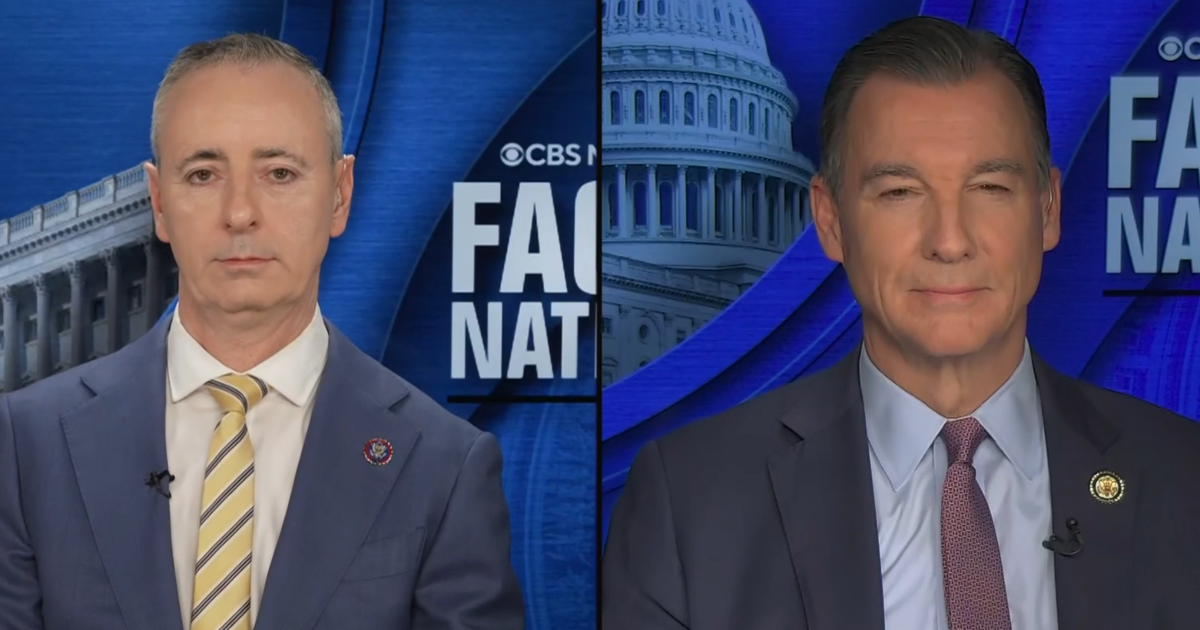
This is a transcript of a May 17, 2026 Face the Nation interview with Reps. Brian Fitzpatrick (R‑PA) and Tom Suozzi (D‑NY), co‑chairs of the bipartisan House Problem Solvers Caucus. Key points they discussed: gerrymandering and recent redistricting that analysts say advantaged Republicans by an estimated nine House seats; the caucus's support for federal incentives (via Help America Vote Act funding) for independent citizen redistricting commissions and computer‑assisted line drawing; concerns about closed primaries and proposals to open primaries nationwide; how safe seats and primary incentives encourage pandering to bases and reduce cross‑aisle cooperation; the recent Republican Senate primary loss of Bill Cassidy and President Trump's involvement in primaries, with mention of pressure on dissenting Republicans such as Rep. Thomas Massie; affordability as the top voter concern, with both members arguing for bipartisan, kitchen‑table economic solutions (they cited tariffs, war, data center costs, and debt as drivers of price increases); a discussion of a proposed federal gas tax holiday and concerns about impacts on the highway/transit trust fund raised by labor groups; and support for new Ukraine security assistance and sanctions, including a discharge petition in the House said to have reached 218 signatures. Throughout, both members framed their approach as centrist and bipartisan, emphasizing outreach to independents and voters across the political spectrum.
Biblical Reflection
From a Christian perspective, several themes stand out. First, the lawmakers' bipartisan emphasis—seeking cooperation, listening to constituents across party lines, and focusing on economic stewardship of families—aligns with biblical calls to love neighbor, pursue justice, and care for the vulnerable. Gerrymandering and closed primaries are described as structural incentives that encourage division and reward pandering; recognizing and reforming harmful systems is consistent with Scripture’s concern for just institutions (Isaiah and the prophets frequently call for fair governance). Second, be alert to political rhetoric and incentives: both speakers promote reforms that reflect their priorities (opening primaries, tying federal funds to redistricting rules), and partisan actors often frame reforms in terms advantageous to their side. The transcript includes factual claims and figures (e.g., estimated seat changes, number of states with independent commissions, percentages of primary voters) that summarize complex processes; Christians should value careful fact‑checking and humility about policy complexity rather than accepting political simplifications. Third, a spiritual hazard appears when party loyalty or personality politics supersede truth‑seeking and service—Scripture warns against idolatry of power and calls leaders to serve with humility. Finally, the call to focus on 'kitchen‑table' issues is a reminder that policy discussions are moral matters: economic policy affects families, children, and those in need. Christians can affirm efforts toward honest, structural reform and bipartisan problem‑solving while critically discerning motives, recognizing the limits of media summaries, and resisting simplistic either/or thinking.
Scripture in context
This outlook does not yet include contextual Scripture citations. Do not treat a general biblical theme as an exegetical conclusion.
Faithful Response
No prescribed response is offered. Consider the reflection prompts below in your own church context.
Reflection and Discussion
- 1What incentives (primary rules, district maps, campaign pressures) shape the behavior of elected officials more than conscience or the common good, and how should that change the way we evaluate political claims?
- 2When politicians call for bipartisanship or institutional reform, how can you discern whether the proposals are aimed at repairing civic health or at securing partisan advantage?
- 3How should Christians balance engagement on complex policy details (funding streams, constitutional limits, federalism) with moral commitments to justice, care for the vulnerable, and truthful speech?
Sources
Reporting links are evidence inputs; Sanctuary News' biblical reflection is commentary.
This outlook currently relies on fewer than two linked sources. Broaden verification before teaching from it.
- 1.Original reportprimary