News Summary
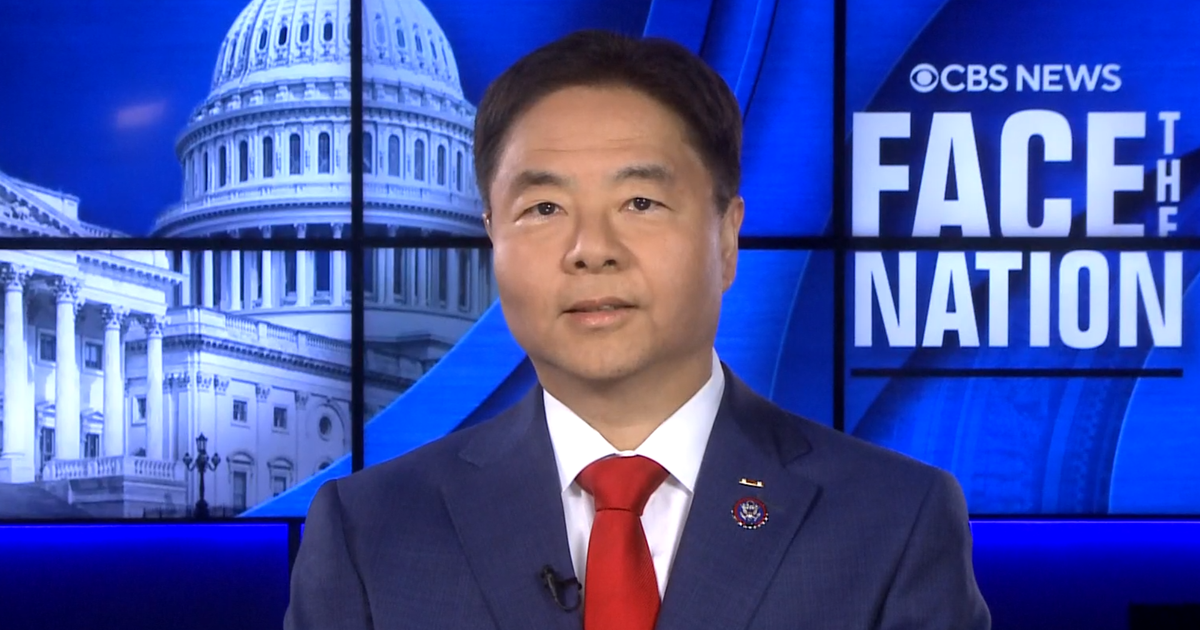
This is a transcript of a Face the Nation interview with Rep. Ted Lieu (D-CA) aired May 10, 2026. Lieu addressed redistricting and recent court decisions, disputing media characterizations that Republicans hold a nine-seat advantage and asserting the GOP advantage is smaller (he estimated three to five seats) and insufficient to stop a Democratic comeback in the midterms. He criticized the Virginia Supreme Court for ordering a new election and described Democratic spending on Virginia redistricting efforts (including over $60 million) as largely (c)(4) funds and taxpayer money he characterized as wasted. Lieu said Democrats will explore legal options and continue to contest maps, and predicted Democrats could win two of four Virginia seats in the midterms. On economic messaging, Lieu blamed former President Trump and Republican policies (including tariffs) for higher costs, inflation, and gas prices, and said Democrats will seek to lower health care and energy costs and reverse Medicaid/Medicare and ACA cuts. He stated the House passed an extension of ACA tax credits for three years and urged the Senate to act. On foreign policy, Lieu said U.S. policy toward Taiwan aims to preserve the status quo, warned that U.S. defensive munitions and stockpiles are depleted and that production capacity for certain missiles is limited (he cited an annual production figure of about 96 for one missile type), and called on the Pentagon to deliver a new Indo-Pacific strategy. He expressed concern about the U.S. ability to sustain a prolonged conflict with Russia or China. Regarding AI, Lieu (a former computer science student) said the industry needs reasonable guardrails; the interview experienced an audio gap during that exchange. The transcript records the full exchange and ends with a commercial break.
Biblical Reflection
This transcript presents a partisan political interview in which Rep. Lieu defends Democratic strategy, critiques judicial decisions and Republican policy, and raises national-security and technology governance concerns. As a primary source, it records assertions and policy positions rather than independent verification of facts. Christians should practice discernment: separate verifiable facts (e.g., that the Virginia court ordered a new election; that Congress passed specific legislation) from partisan interpretation and predictive claims (estimates of seat advantages, causal claims about inflation or production capacity). Biblical virtues useful here include truth-seeking (avoid accepting claims without evidence), stewardship (concern for public resources and defense readiness), and peacemaking (pursuing careful diplomacy and prudence around war and arms). Beware of framing that leans on fear or tribal identity to mobilize support; such rhetoric can harden divisions and make faithful civic engagement harder. At the same time, the pastoral response is not cynicism but prayerful engagement: hold leaders accountable with charity, demand careful use of public resources, support prudent national defense planning, and advocate for ethical, well-regulated technology. Specific claims Lieu made about munitions stockpiles and economic causation should be checked against Pentagon, CBO, and independent economic analyses before being accepted as settled facts.
Scripture in context
This outlook does not yet include contextual Scripture citations. Do not treat a general biblical theme as an exegetical conclusion.
Faithful Response
No prescribed response is offered. Consider the reflection prompts below in your own church context.
Reflection and Discussion
- 1Which statements in this interview are verifiable facts (dates, actions taken, laws passed) and which are interpretive or predictive claims that require independent evidence?
- 2How does partisan framing (language like 'disgraceful' or 'lied to them') shape the listener's response, and what steps can a Christian take to avoid adopting tribal reflexes when evaluating such rhetoric?
- 3What biblical priorities (truth, justice, stewardship, peacemaking) should guide how we judge claims about defense readiness, public spending, and the regulation of emerging technologies like AI?
Sources
Reporting links are evidence inputs; Sanctuary News' biblical reflection is commentary.
This outlook currently relies on fewer than two linked sources. Broaden verification before teaching from it.
- 1.Original reportprimary