News Summary
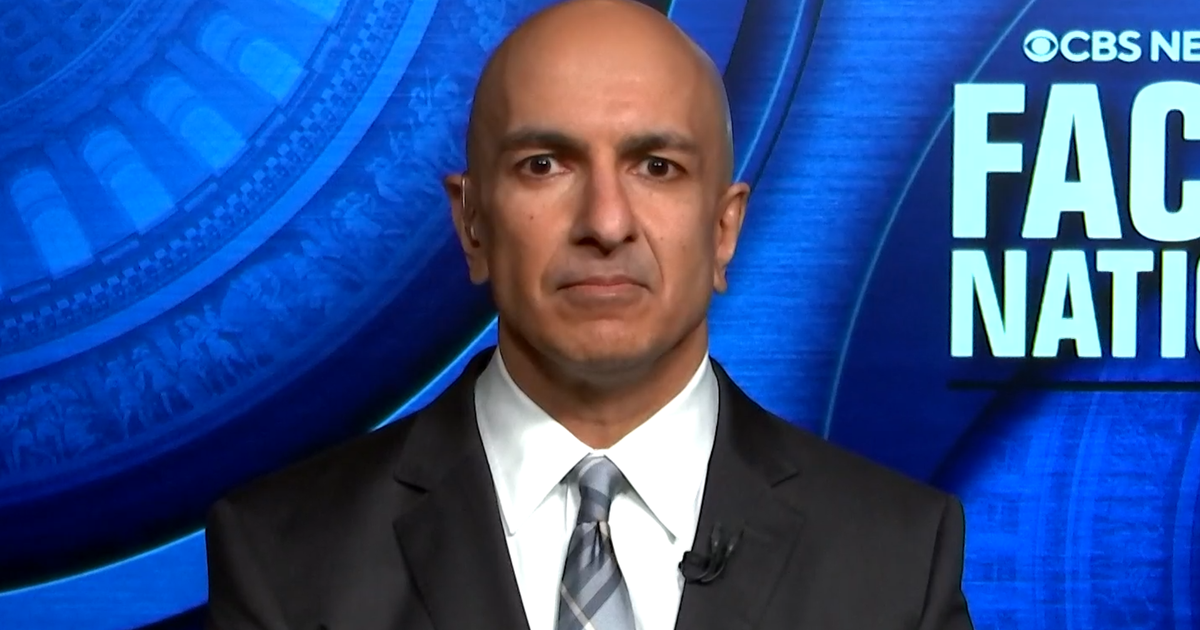
This is a transcript of a May 3, 2026 CBS "Face the Nation" interview with Neel Kashkari, President and CEO of the Federal Reserve Bank of Minneapolis. Kashkari said he dissented at the most recent Federal Open Market Committee meeting and signaled that, given elevated uncertainty from ongoing Middle East tensions (notably potential closures of the Strait of Hormuz), future rate cuts may not be appropriate and rate increases remain possible. He cited rising energy and fertilizer prices, supply-chain disruption that could take months to normalize, and observed that inflation measures are already reflecting those pressures. Kashkari described the U.S. labor market as in a "low hire, low fire" state with recent layoffs but generally stable unemployment near 4.3%; he warned a prolonged external shock could reduce consumer spending and weaken growth and employment. On institutional questions, he said he welcomes review of Fed communication tools and balance-sheet policies under incoming Fed chair Kevin Warsh, and that such discussions should be robust but civil. On the national debt, Kashkari said CBO projections point to an unsustainable trajectory and called on fiscal policymakers (Congress and the Executive) to address it, while noting he did not see an immediate crisis. The interview focused on uncertainty, monitoring incoming economic data, and the need for policy and fiscal responsibility.
Biblical Reflection
From a Christian perspective, the interview highlights a sober, data-driven posture by a public official confronting uncertainty. Kashkari's emphasis on caution, measurement, and contingency planning reflects virtues of prudence and humility before complex realities (we do not have certainty). The piece centers technocratic responses to economic shocks and correctly points to global events (energy disruption) as a material driver of inflation; however, it underplays domestic policy choices (fiscal deficits, distributional impacts) that also shape vulnerability. The worldview behind the interview is pragmatic and institutional: stabilizing prices and managing expectations for markets and political actors. Christians should note two moral lenses: first, stewardship and intergenerational justice — the national debt and fiscal choices have ethical implications for future generations (echoed in Kashkari's call for fiscal responsibility). Second, compassion for the economically vulnerable — inflation and higher energy costs disproportionately burden low- and fixed-income households, even if the discussion is framed primarily in macroeconomic terms. Media transcripts like this can feel neutral, but they often prioritize expert technical framing over voices of the marginalized; Scripture calls believers to weigh both wise public stewardship and care for the poor (e.g., plan responsibly and protect the vulnerable). Finally, a healthy Christian response is neither panic nor complacency: pray for discernment for leaders, seek truth in data, and advocate policies that balance prudence with justice.
Scripture in context
This outlook does not yet include contextual Scripture citations. Do not treat a general biblical theme as an exegetical conclusion.
Faithful Response
No prescribed response is offered. Consider the reflection prompts below in your own church context.
Reflection and Discussion
- 1What assumptions about causes and solutions (geopolitical shocks versus domestic fiscal policy) are most emphasized in this interview, and whose interests or voices may be missing from that framing?
- 2How does a technocratic focus on inflation and markets shape public conversation about justice for the poor and long-term stewardship of national resources?
- 3When experts call for "reexamining tools" or "robust discussion," what standards of truth, humility, and accountability should Christians expect from public servants and institutions?
Sources
Reporting links are evidence inputs; Sanctuary News' biblical reflection is commentary.
This outlook currently relies on fewer than two linked sources. Broaden verification before teaching from it.
- 1.Original reportprimary