News Summary
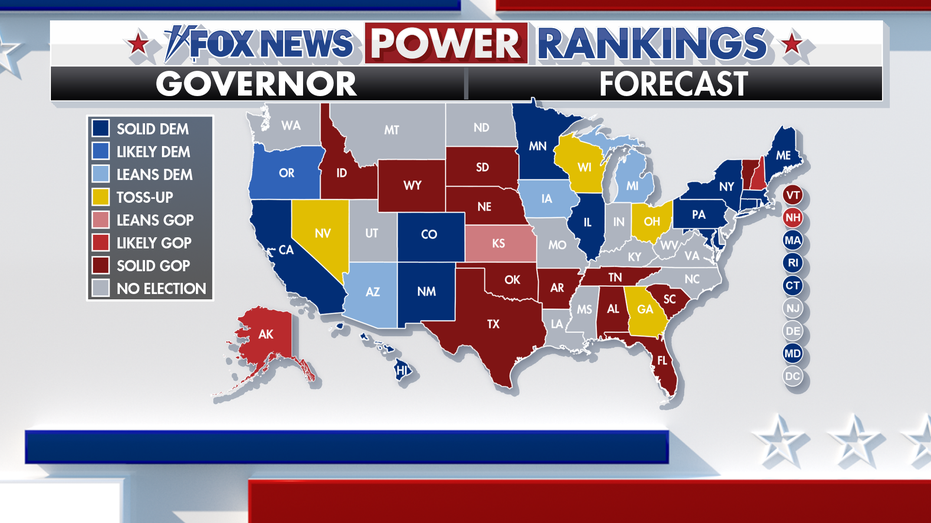
Reported facts: Fox News published a Power Rankings piece listing the top governor races to watch as 36 states choose their next governor, naming Wisconsin as a toss-up and Kansas as a prime flip opportunity for Republicans, and arguing these contests could determine which party holds a majority of statehouses. Attributed claims: The article presents its rankings and analysis (attribution: Fox News). Uncertainty: The article text provided does not show the criteria, data, candidate names, polling numbers, or the full list of races, so independent verification of the specific rankings and the underlying evidence is not available in the supplied material.
Source and Framing Analysis
Material uncertainties that affect the story include the absence of published criteria, data sources, or polling behind the power rankings in the supplied text. The framing emphasizes partisan control (majority of statehouses), which is a legitimate concern but also orients readers toward a scoreboard mindset. Because only a single outlet's rankings are supplied, readers should treat the list as one editorial assessment among others and seek additional sources for underlying polls, local context, and candidate information.
Biblical Reflection
The article frames gubernatorial contests chiefly as partisan contests with control of state government at stake. That framing is factually relevant—state governors and state legislatures shape laws and policies that materially affect citizens—but it reduces complex local issues and leadership qualities to a zero-sum tally of party control. Christians should notice both truths: the importance of civic outcomes, and the danger of treating elections primarily as team contests.
Biblical faith calls Christians to seek the common good, to weigh truth and justice, and to love neighbors across political lines. Read through that lens, the article's implicit message—that political control is the primary metric—risks encouraging tribalism rather than discerning evaluation of candidates' character and policy impacts on vulnerable people. Practically, this means we should not let partisan scoreboard thinking displace careful attention to how policies will affect neighbors in areas like health, education, mercy ministries, and religious liberty.
At the same time, the article rightly signals that many state-level outcomes matter for millions of people; Christians who care about justice and stewardship should pay attention and engage responsibly. That engagement should prioritize truth-seeking, mercy, humility, and peacemaking: verify claims, listen to local voices affected by policy, and resist dehumanizing those with differing views.
Scripture in context
- 1Mark 10:42-45 — In its immediate context, Jesus contrasts worldly leadership marked by power and domination with the kingdom ethic of service; he tells disciples that greatness in God's kingdom is shown by serving others and giving oneself for others. — This passage reminds Christians to evaluate political leaders by their willingness to serve the vulnerable rather than their ability to secure partisan advantage; it calls voters to prioritize servant-hearted leadership and policies that protect those in need.
Faithful Response
Pray for wisdom and for the protection of vulnerable communities affected by state policy.
Learn specifics: consult multiple sources for polling, candidate records, and local reporting rather than relying on partisan rankings alone.
Engage locally with humility—listen to neighbors, support charities and ministries addressing needs, and encourage civil civic participation.
Reflection and Discussion
- 1Are we more persuaded by party advantage or by concrete evidence about how a candidate's policies will affect real people?
- 2When headlines focus on who controls government, whose voices are left out of the conversation and how can we amplify them?
- 3How does Scripture’s call to serve the poor and seek justice change the way we evaluate political rankings and electoral strategy?
Sources
Reporting links are evidence inputs; Sanctuary News' biblical reflection is commentary.
This outlook currently relies on fewer than two linked sources. Broaden verification before teaching from it.
- 1.Fox News Power Rankings: The top races to watch as 36 states choose their next governorprimary_reporting