News Summary
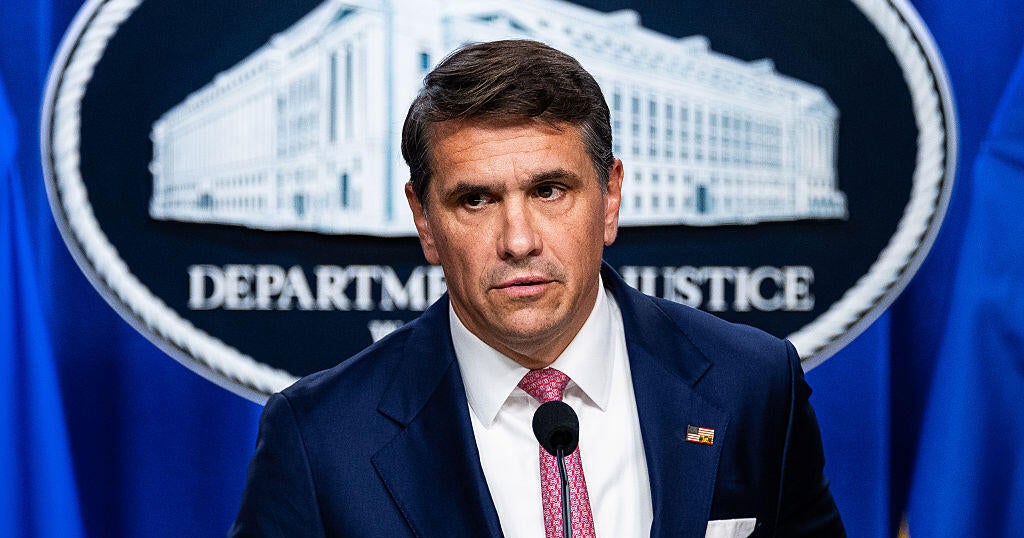
Acting Attorney General Todd Blanche is scheduled to appear before the Senate Judiciary Committee for a confirmation hearing in which senators are expected to question him about several controversies from his tenure at the Justice Department. Democrats plan to press him on alleged politicized prosecutions, the Justice Department’s handling of files related to Jeffrey Epstein, and Blanche’s prior role in proposing a roughly $1.8 billion “anti-weaponization” fund tied to an IRS settlement. President Trump nominated Blanche after firing Pam Bondi; Blanche has served as acting attorney general since Bondi’s removal and was previously confirmed as deputy attorney general. The Senate majority is Republican but narrowed following the death of Sen. Lindsey Graham; Blanche is widely seen as likely to be narrowly confirmed, though some Republicans (including Sens. John Cornyn and Thom Tillis) may express skepticism. The article recounts legal developments tied to the fund and related settlement, including a Miami federal judge’s rebuke and sanctions in an IRS case and a court order barring Blanche and another DOJ official from invoking parts of that settlement in formal proceedings. Separate litigation challenging the fund is pending in federal court. The piece summarizes other controversies: indictments Blanche oversaw of James Comey and New York Attorney General Letitia James that were dismissed on procedural grounds (with the DOJ appealing), a separate Comey indictment alleging threats, a dismissed human-smuggling indictment in Tennessee that a judge found vindictive in part because of Blanche’s public comments, Blanche’s meeting with Ghislaine Maxwell while her appeal was pending, and misstatements Blanche made about a Southern Poverty Law Center investigation. The article notes Blanche’s career background, his role representing Trump in state criminal cases, differing views among former colleagues about his ethics and leadership, reports of roughly 16,000 DOJ employee departures since the start of the second Trump administration, and both criticism and support for Blanche’s conduct. The Justice Department did not immediately comment for the article.
Biblical Reflection
From a Christian perspective, this story raises urgent questions about the stewardship of public trust, the impartial administration of justice, and the character of civic leadership. The article reports factual events and allegations, but it mixes documented court rulings and procedural facts with interpretive claims and source-based judgments about motive. Christians should note the biblical priority of impartial justice: leaders in legal institutions bear a special responsibility to pursue truth, protect the vulnerable, and avoid partiality. Where the Justice Department’s decisions produce sanctions, judicial rebukes, or credible claims of vindictiveness, those outcomes demand accountability and correction; where claims remain unresolved or are contested, Christians should refrain from partisan certainty. The piece reveals competing narratives — critics who say Blanche has politicized the department and supporters who defend his integrity — which highlights how political allegiance can shape perception of the same facts. Pastoral discernment calls us to insist on transparent processes, due process for the accused, and institutional reforms that decrease the opportunity for personal loyalty to override law. Christians should grieve any erosion of public institutions, resist cynicism that reduces everything to partisan warfare, and pray for leaders to act with humility, courage, and fidelity to truth.
Scripture in context
This outlook does not yet include contextual Scripture citations. Do not treat a general biblical theme as an exegetical conclusion.
Faithful Response
No prescribed response is offered. Consider the reflection prompts below in your own church context.
Reflection and Discussion
- 1Are we evaluating claims about legal and ethical misconduct by consistent standards, or letting partisan loyalty shape which facts we accept?
- 2How should Christians balance the need for institutional accountability with the biblical call to presume innocence and pursue fair process?
- 3What reforms or cultural changes in public institutions would most reduce the risk that personal loyalty or politics override impartial justice?
Sources
Reporting links are evidence inputs; Sanctuary News' biblical reflection is commentary.
This outlook currently relies on fewer than two linked sources. Broaden verification before teaching from it.
- 1.Original reportprimary