News Summary
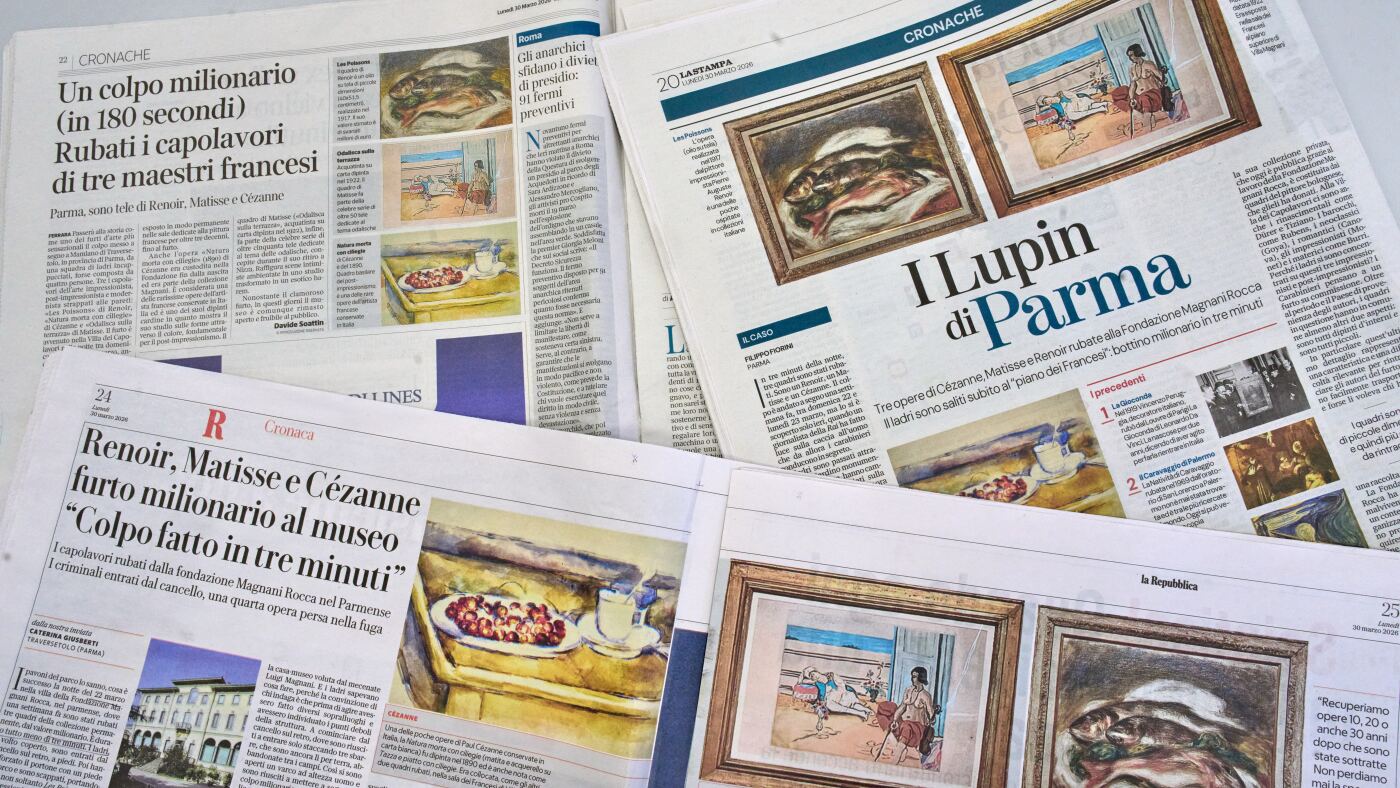
On the night of March 22–23, 2026, thieves forced open the entrance door of the Magnani Rocca Foundation, a private museum 20 kilometers from Parma in northern Italy, and stole three paintings: "Fish" by Auguste Renoir, "Still Life with Cherries" by Paul Cézanne, and "Odalisque on the Terrace" by Henri Matisse. Police said the works—worth millions of euros—were taken in under three minutes, with the perpetrators escaping across the museum gardens. The alarm interrupted the theft; authorities said the operation appeared to have been carried out by a structured, organized gang. The foundation, established in 1977 to display the collection of art historian Luigi Magnani, includes works by Dürer, Rubens, Van Dyck, Goya and Monet. Museum staff did not post an immediate public statement and were not reachable Monday because the institution was closed. An Italian art expert described the three works as relatively minor within the foundation's broader collection and said ransom or extortion is a possible motive. The report noted this theft follows a string of high-profile European museum robberies, including an October theft from the Louvre.
Biblical Reflection
From a Christian perspective, this theft raises several plain moral and spiritual concerns. At the simplest level, the taking of another’s property violates the commandment against stealing (Exodus 20:15) and is an expression of greed and harm that victims—here, a cultural institution and the public who value shared heritage—must endure. The media coverage focuses on market value and the notoriety of the artists, which can unintentionally reduce works of beauty to commodities; Christians should remember that created beauty points beyond itself to the Creator and deserves stewardship, not exploitation. The suggestion of an organized gang and possible ransom indicates planned criminal intent rather than isolated opportunism; that calls for measured support for law enforcement, justice, and restoration. Spiritually, the story invites sober reflection on both the brokenness that leads people to steal and the secular tendency to equate worth with price. Christians can oppose injustice while resisting sensationalism: pray for recovery and repentance, advocate for the protection of cultural goods as part of communal stewardship, and hold both the impulse to idolize wealth and the temptation to treat art merely as investment in tension with the biblical call to love God and neighbor. Finally, compassionate concern for those harmed (museum staff, scholars, and local community) and for the perpetrators’ moral recovery aligns with Christlike justice tempered by mercy.
Scripture in context
This outlook does not yet include contextual Scripture citations. Do not treat a general biblical theme as an exegetical conclusion.
Faithful Response
No prescribed response is offered. Consider the reflection prompts below in your own church context.
Reflection and Discussion
- 1Does the reporting emphasize monetary value and sensational details more than the cultural or communal significance of these works, and how does that shape our response?
- 2How does this event reflect both individual moral failure and larger social incentives that prize wealth and possession over stewardship and the common good?
- 3In seeking justice and recovery, how can Christians balance support for law enforcement and restoration with a posture of repentance and compassion toward those who commit crimes?
Sources
Reporting links are evidence inputs; Sanctuary News' biblical reflection is commentary.
This outlook currently relies on fewer than two linked sources. Broaden verification before teaching from it.
- 1.Original reportprimary