News Summary
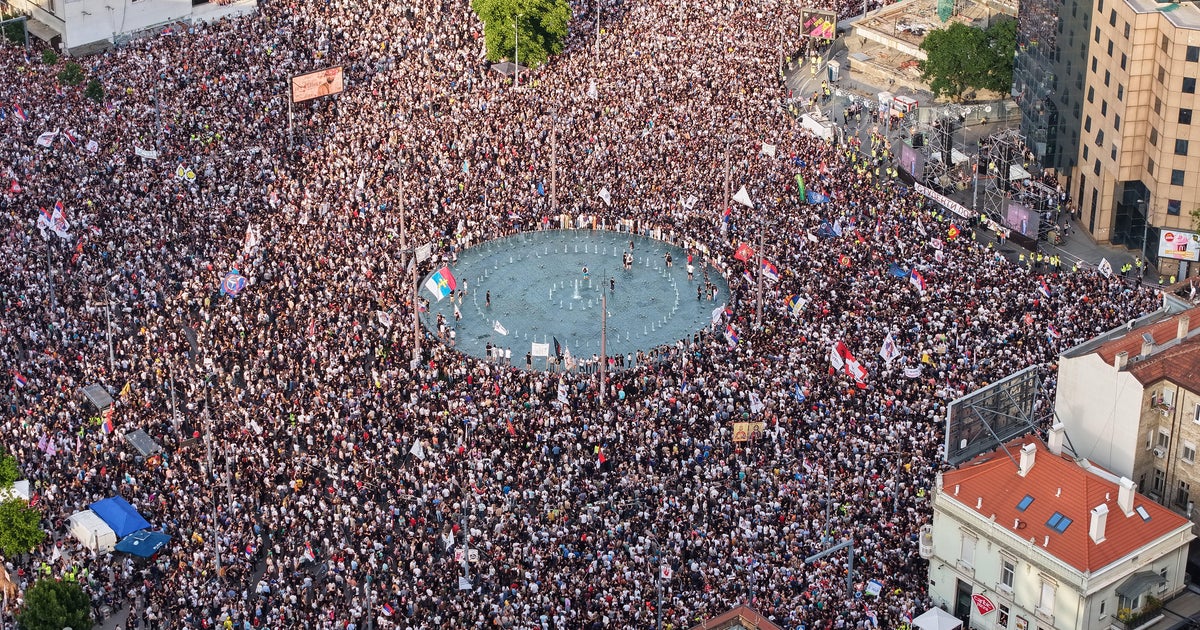
Tens of thousands of people gathered on May 23, 2026, at Slavija Square in Belgrade for an anti-government rally organized largely by a youth/student movement demanding early elections and the rule of law. The main rally was reported as peaceful. Later, smaller groups of mostly young demonstrators clashed with riot police: protesters threw flares, rocks and bottles at police cordons; police used pepper spray and advanced to disperse them. Police used anti-riot vehicles to block demonstrators and the violence ended after a period of confrontation. Authorities had earlier canceled all trains to and from Belgrade. President Aleksandar Vučić said protesters had shown a violent nature and affirmed that state institutions would continue to function according to law. The protests follow more than a year of demonstrations sparked by a November 2024 train-station canopy collapse that killed 16 people and allegations of corruption tied to renovation work. International bodies and rights observers have criticized Serbia’s handling of protests, citing reports of excessive force, arbitrary arrests and alleged protection of masked attackers; the Council of Europe Commissioner for Human Rights said the rights situation has deteriorated. The European Union has warned democratic backsliding could affect funding. Protest organizers say they plan to challenge Vučić electorally; the president said elections could be held between September and November 2026.
Biblical Reflection
From a Christian perspective, this story highlights tensions between legitimate calls for justice and order and the perilous ways political power and public dissent can devolve into cycles of accusation and violence. The students’ demands for accountability, rule of law, and an honest political process align with biblical concerns for justice (Isaiah 1:17; Micah 6:8). At the same time, the presence of violent clashes and rhetoric that dehumanizes opponents (branding critics as foreign agents) should make Christians cautious: violence undermines the moral force of legitimate complaints, and demonizing language corrodes civic trust and charity.
Media and official statements each carry partial views. Reports emphasize protesters’ numbers and grievances and note international criticism of government tactics; government statements emphasize public order and portray critics as destabilizing. A faithful Christian reading asks whether both sides are being heard honestly, whether claims of abuse or provocation are corroborated, and whether responses respect human dignity and the rule of law. Christians should therefore press for transparent investigation of alleged crimes (both the original station collapse and any instances of excessive force), protection for nonviolent assembly and journalists, and restraint by authorities and protesters alike. Finally, global geopolitical alignments (ties with China and Russia, EU accession stakes) mean secular interests may shape responses; Christians ought to seek truth beyond partisan framing and advocate for justice as a kingdom value rather than as a tool of political advantage.
Scripture in context
This outlook does not yet include contextual Scripture citations. Do not treat a general biblical theme as an exegetical conclusion.
Faithful Response
No prescribed response is offered. Consider the reflection prompts below in your own church context.
Reflection and Discussion
- 1How does labeling political opponents as 'foreign agents' or 'violents' shape public perception, and what discerning questions should we ask before accepting such labels?
- 2When a movement includes both peaceful protest and small-scale violence, how should Christians evaluate the legitimacy of the movement's demands and the proportionality of the state's response?
- 3Are institutions being called to accountability in ways that honor truth and human dignity, and what evidence would we look for to confirm that investigations and legal processes are fair?
Sources
Reporting links are evidence inputs; Sanctuary News' biblical reflection is commentary.
This outlook currently relies on fewer than two linked sources. Broaden verification before teaching from it.
- 1.Original reportprimary