News Summary
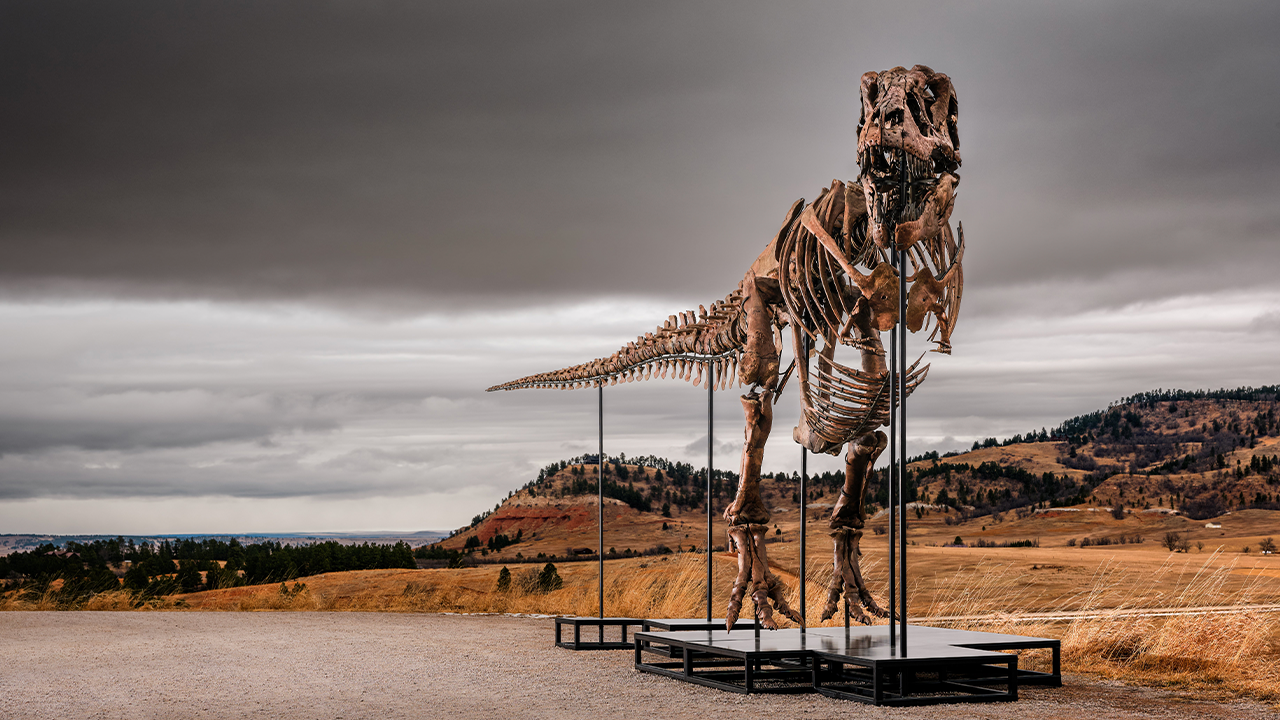
A Tyrannosaurus rex skeleton nicknamed "Gus" sold at Sotheby's for $50.1 million after a roughly 10-minute bidding contest involving seven bidders, surpassing its $20–30 million estimate and setting a new auction record for dinosaur fossils. The purchaser bid by phone and remained anonymous. 'Gus' is estimated at 67 million years old, stands about 12½ feet tall, measures roughly 38 feet long, and includes 183 fossil elements (about 61% complete by bone count, 75–80% by estimated original bone mass). The specimen shows healed fractures and bite marks consistent with trauma and scavenging. The fossil was found on ranchland in Harding County, South Dakota, after rancher Gary "Gus" Licking and Theropoda Expeditions (led by Thomas Heitkamp) located and excavated it over three field seasons; Heitkamp's team then spent years preparing and documenting the bones. The sale renewed debate about whether significant fossils should enter private collections or be held in public museums; the Society of Vertebrate Paleontology urged that the new owner make the specimen accessible to researchers and the public. The auction surpassed prior record fossils sold at Sotheby's, including a stegosaurus known as 'Apex' ($44.6 million in 2024) and the T. rex 'Stan' (nearly $32 million in 2020).
Biblical Reflection
This story sits at the intersection of scientific stewardship, private property, and cultural values. The facts reported (sale price, completeness, discovery, excavation, and institutional responses) are straightforward, but coverage that emphasizes the headline price can overshadow the scientific and ethical issues at stake. From a Christian perspective, fossils and other artifacts of creation are entrusted to human care; treating them primarily as high-value collectibles risks prioritizing wealth and status over the common good of knowledge, education, and research. At the same time, private funding and collectors can play constructive roles—excavation and preparation are expensive, and some private owners loan or donate objects to museums. Christian virtues counsel humility (we are stewards, not owners, of God's handiwork), truthfulness (advocate transparency about provenance and access), and neighbor-love (favor arrangements that preserve research access and public education). The proper balance honors legitimate property rights while pressing for practices—long-term public loans, museum partnerships, or donation—that keep important specimens available for scientific study and public benefit rather than locking them away as trophies.
Scripture in context
This outlook does not yet include contextual Scripture citations. Do not treat a general biblical theme as an exegetical conclusion.
Faithful Response
No prescribed response is offered. Consider the reflection prompts below in your own church context.
Reflection and Discussion
- 1Who gains when scientific specimens are sold at auction, and who may lose access to the knowledge they hold?
- 2Does framing discoveries mainly by their price obscure their deeper value as sources of truth about creation and history?
- 3How should the Christian value of stewardship shape expectations about private ownership versus public access to important natural artifacts?
Sources
Reporting links are evidence inputs; Sanctuary News' biblical reflection is commentary.
This outlook currently relies on fewer than two linked sources. Broaden verification before teaching from it.
- 1.Original reportprimary