News Summary
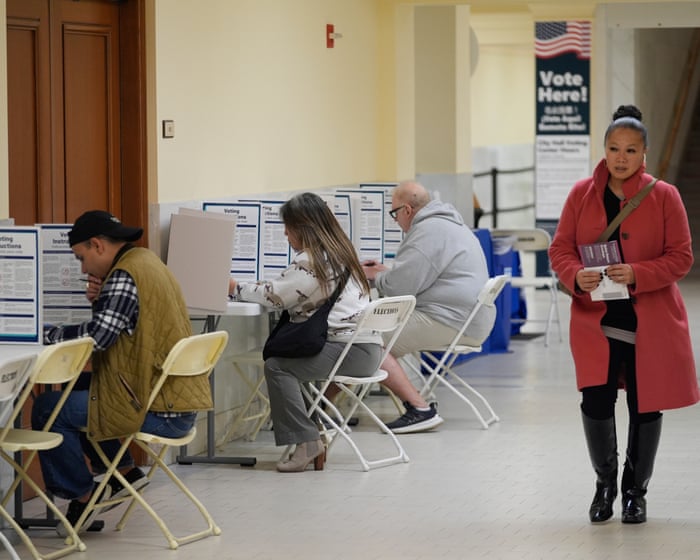
Reported facts: A Guardian opinion piece summarizes a study by Sojourn Strategies, Ariel Research Partners, and Richard Shafranek saying 35% of the U.S. electorate (approximately 85 million people) are “disaffected,” defined by high disillusionment and low trust in government and politics. Attribution: the 35% figure and characterization are attributed to the cited study and are reported in the authors’ commentary. Opinion/advice: The authors argue that rebuilding belonging and organized community organizing are necessary to counter authoritarianism and convert disaffected people into engaged civic actors. Uncertainty: the article is an opinion piece and does not include the full survey methodology, questionnaire, or statistical detail in the text supplied here.
Source and Framing Analysis
The piece is framed as an advocacy commentary by two practitioners in civic organizing who also cite a specific survey. The framing links large-scale civic disaffection to a threat of authoritarianism and proposes community organizing as the primary remedy. Material uncertainty affecting the story includes the absence of the full survey instrument, sampling details, and metrics used to define “disaffected,” which are necessary to evaluate the claim's scope and robustness. The authors’ organizational affiliations and mission-focused perspective plausibly shape their emphasis on community organizing as the key solution.
Biblical Reflection
The article raises a sober concern Christians should take seriously: a large portion of the electorate feels alienated from civic life, and that alienation weakens democratic institutions and leaves space for authoritarian alternatives. Scripture repeatedly calls God's people to care for the common good and to practice neighbor-love in ways that bind communities together. If civic belonging is indeed a bulwark against coercive power, Christians have reason to support honest efforts that rebuild trust, encourage participation, and restore civic friendships across differences.
At the same time, Christians should test the article’s claims and proposals by truth and prudence. The numerical finding (35% disaffected) rests on a survey summary published in a single opinion piece; its policy prescriptions reflect the authors’ organizing perspective. Discernment requires asking about the survey’s methodology and about whether proposed remedies actually foster the virtues of truth, mercy, humility, and justice rather than merely mobilizing partisanship. Constructive Christian engagement looks for practices that strengthen mutual accountability, protect the vulnerable, and cultivate a shared sense of belonging without demonizing neighbors.
Scripture in context
- 1Acts 2:42-47 — Luke’s account of the early Christian community in Acts describes believers sharing resources, meeting together, and growing in numbers through mutual care in the aftermath of Pentecost. — Acts shows a historic Christian model where belonging, shared life, and mutual service strengthened community resilience; this suggests that rebuilding civic bonds can be a legitimate aim for Christians seeking both spiritual and social renewal, while also reminding us that such practices serve gospel ends, not merely political goals.
Faithful Response
Listen to and accompany disaffected neighbors: offer sustained presence and practical help rather than quick political persuasion.
Encourage and participate in local civic life—school boards, neighborhood associations, food banks—that tangibly serve the common good.
Promote civic literacy and patient conversation: host forums or small groups that explain civic processes and create space for trusted relationships across differences.
Vote and help remove practical barriers to participation (e.g., transportation to polling places, information about registration) while modeling humility and gentleness in public debate.
Reflection and Discussion
- 1Are we treating civic belonging as a means to partisan ends, or as an expression of Christlike neighbor-love?
- 2Which practices in our congregation most effectively restore trust and can be shared with the wider community?
- 3How do we weigh the need for political change against the Christian call to patient service and reconciliation?
Sources
Reporting links are evidence inputs; Sanctuary News' biblical reflection is commentary.
This outlook currently relies on fewer than two linked sources. Broaden verification before teaching from it.
- 1.How do we defeat authoritarianism? By building a sense of belonging | Julie Fernandes and Katrina Gambleprimary_reporting