News Summary
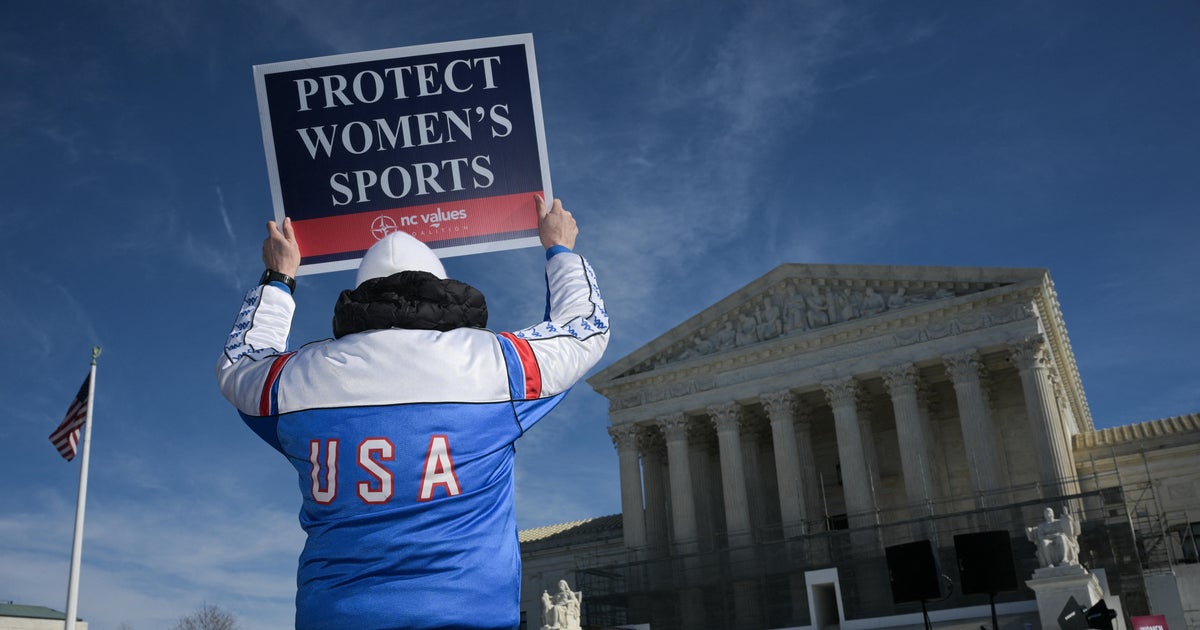
The U.S. Supreme Court ruled that states may prohibit transgender athletes from competing on girls' and women's sports teams. In two cases, West Virginia v. B.P.J. and Little v. Hecox, Justice Brett Kavanaugh wrote for the majority that schools may determine eligibility for women's and girls' sports based on biological sex under Title IX and the Equal Protection Clause. Three liberal justices dissented on the Equal Protection analysis but joined the court's conservatives in the Title IX holding. The decision upholds laws from West Virginia (the Save Women's Sports Act) and Idaho that bar students assigned male at birth from playing on girls' and women's teams. The cases reached the court after lower-court rulings split: a district court had upheld West Virginia's law while an appellate court had ruled it unlawful, and an appellate court had found Idaho's ban likely unconstitutional. The litigation involved plaintiffs including Becky Pepper-Jackson (a transgender high-school athlete in West Virginia who has used puberty blockers and hormone therapy) and Lindsay Hecox (who challenged Idaho's ban while at Boise State). The article notes similar laws exist in about 27 states, that the NCAA and International Olympic Committee have updated eligibility rules, and places the decision alongside other recent Supreme Court rulings involving transgender rights and federal civil-rights law.
Biblical Reflection
This ruling brings into tension two moral goods: the pursuit of fair competition for women and girls, and the protection and dignity of transgender people—especially youth. Legally, the Court framed the issue as a state power to define sex categories for athletic eligibility under Title IX and equal protection; that reasoning reflects a worldview that privileges categorical definitions of sex for institutional organizing. The article reports facts but largely centers the legal outcome and institutional responses rather than lived pastoral realities of the young people involved. Christians should recognize the legitimate aim of protecting opportunities for female athletes while also resisting any impulse to treat transgender persons as mere policy objects. Truth requires careful attention to scientific, medical, and social evidence about athletic advantage and to the scope and scale of those affected; mercy calls the church to care for transgender youth who may suffer stigma, exclusion, or psychological harm; humility reminds us that complex policy questions rarely admit simple answers; courage and peace call believers to advocate for just, compassionate solutions that minimize harm. Practically, the decision will reduce access to school teams for some transgender girls in many states and will shape the public conversation and policy for years—so churches and Christian leaders must minister pastorally to both girls whose competitive opportunities are at stake and to transgender youth and families navigating new legal barriers.
Scripture in context
This outlook does not yet include contextual Scripture citations. Do not treat a general biblical theme as an exegetical conclusion.
Faithful Response
No prescribed response is offered. Consider the reflection prompts below in your own church context.
Reflection and Discussion
- 1Which communities are centered in how this story is told—female athletes, transgender youth, legislators, or institutions—and how does that framing shape our view of justice?
- 2How does defining eligibility by 'biological sex' influence public policy and conversation, and what assumptions about bodies and fairness underlie that language?
- 3Where can Christian communities hold both concerns for fair competition and deep pastoral care for transgender children without defaulting to partisan postures?
Sources
Reporting links are evidence inputs; Sanctuary News' biblical reflection is commentary.
This outlook currently relies on fewer than two linked sources. Broaden verification before teaching from it.
- 1.Original reportprimary