News Summary
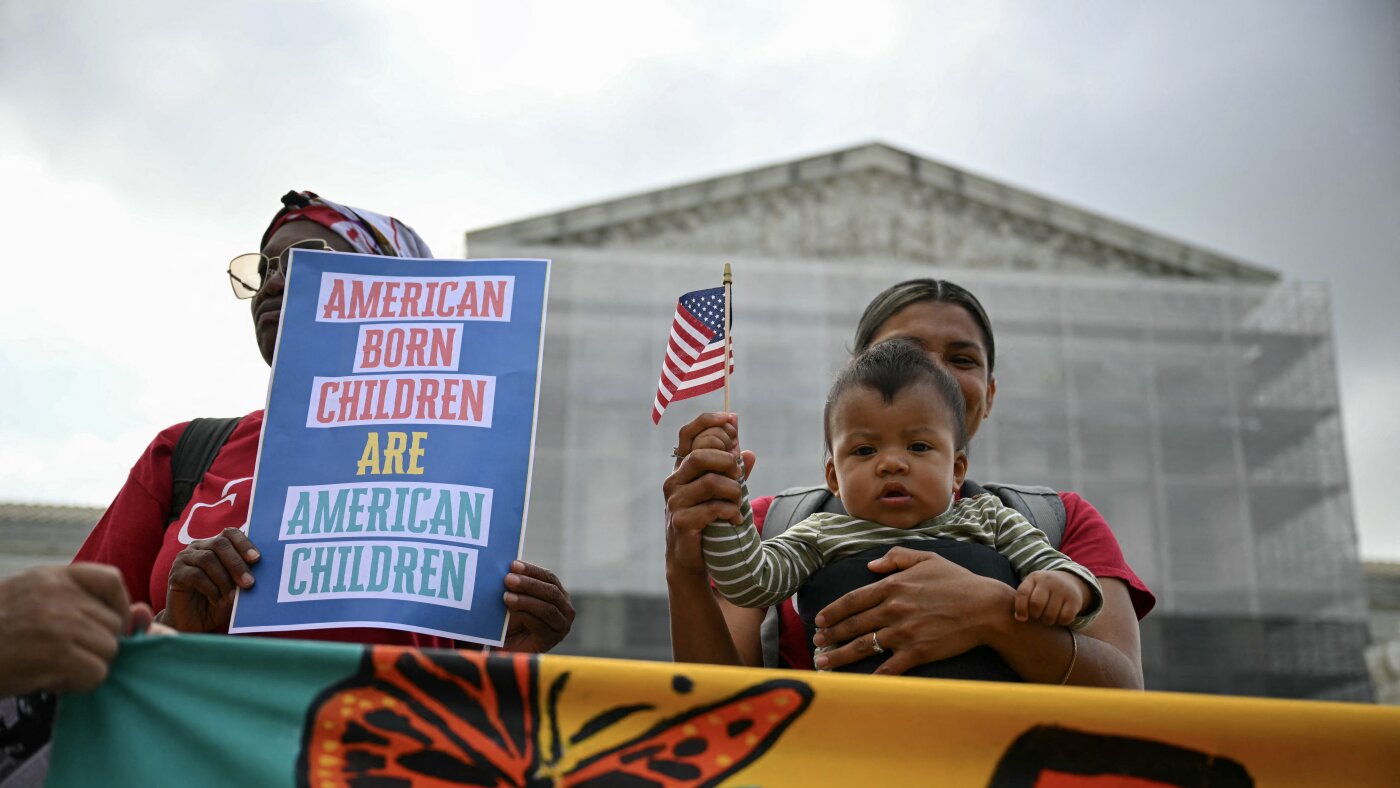
The U.S. Supreme Court will hear Trump v. Barbara on April 1, 2026, a case arising from a presidential executive order issued by President Trump seeking to limit birthright citizenship. The order has been blocked in lower courts. Advocates for children and immigrant-rights organizations submitted amicus briefs and are warning that ending automatic birthright citizenship would create new administrative requirements for proving a newborn's citizenship status and could disrupt immediate access to benefits and services. Currently, most babies born in U.S. hospitals are automatically treated as citizens and hospitals often assist with paperwork for Social Security numbers needed to enroll in programs. Federal programs allow pregnant women to access Medicaid in all states regardless of immigration status; Medicaid covers about 40% of U.S. births. The article cites estimates that about 300,000 babies in 2023 were born to parents without legal status and that roughly 3.6 million babies are born in the U.S. each year. Advocates raise specific concerns: delays or loss of Medicaid, SNAP, and WIC for newborns; complications for children of same-sex parents, surrogates, or assisted reproduction arrangements; problems when parentage is unknown or a parent’s documents are lost; and broader chilling effects on prenatal care when immigrant communities fear seeking services. Hospital and major medical associations declined to comment for the article. Commentators quoted include Bruce Lesley (First Focus on Children), Hannah Steinberg (ACLU Immigrant Rights Project), and Arturo Vargas Bustamante (UCLA Latino Policy and Politics Institute).
Biblical Reflection
From a Christian perspective the article highlights a real ethical tension: legal and policy debates about nationality and administrative processes can have immediate, practical consequences for vulnerable infants and families. Scripture consistently calls believers and societies to protect and provide for children and the vulnerable (e.g., care for orphans, defend the helpless). The advocates quoted focus on concrete harms that could follow from a loss of automatic citizenship — interruptions in health coverage and supports during the earliest, high-risk period of life. Those concerns are reasonable to take seriously: if policy changes create paperwork hurdles that delay access to care for newborns, lives and long-term health can be affected. At the same time, the article leans on advocacy voices and projections of possible harms; it contains little representation of legal arguments in favor of changing birthright rules, nor does it document how specific administrative systems would be designed if the Court ruled differently. That absence makes some claims predictive rather than strictly evidentiary. Christians should therefore hold two convictions simultaneously: (1) a moral imperative to protect infants and ensure continuity of care and support regardless of legal debates, and (2) a sober demand for accurate, balanced information about legal mechanisms and real-world implementation before accepting worst-case projections as inevitabilities. The underlying worldview of the advocates is rooted in the priority of human dignity and social safety nets; the opposing view (not represented here) tends to emphasize legal definitions of nationality and state control over immigration policy. Biblical truth calls us to defend the weak and to pursue justice (Isaiah 1:17; James 1:27), while also urging wisdom and truthfulness in public discourse (Proverbs 18:17, Ephesians 4:15). Christians engaging this issue should press for policies and court outcomes that safeguard children’s access to health and nourishment, insist on clear administrative plans that prevent harm, and resist partisan rhetoric that dehumanizes families on either side of the debate.
Scripture in context
This outlook does not yet include contextual Scripture citations. Do not treat a general biblical theme as an exegetical conclusion.
Faithful Response
No prescribed response is offered. Consider the reflection prompts below in your own church context.
Reflection and Discussion
- 1Who is missing from the public debate and decision-making (e.g., medical providers, social-service administrators, or directly affected families), and how might their inclusion change the policy conversation?
- 2Which claims in the article are factual (current law, program rules, statistics) and which are projections about administrative implementation if law changes — and how should that distinction shape our response?
- 3How can Christians advocate for both the rule of law and the immediate protection of vulnerable children when legal changes are debated or implemented?
Sources
Reporting links are evidence inputs; Sanctuary News' biblical reflection is commentary.
This outlook currently relies on fewer than two linked sources. Broaden verification before teaching from it.
- 1.Original reportprimary