News Summary
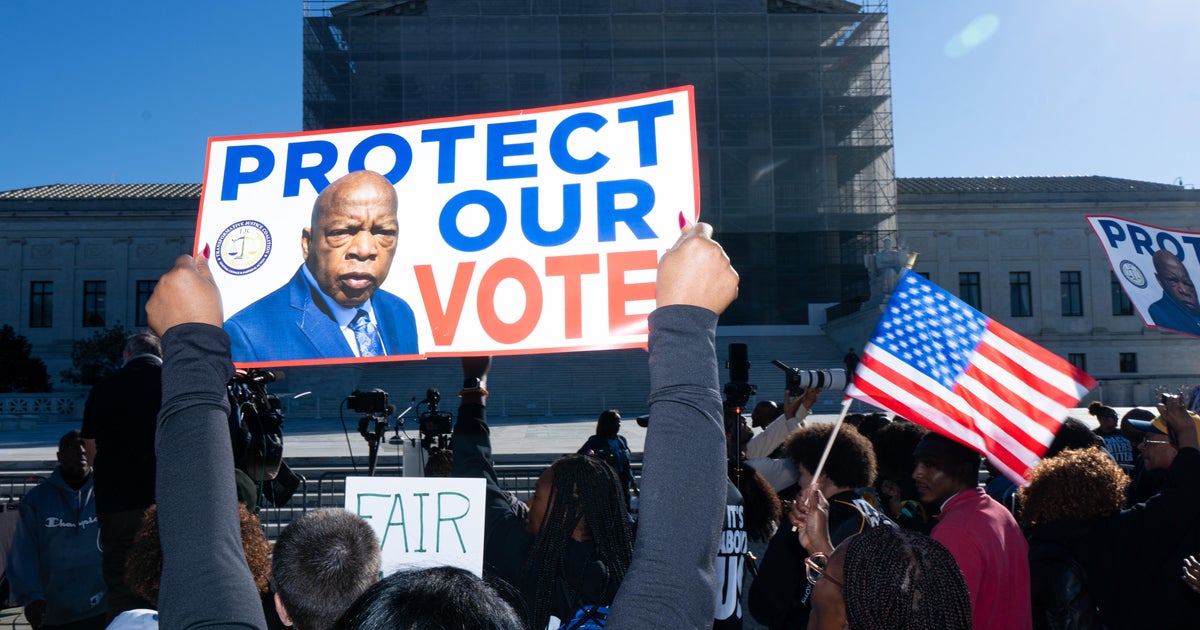
The U.S. Supreme Court, in a 6-3 decision authored by Justice Samuel Alito, struck down Louisiana's congressional map that included two majority-Black districts. The Court upheld a lower-court ruling that the state's legislature relied too heavily on race when it redrew districts to comply with Section 2 of the Voting Rights Act. The majority said that compliance with Section 2 could not justify the state's use of race in drawing House district lines and revised the legal standard courts use to evaluate Section 2 claims, requiring stronger evidence that race-based districting was intentionally used to reduce minority voters' electoral opportunity. Justices Elena Kagan, Sonia Sotomayor and Ketanji Brown Jackson dissented, arguing the ruling severely weakens Section 2 and will hamper minority voters' ability to challenge maps. The decision affects Louisiana's map used in recent elections and could influence litigation and redistricting nationwide ahead of midterm contests. Responses were divided along partisan lines: the White House and Republican officials praised the ruling as affirming equal protection and preventing race-based districting, while civil-rights groups including the NAACP called it a major setback for minority representation and voting rights. Background: Louisiana adopted new lines after the 2020 Census; a federal court ordered a remedial map with a second majority-Black district after a lawsuit alleging Section 2 vote dilution. That remedial map was later challenged as an unconstitutional racial gerrymander, leading to the Supreme Court review and this ruling.
Biblical Reflection
A Christian reading should hold together two biblical priorities: a commitment to impartial justice under the law and a concern for those historically marginalized. The article reports a legal ruling about how race may be considered in redistricting and the Court's reinterpretation of Section 2; it is descriptive of legal outcomes but framed with partisan quotes that highlight political consequences. The underlying worldviews at tension are (1) a legal formalism that emphasizes colorblind application of constitutional protections and (2) a remedial justice posture that accepts race-conscious measures to remedy historical and structural disadvantage. Scripture calls believers to pursue justice, defend the vulnerable, and not show partiality (e.g., Micah 6:8; James 2). At the same time, Christians are called to integrity in civic discourse — to test claims, avoid partisan simplification, and seek reconciliation rather than scorched-earth responses. Be aware of biases in the coverage: selection of emotive quotes and partisan reactions can make the story feel more like a political win/loss than a legal change with long-term policy implications. Practically, believers should assess the ruling on two levels — its legal merit and its human consequences. Legally, the Court has altered the burden for proving discriminatory vote dilution; substantively, that change may make it harder for minority communities to secure districting that enables equitable representation. The Christian response should be to pray for wise and fair governance, to advocate for policies that protect equal access to the political process, and to pursue local and civic engagement that seeks both justice and peace.
Scripture in context
This outlook does not yet include contextual Scripture citations. Do not treat a general biblical theme as an exegetical conclusion.
Faithful Response
No prescribed response is offered. Consider the reflection prompts below in your own church context.
Reflection and Discussion
- 1Does this reporting primarily foreground legal reasoning or political advantage — and how does that framing shape our understanding of justice in this case?
- 2How should Christians weigh a constitutional, 'colorblind' legal interpretation against efforts to remedy historical racial disadvantages when both claims appeal to fairness?
- 3What signs should we look for that a legal change will produce real gains or losses in the political voice of marginalized communities, beyond immediate partisan claims?
Sources
Reporting links are evidence inputs; Sanctuary News' biblical reflection is commentary.
This outlook currently relies on fewer than two linked sources. Broaden verification before teaching from it.
- 1.Original reportprimary