News Summary
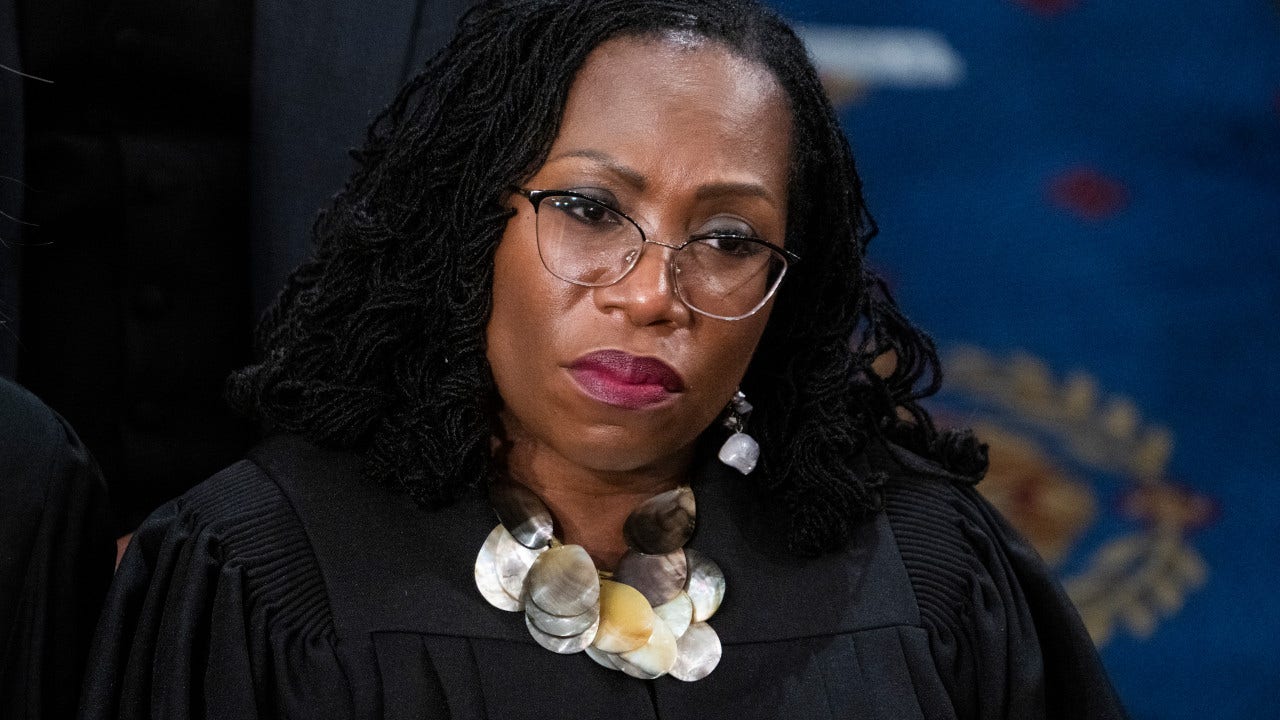
The U.S. Supreme Court, relying on its recent decision in Louisiana v. Callais, sent a Mississippi voting-rights case back to a U.S. district court "for further consideration." Louisiana v. Callais limited the scope of Section 2 of the Voting Rights Act and rejected the view that compliance with Section 2 required Louisiana to create a second majority-Black congressional district; the Court said states may consider the Voting Rights Act but are not required in that case to draw such a district. The Court's approach in Callais makes it harder for plaintiffs to challenge district maps by emphasizing the need to show a racially discriminatory motive. Justice Ketanji Brown Jackson dissented from the order to vacate the lower court judgment in the Mississippi case, arguing the Callais decision did not address the question of Section 2’s private enforceability and that there was no basis to vacate the lower court ruling. The remand could prompt additional litigation over congressional maps and the enforcement of minority-voter protections.
Biblical Reflection
From a Christian perspective, this story raises questions about how legal decisions affect vulnerable and marginalized communities. Scripture repeatedly calls God’s people to defend the rights of the poor and oppressed and to seek just treatment for all (e.g., Micah 6:8, Isaiah 1:17). The Court’s narrowing of Section 2 and its remand of the Mississippi case reflect a legal shift that may make it harder for plaintiffs to obtain remedies for voting practices that disadvantage racial minorities. The article spotlights a dissenting justice and frames the ruling as potentially erasing prior victories for voting-rights groups; readers should note the piece comes from a single media outlet and emphasizes conflict and consequence, which can heighten alarm without laying out the full range of legal arguments or possible outcomes. Biblically, Christians should be attentive to the substance of the law and its real-world effects on neighborliness and equal dignity. That means: (1) evaluating whether the legal standard protects those at risk of being silenced politically, (2) resisting simplistic partisan narratives that treat judicial acts as purely political wins or losses, and (3) advocating for justice through lawful means while exercising humility about complex constitutional questions. The spiritual posture the church is called to adopt is neither blind partisanship nor fatalistic disengagement, but prayerful discernment, defense of the marginalized, and respect for legal processes that steward truth and equity.
Scripture in context
This outlook does not yet include contextual Scripture citations. Do not treat a general biblical theme as an exegetical conclusion.
Faithful Response
No prescribed response is offered. Consider the reflection prompts below in your own church context.
Reflection and Discussion
- 1What assumptions about motive, evidence, and the role of courts are embedded in the Court's new standard, and how might those assumptions shape who has political voice?
- 2How does the article's framing (emphasis on dissent and potential reversal of prior victories) influence your perception of the ruling's immediate and longer-term consequences?
- 3In light of Scripture's call to justice, how should Christians balance respect for judicial institutions with advocacy for laws and policies that protect marginalized communities?
Sources
Reporting links are evidence inputs; Sanctuary News' biblical reflection is commentary.
This outlook currently relies on fewer than two linked sources. Broaden verification before teaching from it.
- 1.Original reportprimary