News Summary
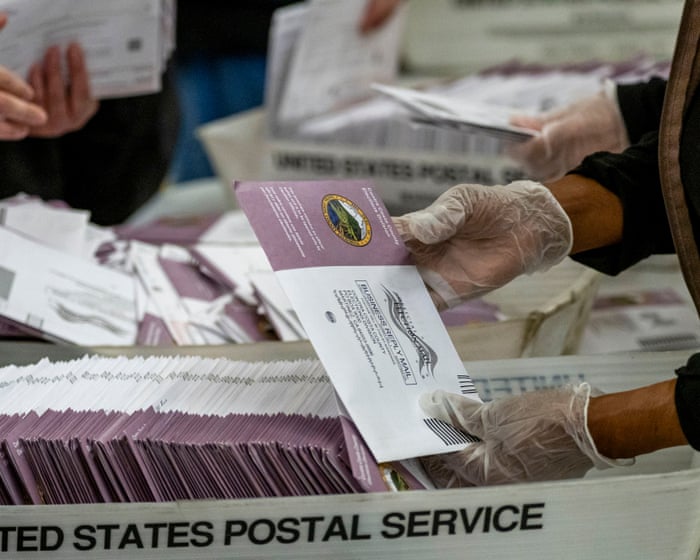
The U.S. Supreme Court, in a 6–3 decision reported by The Guardian, lifted a June injunction that a Massachusetts judge had placed on a presidential executive order restricting mail-in ballot delivery. The Guardian says a separate injunction remains in place and that the ruling leaves room for further legal challenges. A later Guardian excerpt reports a U.S. district judge, Indira Talwani, imposed a 14-day hold on implementing the order, pausing action close to when mail ballots are scheduled to go out. The Guardian article describes uncertainty about whether the administration can implement changes before the November midterm elections.
Source and Framing Analysis
Primary reporting for this cluster comes from The Guardian. Strengths: the reporting identifies a concrete judicial outcome (a 6–3 Supreme Court action lifting an earlier injunction) and acknowledges important qualifiers (another injunction remains, further litigation is possible, and timing for any administrative changes is uncertain). A separate Guardian excerpt specifies a 14-day district‑court hold ordered by Judge Indira Talwani, which materially updates the timeline. Limitations and framing: the articles do not reproduce the Supreme Court order or opinions or the executive order text, and they omit detailed legal reasoning and the precise scope of the remaining injunction. The Guardian pieces use editorial language (for example describing the president as 'obsessed' with restricting mail voting) that moves beyond strictly neutral description and should be treated as interpretive framing. The reporting also appears to contain at least one factual misattribution (an apparent reference to 'prime minister Mark Carney'), which requires correction or verification. For full clarity, primary documents (court orders, filings, the executive order) and additional independent reporting are needed.
How sources covered this story
Sanctuary separately assesses reporting quality and alignment with Christian virtues. The virtues assessment considers truthfulness, dignity, compassion, justice, peacemaking, humility, and care for vulnerable people. It does not assess a publisher's faith or reward religious language.
Compare 2 reports
Rank 1
The Guardian: Federal judge again halts Trump’s executive order limiting mail voting in midtermsReporting 80/100Virtues 78/100
- Distinctive contribution
- Names Judge Indira Talwani, specifies a 14-day hold, and frames the halt as the second stoppage close to when postal ballots will be sent.
- Framing
- Straight news framing that emphasizes immediacy and procedural disruption (second halt) and connects the legal action to the upcoming midterm timeline.
- Omissions or uncertainty
- Does not explain the legal basis for the hold, which party brought the challenge, specifics of what the executive order would change, whether the government will appeal, or details of the earlier Supreme Court action referenced.
- Why these scores
- The excerpt is concise and factual: it names the judge, gives the length of the hold, and places the development in context (timing before ballots). It attributes the action to the US district court and notes the prior Supreme Court reversal of an earlier injunction. It is limited in depth (no legal reasoning, parties, or quotes), but fulfills a clear news purpose reliably. The piece is truthful, non‑dehumanizing, and focused on civic process and timing (care for voters' ability to participate). It lacks explicit compassionate or justice-focused language but does not exhibit sensationalism or disrespect; it centers on facts that matter to public fairness.
Rank 2
The Guardian: First Thing: Supreme court threatens midterms mail-in voting as it backs Trump planReporting 72/100Virtues 68/100
- Distinctive contribution
- Reports the Supreme Court acted 6-3 along ideological lines to lift a June injunction, clarifies that a second injunction still stands, and highlights the president’s longstanding public claims that mail voting is cheating despite his own past use.
- Framing
- Interpretive/contextual summary with editorial language (e.g., 'threatens', 'obsessed') that emphasizes the political and ideological dimensions of the court’s action.
- Omissions or uncertainty
- Doesn’t identify which injunction remains in place, which justices voted which way, the legal reasoning the Supreme Court relied on, who brought the original suits, or the likely practical impact/timing for implementation.
- Why these scores
- The excerpt supplies clear, newsworthy facts (vote split, injunction lifted) and useful context about ongoing litigation risk. As a short summary/brief, it's serviceable, but it uses editorialized language and lacks legal specifics and sourcing that would strengthen its utility for readers wanting detailed legal understanding. The summary is mostly factual and avoids dehumanizing language, but the editorial tone ('obsessed', 'threatens') introduces evaluative language that reduces neutrality. It still centers on protecting the integrity of voting and informs the public, which supports justice and truth, but is less measured than the ideal.
Biblical Reflection
Christians should treat this development as both a civic and pastoral concern. Protecting lawful access to voting advances justice and dignity for neighbors; at the same time, respect for legal process and humility about political claims are vital. Faithful responses center truth-seeking (consult primary documents and reliable reporting), mercy (care for elders, disabled, and marginalized voters whose access could be disrupted), justice (advocate for fair, nonpartisan safeguards), peacemaking (avoid incendiary rhetoric and calm fearful congregations), and practical service (share accurate information and help people vote lawfully).
Scripture in context
- 1Romans 13:1-7 — Paul addresses the role of governing authorities and the believer’s relation to public order and civic obligations. — This passage reminds Christians to respect lawful authority while also calling for accountability where institutions act unjustly. In a contested election-administration context, believers are urged to pray for civic leaders, to pursue justice lawfully, and to protect vulnerable neighbors’ access to civic participation without resorting to partisan rancor.
Faithful Response
Seek accurate information before publicizing claims: consult the Supreme Court orders, district-court filings, the executive order text, and reputable legal reporting.
Provide calm pastoral care: name congregants’ anxieties, correct misinformation, and encourage reliance on verified guidance rather than rumor.
Support vulnerable voters: offer nonpartisan assistance (rides to vote, help with ballot requests/returns, accessible information) especially for elderly, disabled, and marginalized neighbors.
Engage lawful remedies: if you or your congregation want to act civically, do so through nonviolent, lawful channels — contacting election officials, supporting voter‑protection groups, and using legal processes where appropriate.
Model truthful, humble speech: avoid partisan invective; report what is confirmed, note uncertainties, and prioritize neighborly dignity in public statements.
Reflection and Discussion
- 1Is my immediate reaction driven more by concern for fair access or by partisan loyalty, and how should that shape my next actions?
- 2How can our congregation practically protect and assist the most vulnerable voters in our community this week?
- 3When information is incomplete or contested, how can we model humility and insist on facts rather than amplifying fear?
Sources
Reporting links are evidence inputs; Sanctuary News' biblical reflection is commentary.
This outlook currently relies on fewer than two linked sources. Broaden verification before teaching from it.
- 1.First Thing: Supreme court threatens midterms mail-in voting as it backs Trump planprimary_reporting