News Summary
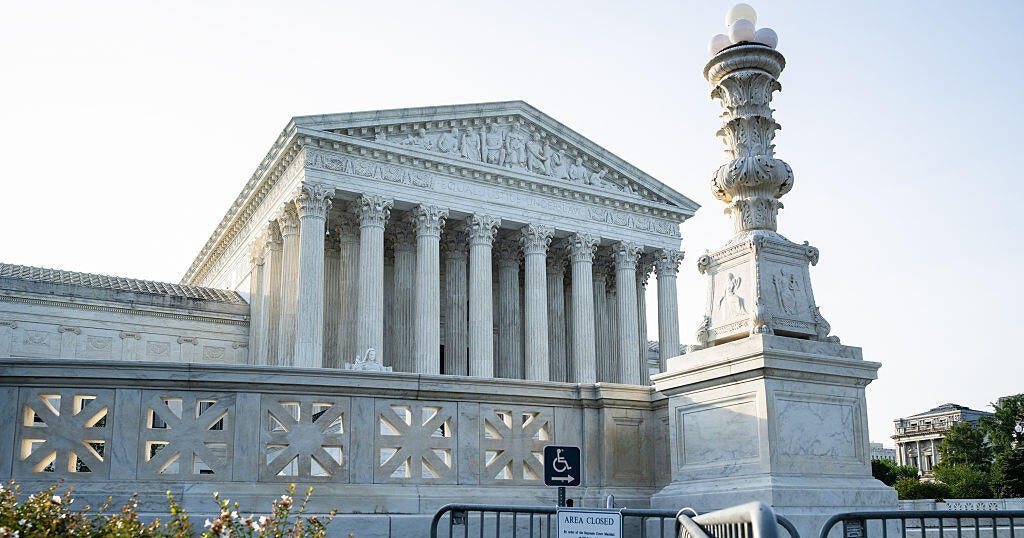
In a 6-3 decision in National Republican Senatorial Committee v. Federal Election Commission, the U.S. Supreme Court struck down federal caps on coordinated spending between political committees and federal candidates, ruling those limits violate the First Amendment; the opinion was authored by Justice Brett Kavanaugh. The contested limits were set by the Federal Election Campaign Act and in the 2026 cycle ranged from roughly $65,300 to $4 million depending on office and activity. Plaintiffs included Republican committees, then-Senate candidate JD Vance, and Rep. Steve Chabot; the FEC (under the Trump administration) joined the challenge and the court appointed an outside lawyer to defend the limits. The ruling continues a line of recent Supreme Court decisions that have invalidated various campaign finance restrictions. Republican leaders praised the decision as a free-speech and party-competitiveness victory; Democratic leaders warned it will strengthen the influence of wealthy donors and increase corruption risks. The ruling comes months before the 2026 midterm elections and changes the legal baseline for party-candidate coordination and spending.
Biblical Reflection
The article reports a concrete legal change that intensifies the longstanding tension between protecting political expression and guarding the integrity of democratic processes. Factually, the piece is straightforward, but its framing—quoting partisan responses and placing the ruling among prior court decisions—underscores that this is both a legal and political turning point. From a Christian perspective, important values are in tension: the biblical call to truth and justice warns against structures that allow concentrated wealth to drown out vulnerable voices, while respect for free speech and lawful procedures matters for liberty and conscience. Christians should notice the power dynamics at stake—who gains influence when spending limits fall—and advocate for transparency, accountability, and policies that protect the common good without unnecessarily silencing speech. We should also be wary of partisan spin on both sides: praise of a ‘‘free speech victory’’ can obscure practical harms, and warnings about corruption can sometimes be amplified for political advantage. The faithful response is sober, informed engagement—seeking reforms (like stronger disclosure, enforcement of anti-corruption laws, and civic education) that guard democracy and neighbor-love rather than simply celebrating or condemning a court outcome.
Scripture in context
This outlook does not yet include contextual Scripture citations. Do not treat a general biblical theme as an exegetical conclusion.
Faithful Response
No prescribed response is offered. Consider the reflection prompts below in your own church context.
Reflection and Discussion
- 1Which value is being prioritized in this ruling—maximizing political speech or limiting undue influence—and how does that choice reshape who has voice in public life?
- 2How might easier coordination between parties and candidates change incentives for elected officials, donors, and the media, and what accountability gaps could open as a result?
- 3What practical safeguards (transparency, disclosure, enforcement) could address legitimate corruption concerns without undermining genuine political expression?
Sources
Reporting links are evidence inputs; Sanctuary News' biblical reflection is commentary.
This outlook currently relies on fewer than two linked sources. Broaden verification before teaching from it.
- 1.Original reportprimary