News Summary
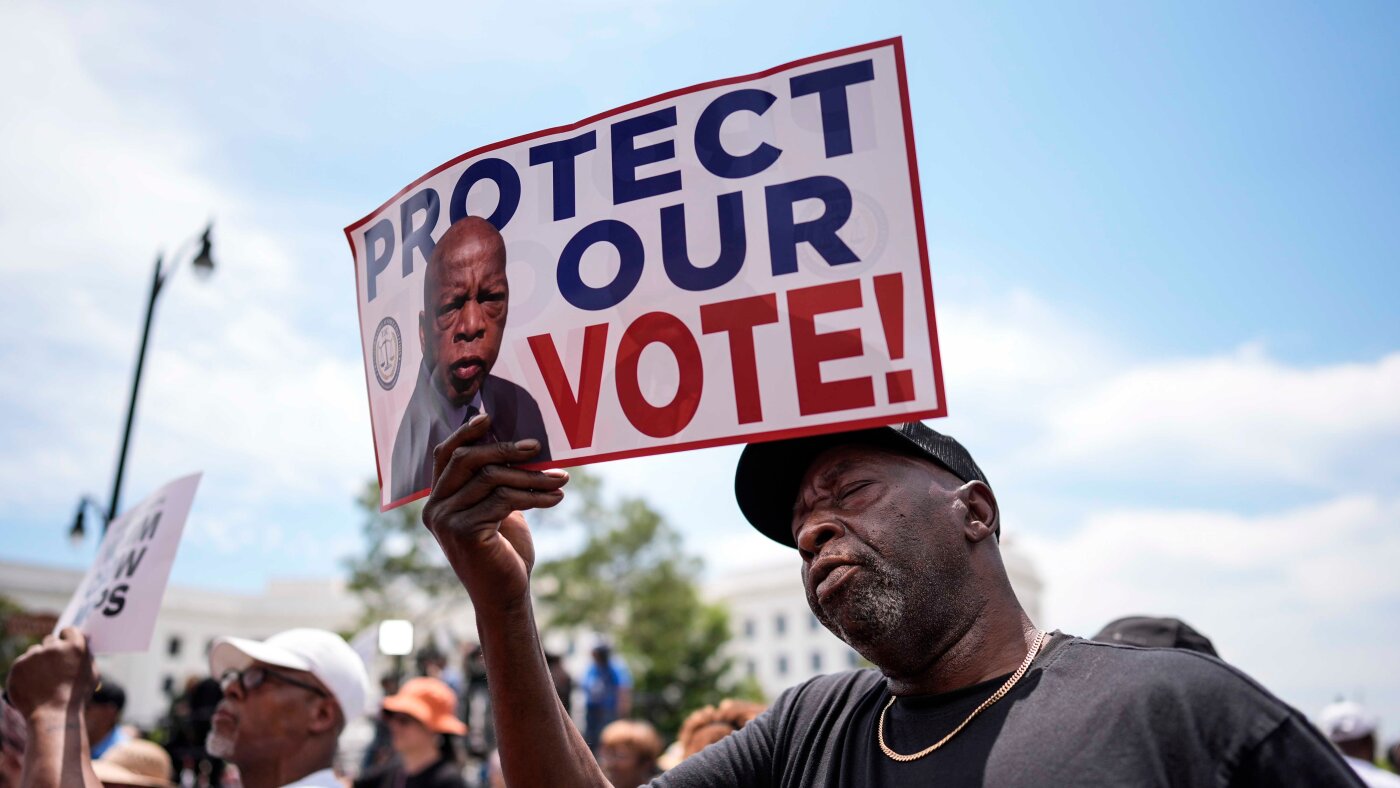
The Supreme Court this week allowed Alabama to use a congressional map that a lower court found intentionally discriminates against Black voters, in a decision that legal experts say further weakens enforcement of Section 2 of the federal Voting Rights Act. With the Court’s recent Louisiana v. Callais decision limiting how Section 2 can be applied, plaintiffs and advocates face far narrower federal remedies for racial discrimination in redistricting. Remaining options described by experts include state-level voting rights laws (which typically cover only state and local elections), defensive map-drawing strategies—mainly in Democratic-controlled states—long-term congressional reform (such as the John R. Lewis Voting Rights Advancement Act), and more structural changes like proportional representation (which federal law currently bans). At least a dozen states have enacted state voting-rights statutes; supporters are pushing more, while opponents have begun lawsuits challenging those laws’ constitutionality. Some Democrats and reformers view partisan mapmaking in blue states as a short-term safeguard for minority representation, citing examples like California’s map that flipped seats without eliminating minority-opportunity districts. Legal scholars warn, however, that these state and partisan strategies cannot fully replace nationwide federal protections, and that a strengthened federal remedy would likely require sustained congressional majorities and face judicial hurdles.
Biblical Reflection
From a Christian perspective, this development raises urgent moral questions about justice, the common good, and the stewardship of democratic institutions. The article reports a legal shift that reduces a federal tool historically used to protect the political voice of racial minorities—people whom Scripture invites us to defend and whose flourishing is tied to communal health. The reporting is factual but emphasizes concerns shared by voting-rights scholars and advocates; it fairly notes countervailing strategies (state laws, partisan mapmaking, structural reforms) while acknowledging their limits. Hidden tensions include how appeals to race in redistricting are legally framed: protections against racial discrimination can be cast as both necessary to secure equal political voice and as problematic if racial considerations are seen as determinative. Christians should be wary of partisan reflexes that justify means by ends; similarly, we should not minimize the concrete harms when political structures mute marginalized voices. Pastoral discernment calls for pursuing truth and justice together—supporting lawful, transparent reforms that protect vulnerable voters, resisting fear-driven scapegoating, and urging humility in both courts and legislatures as they reshape who is heard in the public square.
Scripture in context
This outlook does not yet include contextual Scripture citations. Do not treat a general biblical theme as an exegetical conclusion.
Faithful Response
No prescribed response is offered. Consider the reflection prompts below in your own church context.
Reflection and Discussion
- 1Whose voices are most at risk under the Court’s recent rulings, and how do legal definitions of 'race-conscious' policy shape that risk?
- 2What limits do state-level or partisan fixes have compared with national protections, and how should Christians weigh expedient political strategies against long-term justice?
- 3Are there ways the church can faithfully advocate for fair representation without adopting partisan tactics that compromise the witness to neighbor-love?
Sources
Reporting links are evidence inputs; Sanctuary News' biblical reflection is commentary.
This outlook currently relies on fewer than two linked sources. Broaden verification before teaching from it.
- 1.Original reportprimary