News Summary
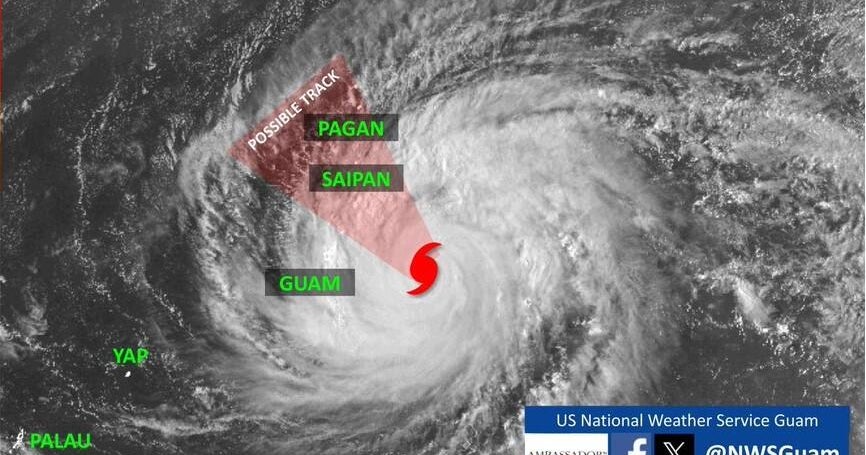
Super Typhoon Sinlaku tracked west-northwest toward the Mariana Islands on April 13, 2026. The National Weather Service office in Guam reported the storm's maximum sustained winds stabilized at about 175 mph after peaking near 180 mph. Sinlaku was classified as a 'super typhoon' (the Pacific term for storms with winds equivalent to U.S. Category 5). Forecasts projected weakening before crossing the Marianas, but forecasters warned the system could still arrive with winds equivalent to Category 4 or 5. Typhoon-force winds extended up to 80 miles from the center and tropical-storm-force winds up to 275 miles. Warnings and watches in effect included: typhoon warnings for Rota, Tinian and Saipan; tropical storm warnings for Guam, Pagan and Alamagan; a tropical storm watch for Agrihan; and a typhoon watch for Guam. Officials in Guam advised residents to stay indoors and out of the water, and the Guam Joint Information Center emphasized that although the threat of typhoon-force winds had diminished, the event remained serious, with the potential for heavy rain, flooding, and extended periods of tropical-storm-force winds between Monday night and Wednesday.
Biblical Reflection
The article is a straightforward, factual weather report focused on hazard information and official advisories; it emphasizes preparedness and public-safety messaging rather than political commentary. From a Christian perspective, the core truths to hold are: (1) natural events can produce real vulnerability and suffering; reporting that highlights concrete risks (wind speeds, warning areas, expected impacts) helps communities take responsible action to protect life and property, which aligns with biblical calls to love and protect neighbors (see Isaiah 1:17; Matthew 22:39). (2) The article implicitly assumes human responsibility for preparation and response — an appropriate stance: Scripture calls for wise stewardship of resources and care for the vulnerable (Proverbs 27:12; Luke 10:25–37). (3) Christians should resist two unhelpful responses the media can sometimes encourage: sensational fear (which magnifies anxiety) and fatalistic passivity (which assumes nothing can or should be done). Both are countered by prayer paired with practical action. Finally, recognize the geopolitical reality that these are U.S. territories with military and civilian populations; reporting on warnings and preparedness serves public accountability and the common good. The church's response should be informed compassion: pray, support evacuation and relief structures, and advocate for effective aid for affected communities.
Scripture in context
This outlook does not yet include contextual Scripture citations. Do not treat a general biblical theme as an exegetical conclusion.
Faithful Response
No prescribed response is offered. Consider the reflection prompts below in your own church context.
Reflection and Discussion
- 1Does the reporting prioritize actionable safety information for affected people, or does it lean toward dramatic language that could increase fear without improving preparedness?
- 2What assumptions about human responsibility versus resignation to fate shape the article's tone, and how does Scripture call believers to balance prayerful dependence on God with practical preparation?
- 3How might the status of these islands as U.S. territories affect expectations for governmental response and the church's role in relief and advocacy?
Sources
Reporting links are evidence inputs; Sanctuary News' biblical reflection is commentary.
This outlook currently relies on fewer than two linked sources. Broaden verification before teaching from it.
- 1.Original reportprimary