News Summary
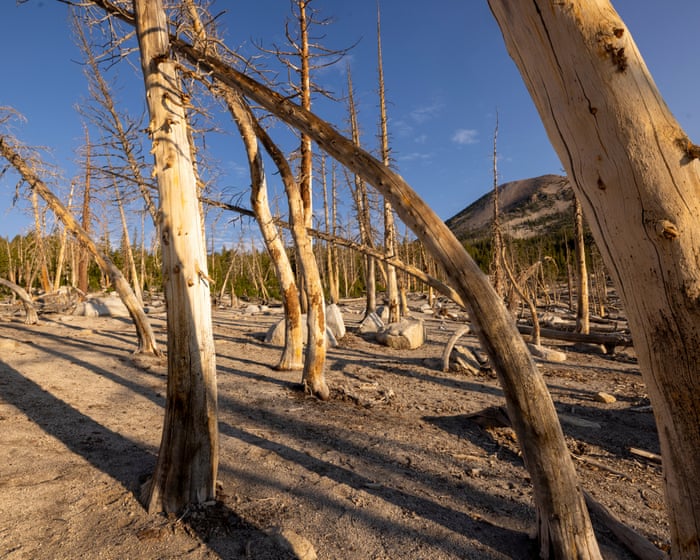
The Guardian (Aug 13, 2026) reports on a new scientific study that analyzed fossilized leaf cells from the Paleocene–Eocene Thermal Maximum (PETM, ~56 million years ago). According to the article, the study reconstructs forest responses during a period of rapid carbon release and warming and concludes that very large, rapid additions of carbon dioxide harmed forests rather than producing net flourishing. The Guardian frames the study as a corrective to public claims (which it attributes to some Trump administration members) that fossil-fuel CO2 emissions would simply 'green the planet.' The article excerpt supplied does not include the original paper, authorship, methodological detail, peer-review status, geographic scope, or quantified measures of forest decline, so important technical and contextual questions remain open.
Source and Framing Analysis
Source: The story is drawn from a single mainstream news report (The Guardian). Strengths: the piece identifies a relevant paleoclimate interval (the PETM) and a concrete proxy (fossilized leaf cells) that scientists use to infer plant responses to past climate and carbon changes. The Guardian explicitly situates the study in public-policy debate by contrasting its findings with contemporary political claims that CO2 emissions will benefit plant growth. Limitations and omissions: the supplied reporting does not name the study’s authors or institution, provide the peer-reviewed paper or journal, detail the methods (sampling locations, dating, statistical approaches, or uncertainty ranges), nor quantify the magnitude or geographic extent of the reported forest harm. It also compresses complex scientific inference into a short corrective narrative; paleoclimate analogues are informative but have limits (differences in baseline climate, rates of carbon release, ecosystems present, and human land-use). Framing effects: by using the study to rebut a specific political claim, the article clarifies public relevance but also increases the risk that nuances about applicability and uncertainty are underemphasized. Conclusion: the Guardian’s report credibly communicates that researchers find evidence of forest harm associated with large, rapid past carbon injections; however, evaluation of how directly the PETM parallels modern anthropogenic emissions requires consulting the original study and broader peer-reviewed literature.
How sources covered this story
Sanctuary separately assesses reporting quality and alignment with Christian virtues. The virtues assessment considers truthfulness, dignity, compassion, justice, peacemaking, humility, and care for vulnerable people. It does not assess a publisher's faith or reward religious language.
Compare 1 reports
Reporting 75/100Virtues 80/100
- Distinctive contribution
- Cites the Paleocene–Eocene Thermal Maximum and analysis of fossilized leaf cells as direct paleoecological evidence that large, rapid carbon injections coincided with forest decline — a long-term analogue that strengthens claims about harms from current rapid emissions.
- Framing
- Frames the finding as a corrective to political narratives (specifically noting members of the Trump administration) that portray fossil-fuel emissions as beneficial to plant growth; presents the study as evidence that rapid CO2 increases cause forests to wither rather than flourish.
- Omissions or uncertainty
- The supplied excerpt does not identify the study authors, institutions, journal, methods, geographic scope, specific metrics or magnitude of forest harm, temporal resolution, or limits of the PETM analogue for present-day conditions. It presents the conclusion without detailed evidence or caveats about differences between past and present forcings.
- Why these scores
- The excerpt responsibly connects a published scientific study to a topical political claim and identifies the relevant paleoclimate interval (PETM) and sample type (fossilized leaf cells). It is concise and clear, but lacks key attribution (authors/journal), methodological detail, quantification, and explicit caveats about analogy limits, which prevents a higher score. The piece promotes truth-correction by rebutting misleading political claims and advances care for creation and future vulnerable populations by highlighting environmental harms. It does so without dehumanizing language and appears to respect scientific authority. The excerpt lacks explicit compassion language but aligns well with truthfulness, justice for impacted communities, and stewardship values.
Biblical Reflection
A Christian response centers truth-telling and humble stewardship. Truth: we should accurately report and learn from robust scientific findings about ecological risk. Mercy and justice: recognizing that ecological harms fall disproportionately on vulnerable peoples and future generations, Christians are called to policies and practices that protect the weak and preserve creation. Humility: paleoclimate analogues like the PETM are powerful but not exact mirrors of the present; that scientific uncertainty should motivate careful study, not complacency. Peacemaking and dignity: public engagement should avoid partisan triumphalism and respect persons on all sides while advocating for the common good. Practically, this outlook calls congregations to informed care for local ecosystems, advocacy for climate- and justice-centered policies, pastoral attention to climate anxiety, and ongoing learning that couples scientific humility with moral responsibility.
Scripture in context
- 1Genesis 2:15 — Humanity is placed in the garden with a mandate to tend and keep it, framing work as stewardship rather than careless domination. — This stewardship language supports taking scientific findings about ecological harm seriously and treating them as moral prompts to care for forests and vulnerable neighbors rather than to ignore or exploit creation.
- 2Matthew 25:14–30 (Parable of the Talents) — A parable about entrusted resources and accountable stewardship in which faithful, prudent care is commended and negligence is criticized. — Applied to environmental responsibility, the parable encourages active, prudent care of creation and resources for the welfare of others, resisting short-term exploitation that leaves harm for future people.
Faithful Response
Learn: Read the primary study and related peer-reviewed literature, or reliable summaries written by scientists, to understand methods, limits of the PETM analogy, and consensus.
Practice stewardship: Reduce congregation and personal carbon footprints where feasible; support local reforestation, invasive-species control, and habitat-protection projects that strengthen forest resilience.
Advocate with compassion: Urge policymakers toward climate-smart, justice-focused measures (emissions cuts, support for climate-impacted communities, conservation funding) while listening respectfully to other views.
Pastoral care and formation: Provide congregational teaching on creation care, offer pastoral support for climate anxiety, and create service opportunities (tree planting, habitat restoration) that embody care for neighbors and creation.
Humble science engagement: Encourage funding and support for further research and for making scientific findings accessible to lay communities so policy and practice are well-informed.
Reflection and Discussion
- 1How does evidence from deep-time events like the PETM shape our responsibilities for present-day decisions about fossil fuels and forest stewardship?
- 2In what ways should Christian love for neighbor—especially toward vulnerable communities and future generations—inform how we interpret and act on scientific warnings about ecosystems?
- 3Where is humility needed in our public and private conversations when scientific findings challenge convenient or politically attractive narratives?
Sources
Reporting links are evidence inputs; Sanctuary News' biblical reflection is commentary.
This outlook currently relies on fewer than two linked sources. Broaden verification before teaching from it.
- 1.Fossils show huge carbon emissions harm forests, not ‘green the planet’primary_reporting