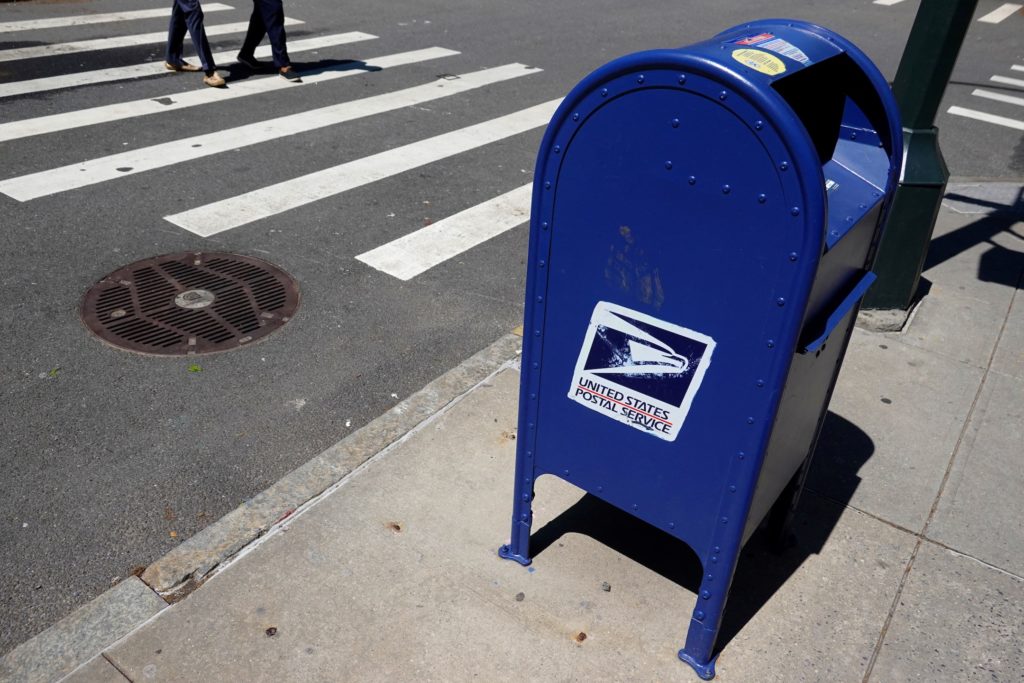
News Summary
PBS NewsHour's brief report states that "Democratic-controlled states" have filed a new lawsuit against the U.S. Postal Service challenging President Trump's executive order concerning mail‑in voting. The short wrap does not name the states, include the text of the executive order, describe the legal claims, provide filing details or court docket information, nor report any response from the Postal Service, the White House, or election officials.
Source and Framing Analysis
Source: PBS NewsHour (news wrap format). Framing: top‑line, neutral headline summary that condenses a developing legal story into one sentence. Strengths: flags a potentially consequential legal challenge and attributes the filing to a set of plaintiffs (described as "Democratic‑controlled states"). Limitations: the format omits primary materials (the complaint, the executive order text, court filings) and named attributions (which states, which court, when filed), so the report should be treated as a prompt for follow‑up rather than a complete account. Because only a brief summary is provided, important source‑specific details and any conflicting statements are absent — follow‑up with official court dockets, the executive order, plaintiff press releases, and USPS statements is needed to verify scope, standing, claims, and requested relief.
How sources covered this story
Sanctuary separately assesses reporting quality and alignment with Christian virtues. The virtues assessment considers truthfulness, dignity, compassion, justice, peacemaking, humility, and care for vulnerable people. It does not assess a publisher's faith or reward religious language.
Compare 1 reports
Reporting 70/100Virtues 75/100
- Distinctive contribution
- Mentions that Iran's statement was framed 'as part of a potential agreement with Oman to reopen the waterway,' which links the Iran declaration to Oman-brokered diplomacy—an added contextual detail beyond bare headlines.
- Framing
- Top-line, neutral summary (news wrap) presenting three separate items without analysis or sourcing detail; no charged language.
- Omissions or uncertainty
- Does not identify which Democratic-controlled states filed the lawsuit, the specific legal claims or standing, or timing/details of the suit; does not attribute Iran's statement to a named official, agency, or date; does not name the FDA-approved drug, indicate the specific approval (e.g., accelerated/full), trial data, or implications for patients. Lack of sourcing and specifics limits independent verification and depth.
- Why these scores
- Appropriate for a brief news wrap: accurate-sounding, neutral, and concise. However, it omits key specifics and attributions that would strengthen verifiability (which states sued, which Iranian source made the claim, the drug name and approval details). For a short summary this is acceptable but limited. Neutral, non-sensational language that does not dehumanize or exploit vulnerable people; mentions an FDA approval for a serious disease (public-health relevance). The excerpt shows no evident bias or contempt and respects truthfulness within its brevity. It could score higher with more context that reflects care for affected people (e.g., patient impact, who is harmed/benefited).
Biblical Reflection
A Christian public response should hold together commitment to the rule of law, protection of voting access, and honest, peaceful civic participation. Seek truth with humility (pursue primary documents and impartial reporting), pursue justice (ensure lawful avenues protect both access and integrity), and practice mercy and peacemaking (avoid inflammatory rhetoric, support nonviolent advocacy, and care pastorally for those anxious about elections). Encourage congregants to engage civilly, resist partisan escalation, and pray for judges, election administrators, and postal workers who serve the common good.
Scripture in context
- 1Matthew 5:9 (Sermon on the Mount) — Jesus blesses those who make peace, valuing reconciliation and restorative approaches over domination or escalation. — This calls Christians to prefer de‑escalation, to support lawful, transparent processes for resolving disputes about elections, and to promote civic practices that reduce conflict while defending rights.
- 2Micah 6:8 (prophetic call to ethical life) — A summons to act justly, love mercy, and walk humbly with God as markers of faithful public life. — Apply these priorities when assessing contested election procedures: pursue justice (fair access), show mercy (care for those harmed by confusion), and practice humility in public judgment, relying on verified information.
Faithful Response
Seek primary documents: read the lawsuit complaint, the cited executive order, and any USPS or plaintiff press statements before forming public judgments.
Pray for all parties: judges, election officials, postal workers, plaintiffs, and defendants, asking for wisdom, integrity, and calm.
Provide congregational guidance: teach members how to find and read court dockets and official election guidance; discourage rumors and partisan amplification without verification.
Support nonpartisan voter access: volunteer with or donate to organizations that help voters obtain ballots and return them securely, and assist community members needing mail or transportation help.
Advocate for transparency and timely adjudication: encourage public officials to publish documents and for courts to resolve urgent election‑related disputes promptly to reduce uncertainty.
Reflection and Discussion
- 1What primary documents (complaint, executive order, USPS statement) should we read before forming a firm view, and where will we look for them?
- 2How can our congregation defend both the integrity of elections and the right of all eligible voters to access ballots without escalating partisan conflict?
- 3In what practical ways can we care for neighbors who feel anxious or disenfranchised by legal disputes over voting procedures?
- 4When a civic dispute is unfolding in courts, how should Christian civic engagement differ from partisan campaigning?
Sources
Reporting links are evidence inputs; Sanctuary News' biblical reflection is commentary.
This outlook currently relies on fewer than two linked sources. Broaden verification before teaching from it.
- 1.News Wrap: States sue USPS, challenging Trump's order on mail-in votingprimary_reporting